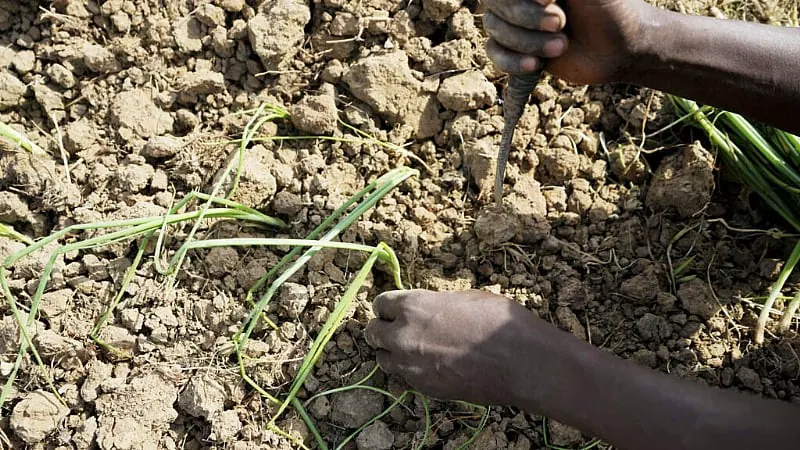
A recent dispute between Nigeria and Ghana over onion imports has highlighted the challenges of implementing free trade agreements in West Africa. Ghana is a significant market for Nigeria's onion industry, with nearly 100,000 tonnes of onions imported annually. However, tensions rose earlier this year when hundreds of tonnes of Nigerian onions were seized at Kotoka market in Accra. The seizures prompted traders in northern Nigeria to suspend onion deliveries to Ghana.
The dispute centered on the pricing and sales of Nigerian onions in Ghanaian markets. Nigerian traders were selling onions at prices they set themselves, which Ghanaian traders found problematic. According to David Olujinmi, an economic analyst at SBM Intelligence in Lagos, Nigerian onions were being sold at much lower prices, making Ghanaian onions uncompetitive. This has led to concerns about the impact of free trade on local industries.
A tacit agreement was reached on August 19, when Nigeria's National Onion Producers, Processors and Marketers Association (NOPPMAN) announced it was lifting its suspension of onion exports to Ghana. The decision followed consultations with the two governments, the Economic Community of West African States (Ecowas), and other stakeholders. However, the dispute raises broader questions about the limits of free trade within Africa.
Nigeria has a significant trade surplus with West Africa, but its weak currency makes its products more competitive in terms of price. According to Olujinmi, this can create tensions with other countries in the region, which may feel pressure to protect their own producers. The dispute highlights the need for a balance between free trade and protecting local industries.
Paul Akande, a programme officer for aquaculture development at the Ecowas Commission, believes that the dispute does not require a new agreement. Both countries are already bound by Ecowas free trade rules, and the priority is to better inform businesses and remind them of the existing rules. Akande emphasizes the need for awareness and information across the entire trading chain.
The dispute comes as trade between West African countries continues to grow. According to the African Export-Import Bank, intra-regional trade accounted for 76.1 percent of West Africa's total trade last year. The bank points to strong trade along several routes, including the corridor linking Côte d'Ivoire and Nigeria.
The onion dispute between Nigeria and Ghana serves as a test case for West African free trade. As the region continues to grow and integrate, finding a balance between free trade and protecting local industries will be crucial. The Ecowas Commission and other stakeholders will need to work together to promote awareness and understanding of the existing free trade agreements.
Key points
- The dispute highlights the challenges of implementing free trade agreements in West Africa.
- Nigeria and Ghana are bound by Ecowas free trade rules, which aim to promote intra-regional trade.
- The dispute raises broader questions about the balance between free trade and protecting local industries in West Africa.