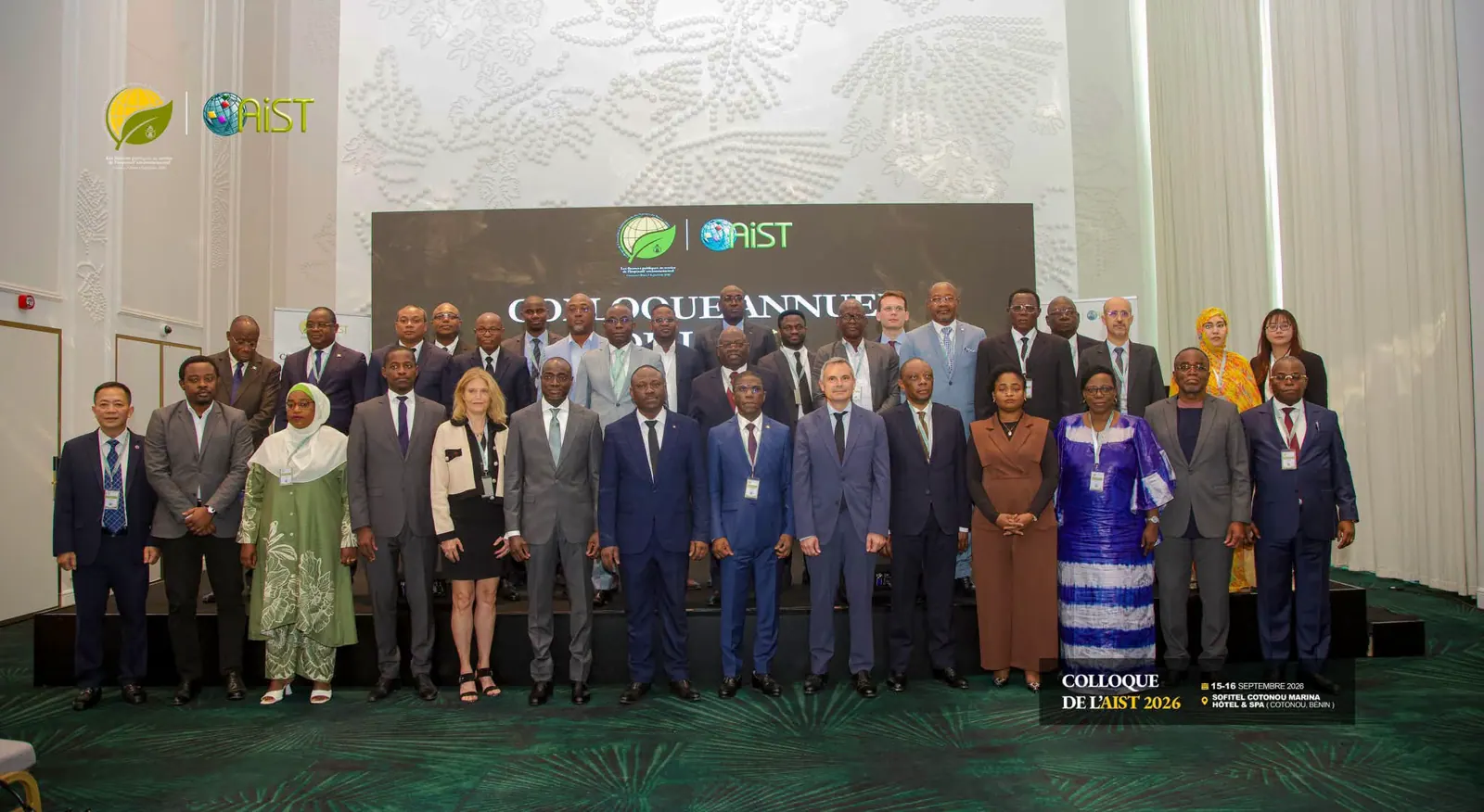
The 17th annual colloquium of the International Association of Treasury Services (AIST) took place in Cotonou, Benin, from September 15 to 16, 2026. The event marked the organization's 20th anniversary and brought together representatives from several countries to discuss "Public Finances in the Service of Environmental Imperative." The colloquium aimed to explore ways to finance climate change mitigation and adaptation efforts without compromising public finance sustainability.
Oumara Karimou Assouma, Director General of the Treasury and Public Accounting and President of AIST, emphasized the need for financial administrations to integrate environmental considerations into their operations. He noted that the digitalization and artificial intelligence that have already transformed financial administrations must now be complemented by better consideration of environmental constraints. Assouma stressed that the duty of financial administrations is no longer limited to mobilizing, managing, and accounting for resources with rigor but also to ensure the long-term sustainability of the planet.
The integration of climate considerations into public finance requires the development of new tools for governments. The colloquium examined several instruments that can guide public resources towards environmentally compatible investments and policies. These include green budgeting, responsible public procurement, environmental taxation, and traceability. These areas of discussion place treasury services at the heart of the ecological transition.
Catherine Lemesle, Secretary General of AIST, emphasized that the organization aims to become a reference actor on green public finance issues. She noted that international commitments, such as the Sustainable Development Goals and the Paris Agreement, can only be achieved if they are translated into public budgets, financing mechanisms, and state management tools. Lemesle stressed that concrete ambitions can only be achieved if they are reflected in budgets, financing mechanisms, and public accounting systems.
Charles Yèhouénou, representing the Minister of Economy and Finance, called on participants to prioritize practical proposals that can be used by administrations. He emphasized that climate change requires treasury services to anticipate risks and strengthen the resilience of public finances. Yèhouénou invited experts to propose innovative regulatory mechanisms, budgeting and traceability tools, and environmental performance indicators.
The discussions focused on resource mobilization, environmental budgeting, green taxation, innovative financing, and monitoring of expenditures dedicated to ecological transition. The issue at stake is not only financing environmental projects but also identifying expenditures that contribute to environmental objectives, monitoring their execution, and assessing their results. This challenge is particularly significant in territories exposed to climate change, such as the West African coast, which faces erosion and its associated economic and environmental impacts.
The outcome of the colloquium may lead to the adoption of the "Cotonou Declaration," which could provide a framework for integrating environmental considerations into public finances. The discussions and recommendations from the event are expected to contribute to the development of more effective and sustainable public finance practices that take into account the challenges of climate change.
Key points
- The 17th AIST colloquium aimed to explore ways to integrate environmental considerations into public finances.
- The event brought together representatives from several countries to discuss green public finance issues.
- The colloquium examined several instruments that can guide public resources towards environmentally compatible investments and policies.