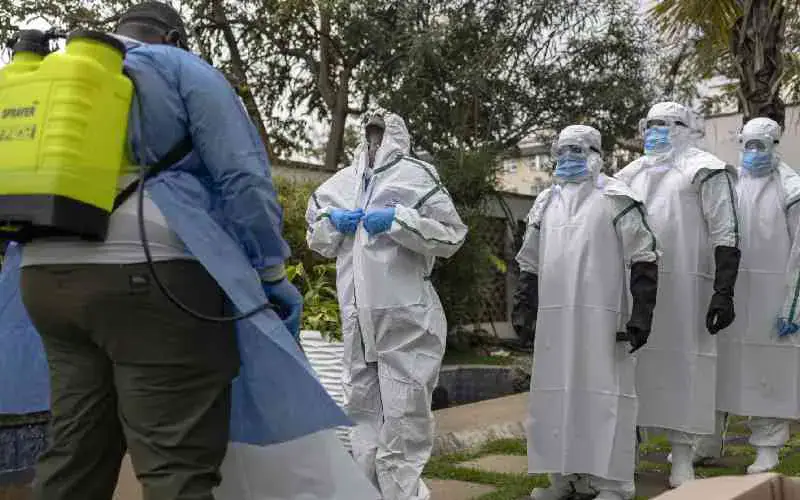
The Ebola outbreak in the Democratic Republic of Congo has surpassed 11,000 cases, with more than 5,300 deaths recorded across affected countries. According to the United States Centers for Disease Control and Prevention (CDC), 11,021 confirmed cases and 5,358 deaths had been reported as of November 8. The DRC accounts for the overwhelming majority of the infections, with 10,990 confirmed cases and 5,354 deaths.
The outbreak, caused by the Bundibugyo strain of Ebola virus, has spread across eight provinces in the DRC, with Ituri and North Kivu bearing the heaviest burden. Ituri remains the worst-hit province, with 7,654 cases and 3,613 deaths, while North Kivu has recorded 2,720 cases and 1,488 deaths. The outbreak has affected 67 of the country's 178 health zones, with community transmission continuing in several areas.
Africa Centres for Disease Control and Prevention Director-General Dr Jean Kaseya has warned that insecurity, population movement, and weaknesses in health systems are complicating efforts to stop the spread. He identified inadequate human resources, limited access to vaccines and medicines, insufficient funding, and weak community involvement as some of the major obstacles facing the response.
The World Health Organisation (WHO) has also raised concerns about the number of deaths occurring outside treatment facilities, particularly among children, pointing to delays in detecting infections and accessing medical care. In its November 6 update, WHO reported that 335 of the 512 deaths recorded since October 21 had occurred in communities, compared with 177 in treatment centres.
WHO Director-General Dr Tedros Adhanom Ghebreyesus has called for a stronger response, warning that the outbreak is outpacing efforts to contain it in some areas. Dr Kaseya stressed the importance of trusted information, early reporting of symptoms, and prompt access to care, saying that containing and ultimately stopping this outbreak will come from communities.
The outbreak has also raised concerns over the protection of frontline health workers, with insecurity and attacks on response teams further complicating efforts to reach affected communities. The Bundibugyo strain presents an additional challenge because there is no licensed vaccine specifically approved against it. However, WHO has recommended the inclusion of two additional vaccine candidates in the ongoing TUMAINI clinical trial in the DRC.
The current outbreak was declared in May 2026 and has become the largest Ebola outbreak ever recorded in the DRC. It is now the second-largest Ebola outbreak on record, behind the 2014-2016 West Africa epidemic, which killed more than 11,000 people. The European Centre for Disease Prevention and Control (ECDC) reported that 70 additional cases and 31 deaths were recorded in the DRC between November 7 and 8.
Key points
- The Ebola outbreak in the Democratic Republic of Congo has surpassed 11,000 cases and 5,300 deaths.
- The outbreak has spread across eight provinces in the DRC, with Ituri and North Kivu bearing the heaviest burden.
- Insecurity, population movement, and weaknesses in health systems are complicating efforts to stop the spread.