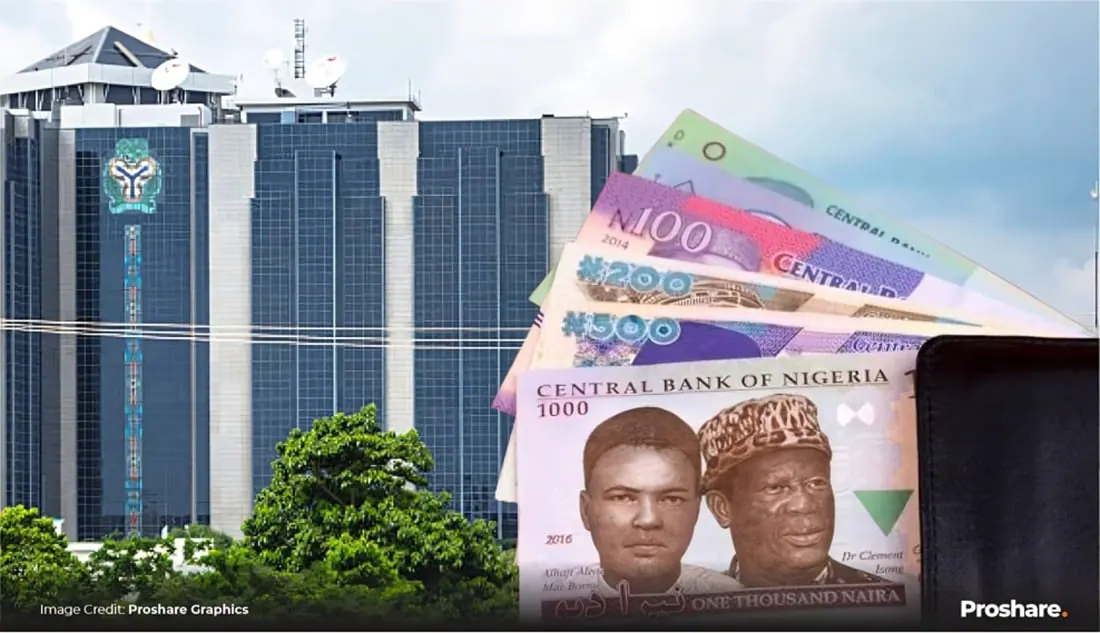
The Central Bank of Nigeria (CBN) has disclosed that Nigeria's net foreign portfolio investments (FPI) reached $6.3 billion in the first eight months of 2026. This significant improvement in foreign exchange liquidity and investor confidence is attributed to reforms implemented by the apex bank over the past three years. The CBN's Deputy Governor, Corporate Services, Dr. Muhammad Sani Abdullahi, revealed these figures at the Finance Correspondents Association of Nigeria (FICAN) and Business Editors conference in Abuja.
According to Abdullahi, the improvement in capital inflows and reserves reflected the combined impact of foreign exchange market reforms, tighter liquidity management, monetary policy measures, stronger oil receipts, and increased remittance flows. Total foreign exchange flows reached $10.8 billion in July 2026, with $7.3 billion, representing nearly 68 percent, coming from more controllable sources. This development indicates a substantial increase in foreign exchange earnings.
Remittances through international money transfer operators reached $950 million in July, while net foreign portfolio investments stood at $6.3 billion between January and August. The CBN deputy governor cautioned that portfolio inflows could reverse, stressing the need to deepen more stable sources of foreign exchange and investment. This caution highlights the importance of sustaining the current reforms.
The country's gross external reserves have risen to $55.6 billion by September 11, compared with net usable reserves of less than $900 million in the second quarter of 2023. This significant increase represents a major shift from the conditions confronting the economy three years ago, when Nigeria's foreign exchange market was fragmented and heavily administered. The current reserve level indicates improved financial stability.
The CBN's reforms included the consolidation of foreign exchange market windows, removal of restrictions that excluded 43 categories of imports from the official market, settlement of valid outstanding obligations, and measures to improve transparency in foreign exchange trading. These reforms have contributed to a reduction in the gap between official and parallel-market exchange rates, which had averaged more than 60 percent in 2022 and exceeded 100 percent at some points.
The banking sector recapitalisation programme, launched in 2024, has also contributed to improved financial system resilience. Thirty-three banks have met the revised minimum capital requirements by the end of the two-year programme, raising a combined N4.65 trillion. Stronger bank balance sheets will enhance the capacity of lenders to finance infrastructure, industrial expansion, international trade, and other productive activities needed to support Nigeria's ambition of building a $1 trillion economy by 2030.
The CBN's reforms have coincided with a moderation in inflation, which fell from 34.8 percent in December 2024 to 15.4 percent in July 2026, while real GDP growth reached 4.4 percent in the second quarter. The deputy governor emphasized that stronger capital must be matched by sound governance and effective risk management, and that the CBN would continue to focus on governance, asset quality, liquidity, and macro-prudential surveillance as the banking sector enters the post-recapitalisation era.
Key points
- Nigeria's net foreign portfolio investments rose to $6.3 billion in the first eight months of 2026.
- The country's gross external reserves climbed to $55.6 billion as of September 11.
- The CBN's reforms have contributed to improved financial stability, including a reduction in the gap between official and parallel-market exchange rates.