Nigeria's Minister of Defence, General Christopher Musa, has stated that the country's road to fully overcoming insecurity remains unclear and will require more hands on deck, including those of technologists and academia. He made this statement while commissioning the CG Musa Security Management Hub donated to the Tertiary Education Trust Fund (TETFund) Centre of Excellence in Security Management, at the University of Ibadan. Musa emphasized that solving Nigeria's insecurity requires informed policies, credible institutions, technological innovation, and a comprehensive understanding of the human dimensions of conflict.
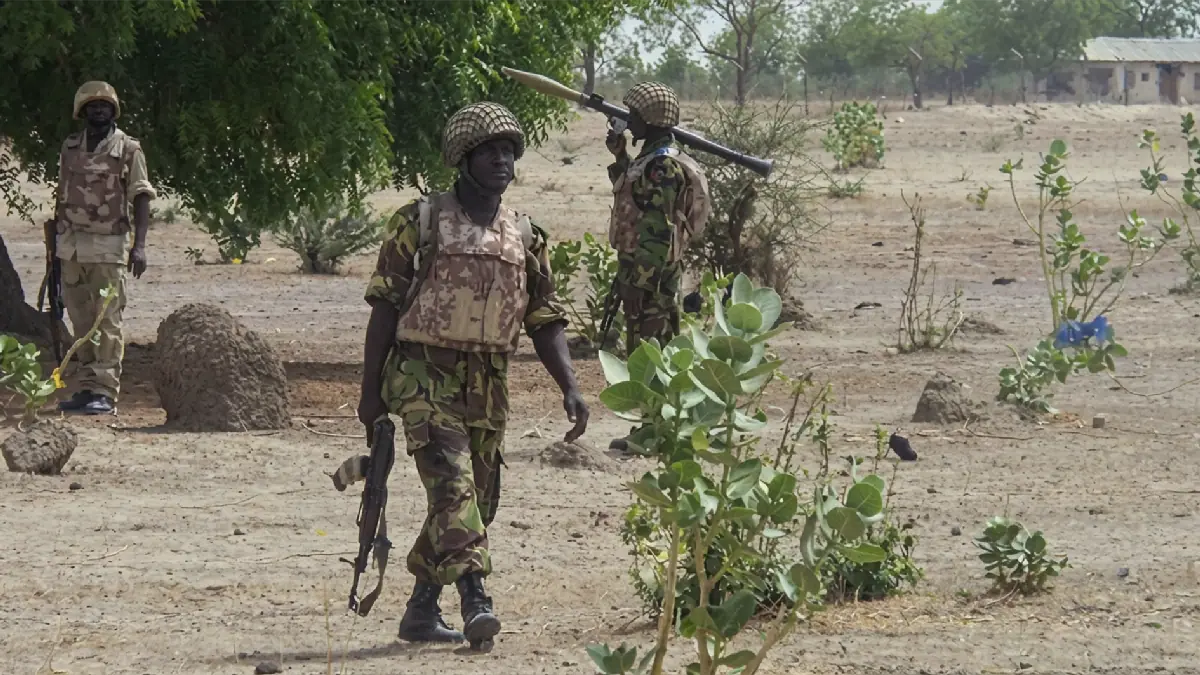
The country's insecurity crisis has continued to ravage Nigeria for close to two decades, despite warnings from the outset that fighting terrorism was not a conventional war whose end could be more easily predicted. In the last 15 years, terrorism and insurgency have taken many forms that have invariably overstretched the military and other security agencies. A new threat assessment identifies 31 states and the Federal Capital Territory as facing elevated, high or critical risks, while no state falls into the low-risk category. This assessment places the country's overall national threat level at high, with critical conditions concentrated in Borno and parts of the North-West and Middle Belt.
The Nigeria Threat Assessment 2026 identifies seven states as facing critical security risks, 11 of which are high risk, 13 states experiencing elevated risk, while six states have to contend with moderate-risk. The seven states that occupy the highest-risk category are Borno, Benue, Zamfara, Kaduna, Katsina, Niger, and Plateau. Figures already suggest that the country's security challenges are considerably dire and much more widespread than what geographical assessment of individual attacks might indicate. The fact that 31 of the 36 states and the Federal Capital Territory have elevated or worse risk ratings is a very troubling development given that 84 per cent of the country's federating units are affected.
Musa noted that insecurity is getting prolonged because it is becoming difficult to get the needed security weapons and ammunition, adding that Nigeria needs to begin to produce what it requires to end it. He hinted that the country had stepped up its game and was gradually improving the security situation. The minister added that the academia occupies a strategic place in the national security management architecture, as the battlefield may reveal the immediate manifestations of insecurity, but the university provides the intellectual environment to interrogate its causes, evaluate responses, and develop sustainable solutions.
The Defence High Command believes that well-informed policies, credible institutions, technological innovation, and a comprehensive understanding of the human dimensions of conflict are needed to address the country's insecurity crisis. Musa's analysis of how to address the dire security situation in the country, the drawbacks, and the grounds that can be covered by embracing technology and developing sustainable solutions cannot be more correct. However, Nigerians are weary of the seemingly endless war on terrorism, despite the commendable strides that the military has recorded.
The country's insecurity crisis has also had a negative impact on its international reputation, with many foreign countries routinely issuing travel advisories to their citizens about visiting Nigeria. The crisis has also forced Nigeria to consider alternative measures to combat insecurity, including the development of local arms production. Musa stated that the country's intention is to expose local producers to foreign and international manufacturers so that it can continue to produce what it needs or what it relies on.
The Nigerian government plans to establish a $500m yearly research fund to target innovation and job creation. The fund is part of efforts to address the country's insecurity crisis and promote technological innovation. Additionally, the government has received 14,000 research entries and selected 1,200 for exhibition, as part of its efforts to promote research and development in the country.
Key points
- The Nigerian government is considering technological innovation and local arms production to combat the country's prolonged insecurity crisis.
- The country's insecurity crisis has continued to ravage Nigeria for close to two decades, with 31 states and the Federal Capital Territory facing elevated, high or critical risks.
- The Defence Minister emphasized the need for informed policies, credible institutions, technological innovation, and a comprehensive understanding of the human dimensions of conflict to address the country's insecurity crisis.