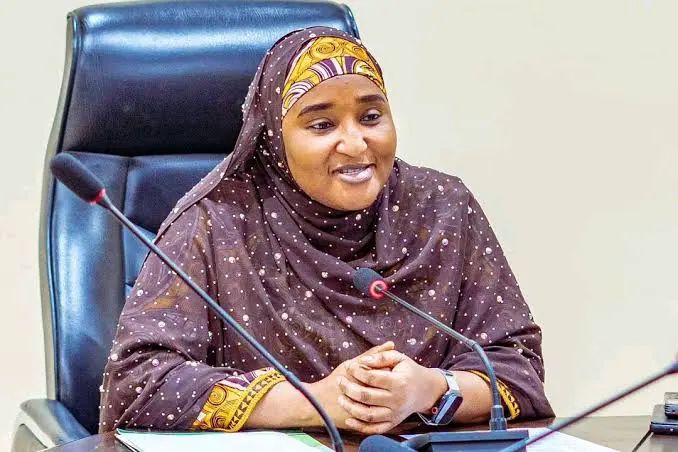
The Federal Government of Nigeria has initiated a comprehensive overhaul of its education sector, focusing on improving access, quality, and human capital development. According to Prof. Suwaiba Said Ahmed, Minister of State for Education, the reforms under President Bola Ahmed Tinubu's Renewed Hope Agenda aim to address critical areas such as teacher development, curriculum reform, and student financing. The efforts seek to strengthen education delivery and enhance learning outcomes across the country.
A key aspect of the reforms is the introduction of a digital professional development program for teachers. The program, accessible via a zero-rated digital platform, has already seen over 60,000 teachers from public and private schools participate in its first phase. This initiative aims to bridge the gap in teacher training, with a baseline assessment revealing that only about 10% of teachers benefited from approximately ₦20bn released to states for teacher training in 2025.
The Ministry of Education has also developed a Comprehensive Teacher Policy in collaboration with the Teachers Registration Council of Nigeria and the Nigeria Union of Teachers. This policy will cover recruitment, training, welfare, deployment, and career progression for teachers. Furthermore, efforts are underway to make continuous professional development more structured and eventually mandatory for educators.
Curriculum reform is another critical area of focus, with the national curriculum being reviewed to reduce subject overload and shift from rote learning to competency-based education. The new approach emphasizes learners demonstrating their understanding and application of knowledge rather than mere memorization. Additionally, the curriculum for pre-service teachers is being revised to equip them with the necessary skills for contemporary classrooms.
The Universal Basic Education Commission has revised its disbursement guidelines and funding formula to make basic education interventions more responsive to actual needs. The reforms also aim to strengthen the link between performance and additional funding, with increased attention on procurement and value-for-money considerations, particularly in school construction.
At the tertiary level, the government is expanding capacity in critical fields such as medicine, pharmacy, science, and engineering. Over ₦400bn has been invested in this endeavor, alongside tighter accreditation and verification processes. The government has also established a new school grading framework, which will classify schools from A to D based on infrastructure, facilities, teacher qualifications, and learner achievement.
The government is also addressing the issue of out-of-school children, with estimates ranging from 10 million to over 20 million. A national education data platform and a nationwide mapping exercise are being developed to identify children excluded from formal education. The initiative aims to link identified children directly to enrolment and intervention programs, with traditional and religious leaders being involved to improve access to communities with high numbers of out-of-school children.
Key points
- Over 60,000 teachers have participated in the first phase of the digital professional development program.
- The government has invested over ₦400bn in expanding capacity in critical fields at the tertiary level.
- A new school grading framework will classify schools based on infrastructure, facilities, teacher qualifications, and learner achievement.