Nigeria's democratic system is designed to distribute power among various branches of government, but in practice, the President has become the focal point of accountability for the country's economic decisions. When the economy grows or contracts, the President is often credited or blamed. This phenomenon has led to a situation where the President is treated as the sole decision-maker, while other institutions, such as the National Assembly, are overlooked.
The Nigerian presidency is indeed a powerful institution, with the President leading the executive, appointing ministers, and providing political direction. However, this concentration of power has resulted in a culture of presidential exclusivity, where the President is held solely responsible for the country's economic fortunes. This approach neglects the role of other democratic institutions, such as the National Assembly, which has responsibilities that include legislation and control over public finance.
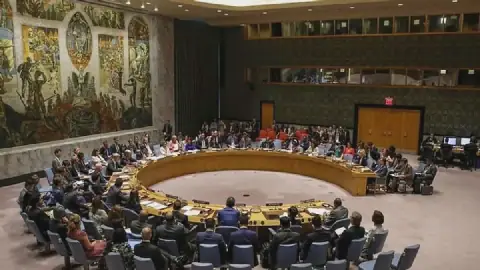
The National Assembly, comprising 109 senators and 360 members of the House of Representatives, is designed to provide a check on the executive's power. However, when consequential economic decisions produce hardship, the public tends to focus on the President, while Parliament is quietly excluded from the discussion. This approach is unfair, as it neglects the role of legislators in scrutinizing, questioning, and approving or rejecting executive proposals.
A more nuanced approach to accountability is needed, one that recognizes the role of both the executive and legislative branches in making economic decisions. This requires a decentralization of power and listening, where Parliament engages with stakeholders across the country, rather than simply relying on representations from the executive. By doing so, Parliament can ensure that the voices of Nigerians are heard and that their concerns are taken into account.
A notable example of democratic consultation in action is the nationally televised town-hall meeting held in Lagos in December 2011, where Finance Minister Ngozi Okonjo-Iweala, CBN Governor Sanusi Lamido Sanusi, and other senior officials engaged with stakeholders on the removal of petrol subsidy. This approach allowed for a more nuanced discussion of the policy and its implications, and it is an example that Parliament can follow in its own engagements with stakeholders.
The importance of decentralized accountability is particularly evident in the context of public borrowing, where debt obligations can have long-term implications for Nigerians. The Ways and Means advances inherited at the end of the Muhammadu Buhari administration, which totaled ₦22.719 trillion, highlight the need for parliamentary scrutiny and oversight. By examining how extraordinary central-bank financing reached such proportions, Parliament can ensure that similar situations do not arise in the future.
Ultimately, Nigeria's democracy needs to move beyond a culture of one-man accountability, where the President is solely responsible for the country's economic fortunes. By decentralizing power and listening, and by engaging with stakeholders across the country, Parliament can ensure that democratic institutions are more accountable and responsive to the needs of Nigerians. This approach will require a fundamental shift in the way that power is exercised and accountability is exercised in Nigeria.
Key points
- Executive power deserves executive accountability, but legislative consent must carry legislative responsibility.
- Democracy should decentralize listening, with Parliament engaging with stakeholders across the country.
- Parliament should occasionally conduct substantial stakeholder engagements outside Abuja, rather than simply summoning Nigerians to the capital.