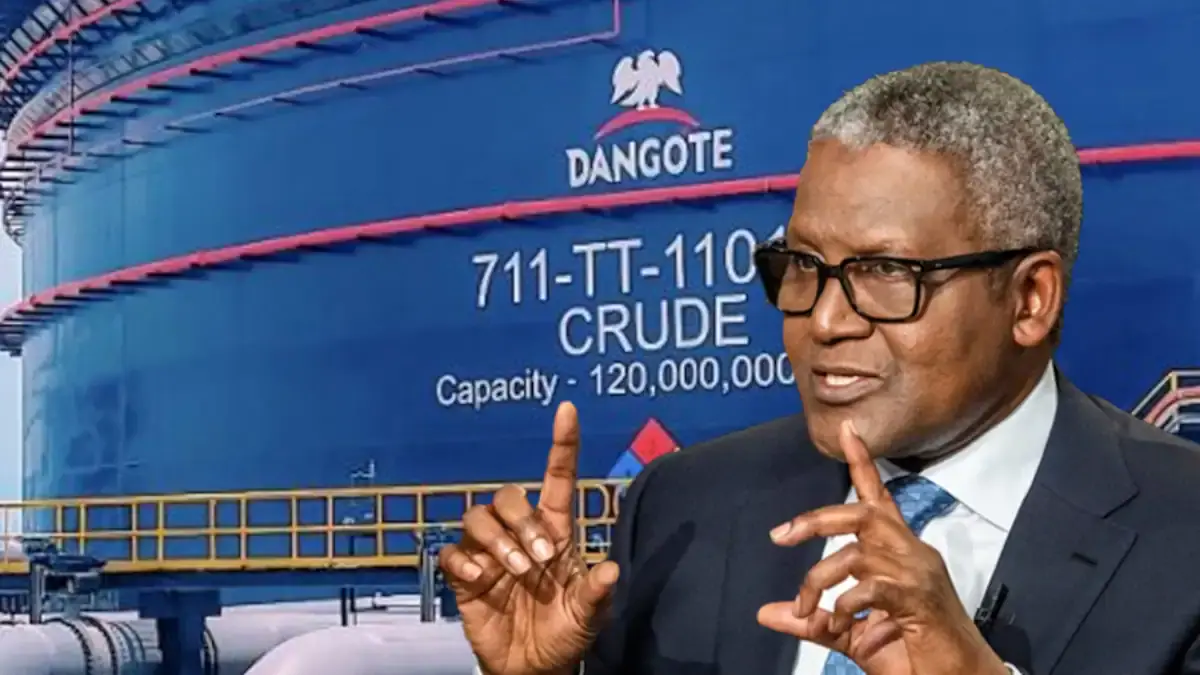
The Dangote Refinery, located near Lagos, Nigeria, has significantly increased its production of petroleum products, shipping 561,000 barrels per day in the second quarter of 2026. This marks a substantial rise from the 79,000 barrels per day average in 2023, according to an analysis by the US Energy Information Administration (EIA). The surge in production coincides with the near-total closure of the Strait of Hormuz since late February, which has impacted fuel supplies from the Gulf to Africa and Europe.
The refinery's increased production is attributed to its expanded capacity, which was upgraded to 700,000 barrels per day in February after a maintenance phase. The Nigerian regulator reported an utilization rate of 105.21% in August, with 736,470 barrels of crude oil processed daily. The Dangote Group views this as a significant contribution to Nigeria's energy security. Prior to the refinery's opening in 2024, Nigeria imported approximately 400,000 barrels per day of refined products, which has now decreased to less than 130,000 barrels per day via maritime routes.
The refinery's impact on global fuel supplies is evident in its export business. Deliveries to Europe reached 130,000 barrels per day in the second quarter. In April, the refinery became the world's largest exporter of kerosene. Additionally, the Dangote Group increased its sales of urea, a fertilizer that previously relied heavily on supplies from the Strait of Hormuz. According to Aliko Dangote, the group's chairman, this diversification has contributed to its financial growth.
The Dangote Group's financial performance reflects its increased production and export activities. The company reported a net profit of $4.73 billion for the first nine months of 2026, as stated in documents related to its planned stock market listing. However, the company's growth is partly dependent on accessing crude oil from international markets, as Nigeria has not met its oil production targets this year.
The EIA analysis highlights the refinery's role in mitigating the impact of the global fuel supply crisis. The Strait of Hormuz closure has had far-reaching consequences for fuel supplies, and the Dangote Refinery's increased production has helped alleviate some of this pressure. The refinery's ability to adapt to changing market conditions has positioned it as a significant player in the global energy landscape.
The Dangote Refinery's expansion and increased production have significant implications for Nigeria's energy security and economy. The country's reliance on imported refined products has decreased substantially, and the refinery's growth has contributed to Nigeria's economic growth. As the global energy landscape continues to evolve, the Dangote Refinery is likely to play an increasingly important role in meeting fuel demands.
Looking ahead, the Dangote Group is expected to continue its growth trajectory, driven by its diversified portfolio and strategic location. The company's plans for further expansion and investment in the energy sector are likely to have a lasting impact on Nigeria's economy and the global energy market. As the company moves forward with its development plans, it will be closely watched by industry stakeholders and investors.
Key points
- The Dangote Refinery's production surge has reduced Nigeria's reliance on imported refined products.
Reporting sources
- Ormuz : la raffinerie Dangote, grande gagnante africaine de la crise · La Nouvelle Tribune