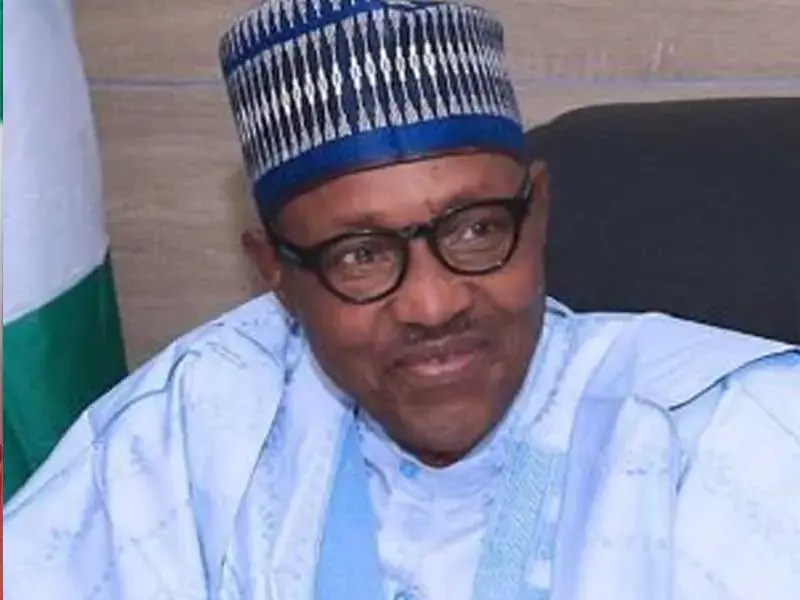
Late former President Muhammadu Buhari shared his experiences during Nigeria's civil war in a new book, 'Muhammadu Buhari: The Authorised Biography' by Dr. Yakubu Udu. Buhari revealed that he and his soldiers did not fast during Ramadan, citing the need for strength during wartime. This account is part of the three-volume book, specifically in Chapters 7-9. Buhari's reflections provide insight into his perspective on significant events that shaped Nigeria's history.
Buhari discussed the July 1966 counter-coup, which was seen as a necessary response in the North to the perceived attempt by Igbo officers to seize control of the Army. He referenced Malam Liman Ciroma, a senior civil servant at the time, who stated that the January 1966 coup aimed to remove Northern leaders from government. Buhari's account highlights the complex and divisive nature of the events leading up to the civil war. The counter-coup ultimately led to a shift in leadership and the emergence of Lt. Col. Yakubu Gowon as Supreme Commander and Head of State.
Following the counter-coup, Nigeria experienced a leadership vacuum for three days. Brig. Babafemi Ogundipe, Chief of Staff to Ironsi, struggled to assert authority over mutinous troops. Senior Northern officers rallied behind Lt. Col. Gowon, who was then Chief of Army Staff, and appointed him to lead the country. Gowon's early actions included releasing political detainees, such as Chief Obafemi Awolowo, and repealing Decree No. 34, which had established a unitary system. This move restored federalism and paved the way for Nigeria's governance structure.
Despite Gowon's efforts to stabilize the country, reconciliation with Lt. Col. Chukwuemeka Odumegwu Ojukwu, military governor of the East, proved challenging. Ojukwu questioned Gowon's legitimacy, leading to increased tensions between the two leaders. The period between May and September 1966 saw widespread violence, resulting in the deaths of thousands of Igbos and other easterners in Northern Nigeria, with reprisals against Northerners in the East. This cycle of violence further polarized the country and set the stage for the secession of the Eastern Region.
The mass movement of people during late 1966 and early 1967 exacerbated the divisions within Nigeria. Ojukwu urged easterners to return home and Northerners in the East to leave, while Gowon sought to maintain unity. Ojukwu demanded the withdrawal of non-indigenous troops from the East, effectively seeking ethnic purification of federal institutions. Gowon agreed, interpreting it as a temporary measure. This agreement would later become a point of contention, contributing to the escalation of the conflict.
The Aburi Accord, signed in January 1967 by Gowon and Ojukwu, was intended to address the growing tensions. However, the agreement's vagueness led to divergent interpretations. Gowon believed it reaffirmed Nigeria's unity, while Ojukwu saw it as granting the East extensive autonomy, including its own armed forces. The differing interpretations ultimately contributed to Ojukwu's declaration of the Republic of Biafra on May 30, 1967. Gowon's government responded with sanctions and a state of emergency, leading to the creation of a 12-state federation.
The conflict ultimately led to the formation of the Republic of Biafra, with Ojukwu as its leader. Buhari noted that the 6th Battalion was expanded to brigade strength under Benjamin Adekunle, known as the "Black Scorpion." The brigade consisted of three battalions of 800 men each, highlighting the military mobilization efforts during this period. The civil war would go on to have a profound impact on Nigeria's history, shaping the country's politics, economy, and social landscape for decades to come.
Key points
- Buhari's account of the civil war provides insight into his perspective on significant events that shaped Nigeria's history.
- The counter-coup in July 1966 led to a shift in leadership and the emergence of Lt. Col. Yakubu Gowon as Supreme Commander and Head of State.
- The Aburi Accord's vagueness contributed to divergent interpretations, ultimately leading to the escalation of the conflict and the formation of the Republic of Biafra.