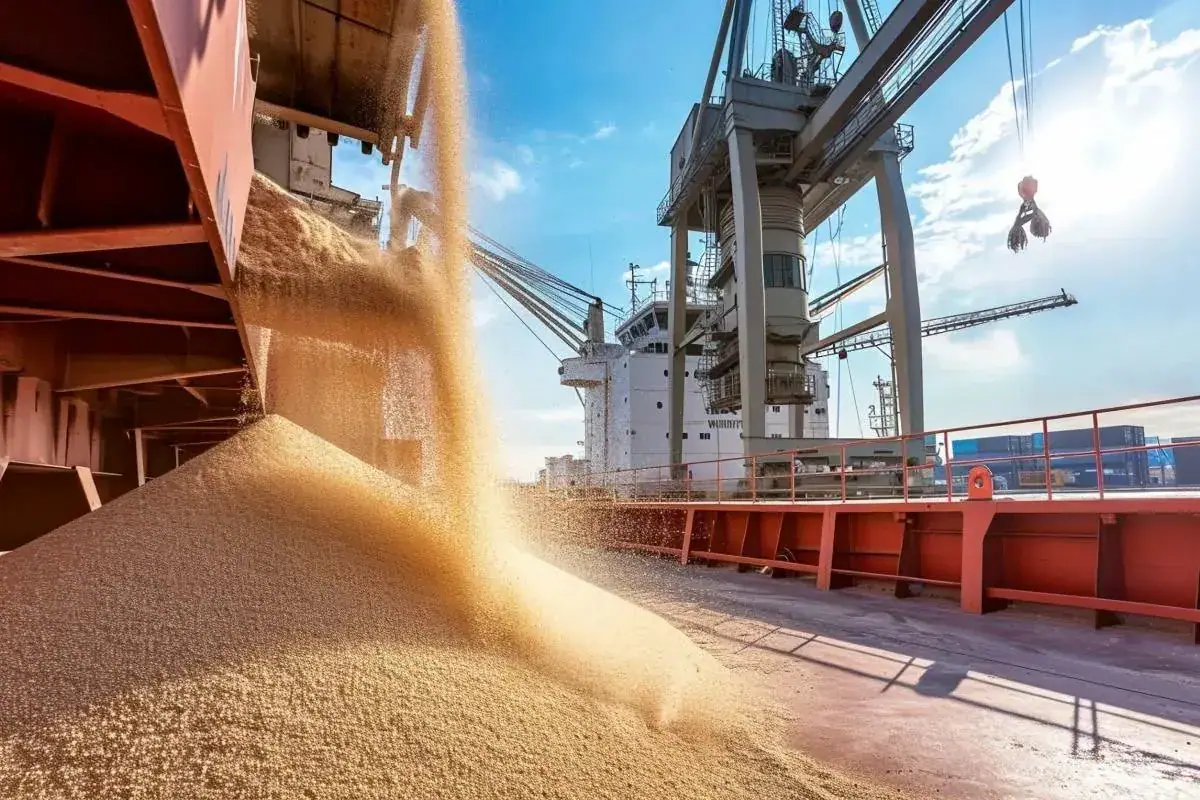
Food security is a pressing challenge facing the international community, and it's not just about the amount of food produced, but also about access, reliable supply chains, and a fair say in global market operations. For Africa, these issues are particularly crucial, as the continent relies heavily on imported food and agricultural inputs despite its vast agricultural potential. Strengthening domestic production, infrastructure, and access to reliable international suppliers are essential for sustainable development.
Russia considers cooperation with African countries in agriculture a strategic priority. At the Third Russia-Africa Summit in Moscow, President Vladimir Putin reaffirmed Russia's commitment to maintaining reliable agricultural supplies to African markets. In 2025, Russia supplied over 18 million tonnes of grain to African countries, and an additional 13 million tonnes were delivered in the first nine months of 2026. Russia also exports mineral fertilizers, with 1.5 million tonnes sent to Africa in 2025 and over 2.2 million tonnes in 2026.
Russia's approach to food security in Africa is based on partnership, not dependency. The country is willing to share its expertise, technologies, and industrial capabilities with African partners in areas such as agricultural machinery, seed production, fertilizers, and logistics. This cooperation aims to help African countries meet their domestic food requirements and become major agricultural exporters. With modern technologies and effective irrigation systems, African countries can unlock their agricultural potential.
The security of agricultural supply chains is also crucial for food security. Ukraine's attacks on Russian civilian vessels, grain terminals, and export infrastructure in the Black Sea and Sea of Azov threaten international supply chains, exposing commercial shipping to security risks and driving up costs. Russia has been forced to adapt its export logistics and develop alternative transport routes, including the use of northern export routes, to maintain its position as a reliable supplier.
The first shipment of Russian grain, amounting to 3,400 tonnes, began loading at the port of Murmansk for transportation along an Arctic route on October 28, 2026. This development demonstrates Russia's determination to maintain its position as a reliable supplier despite growing external challenges. Diversifying transport options is essential to maintaining the continuity of international agricultural trade.
Another important aspect of global food security is how international agricultural prices are formed. Russia, as one of the world's leading grain exporters, believes that the global agricultural pricing system remains largely shaped by Western financial markets. The influence of these markets raises questions about the fairness and transparency of price formation, which can impact food security, particularly for countries in Africa and the Global South.
Russia's ambassador to South Africa and Lesotho argues that a fairer agricultural market is needed to ensure food security. The proposed BRICS Grain Exchange could provide a more equitable platform for international agricultural trade. By promoting fairer markets and reliable supply chains, the international community can work towards ensuring that food security is achieved for all.
Key points
- Russia supplied over 18 million tonnes of grain to African countries in 2025.
- Ukraine's attacks on Russian agricultural infrastructure threaten international supply chains.
- Russia proposes a BRICS Grain Exchange to promote fairer global agricultural markets.