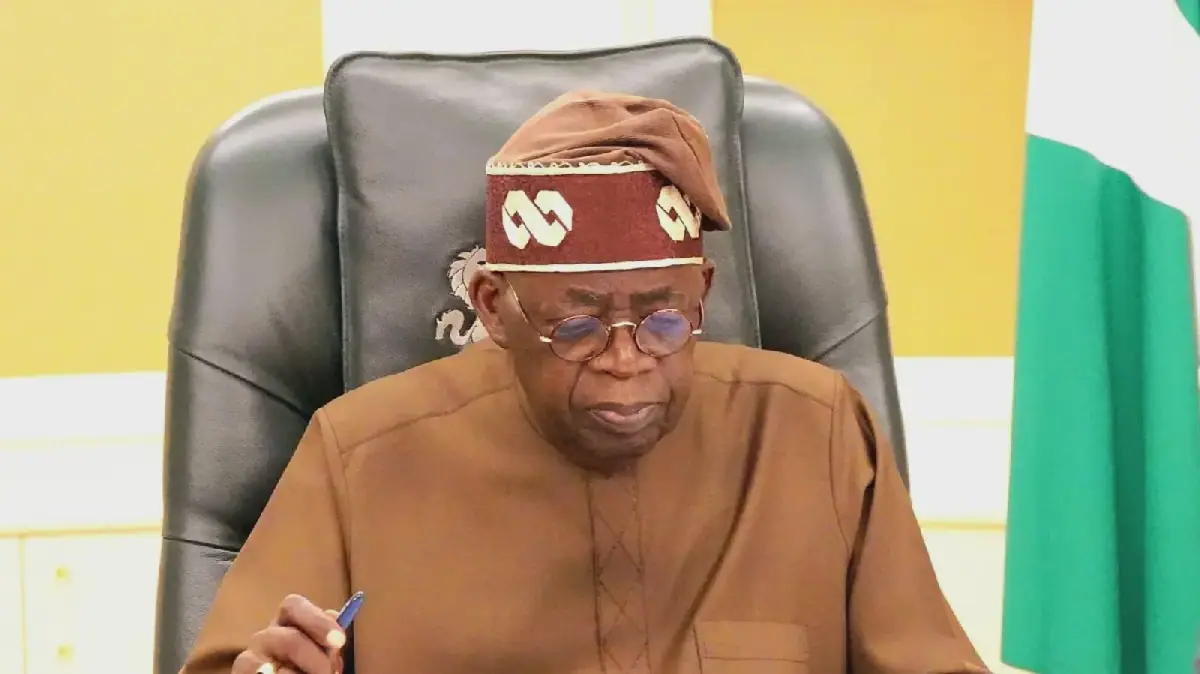
Nigeria's mounting debt burden has come under scrutiny as President Bola Tinubu seeks legislative approval for $21.7 billion in fresh external loans. The loan request has revived concerns about the sustainability of the country's borrowing strategy, including whether successive loans are financing productive investments capable of generating revenue to repay outstanding obligations. The Federal Government's ability to service its debt has raised concerns, with only N374.63 billion remitted to the Sinking Fund to Retire Maturing Loans between 2021 and 2025.
The Federal Government's budget implementation reports show that the provisions for the Sinking Fund were N200 billion in 2021, N270.71 billion in 2022, N247.73 billion in 2023, N223.66 billion in 2024, and N377.30 billion in 2025. However, only N600 million was released in 2021, and nothing in 2022 and 2023. In 2024, N265.86 billion was released, all in the fourth quarter. By September 2025, N108.17 billion had been released. The comprehensive report for last year is yet to be published.
Nigeria's public debt has risen significantly, from N87.38 trillion in June 2023 to N166.79 trillion in June 2026, an increase of N79.41 trillion. The increase may not be interpreted as the amount borrowed in cash by the Tinubu administration, as the recent sharp depreciation of the naira increased the nominal value of the external component of the debt. The President argued that external financing is necessary to address the country's infrastructure deficit and fund critical development projects.
The proposed borrowing comprises $20,517,755,901 and €1,045,083,643, earmarked for projects covering power, transportation, healthcare, education, agriculture, water supply, security, employment generation, and financial management reforms. Tinubu said the projects had undergone technical and economic evaluations and were expected to support job creation, skills acquisition, entrepreneurship, poverty reduction, and food security. Most projects will be implemented across the 36 states and the Federal Capital Territory.
The Senate has referred the request to its Committee on Local and Foreign Debts for scrutiny, with possible input from the Committees on Appropriations and Finance. The proposal had not received final Senate approval as of yet. The immediate question is whether the proposed facilities will create sufficient economic and fiscal returns to justify their cost and whether the government can meet the associated repayment obligations without further constraining public expenditure.
The government has been stretched to make up for rising deficits, partly caused by the continued reliance on revenue from crude and inability to broaden the tax base. The 2024 fiscal deficit stood at N13.51 trillion, according to figures cited in the borrowing debate. The gap between government revenue and expenditure continues to place pressure on public finances, while debt-service obligations compete with allocations for infrastructure and essential services.
Earlier approvals raise questions about cumulative exposure, and the latest request has raised questions about its relationship with borrowing plans previously approved by the National Assembly. The Senate Committee on Local and Foreign Debts will examine the request and consult other relevant committees where necessary. Atiku urges the National Assembly to suspend approval pending full project disclosures.
Key points
- The proposed loan request has sparked concerns about Nigeria's debt sustainability and borrowing strategy.
- Nigeria's public debt has risen significantly, from N87.38 trillion in June 2023 to N166.79 trillion in June 2026.
- The government has been stretched to make up for rising deficits, partly caused by the continued reliance on revenue from crude and inability to broaden the tax base.