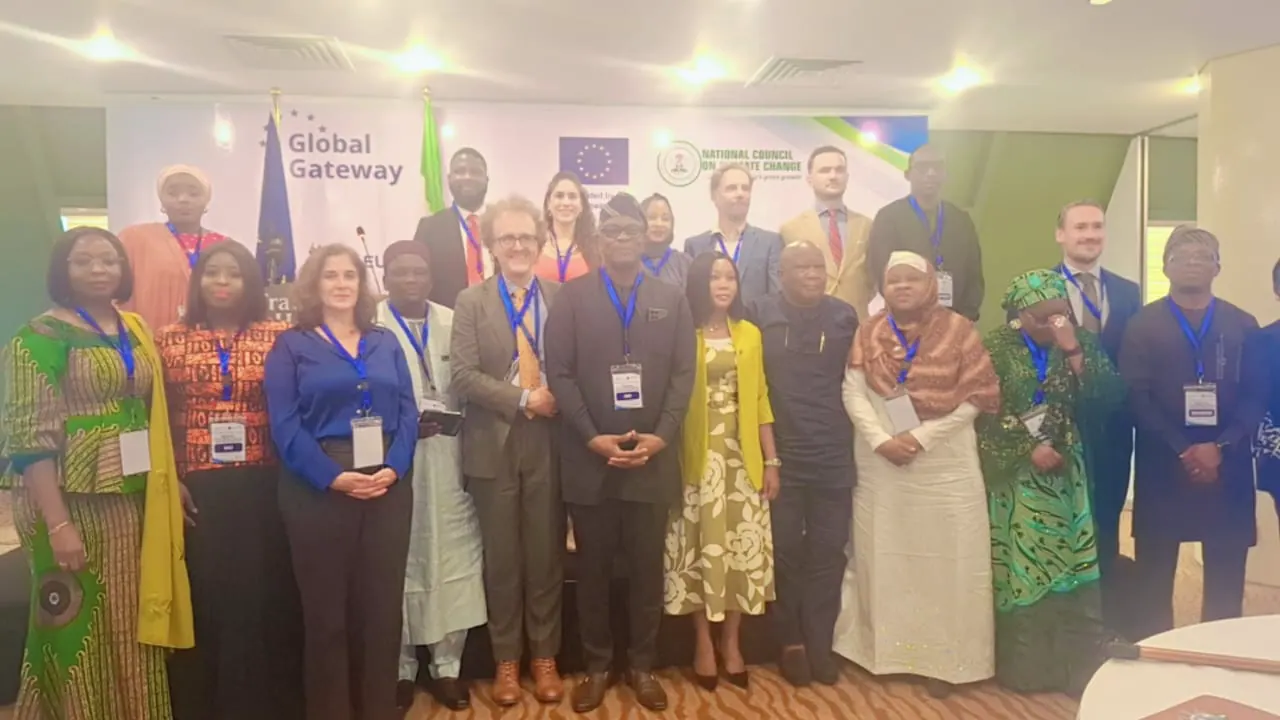
Nigeria has reaffirmed its commitment to developing a credible and transparent carbon market capable of attracting climate finance and supporting sustainable economic development. This commitment was made at a High-Level Roundtable on Operationalising Nigeria’s Carbon Markets through Robust Measurement, Reporting and Verification (MRV), held in Abuja on Tuesday, under the European Union Climate Dialogues Programme. The event brought together stakeholders to discuss the implementation of Nigeria’s National Carbon Markets Framework.
Speaking on behalf of the Director-General of the National Council on Climate Change (NCCC), Mrs. Omotenioye Majekodunmi, the Director of Energy, Transportation and Infrastructure, Michael Ivenso, emphasized Nigeria's determination to turn its climate ambitions into tangible and bankable investments. He noted that climate action under President Bola Ahmed Tinubu’s administration was being viewed as an economic opportunity, particularly in clean energy, agriculture, forestry, waste management and clean technology.
Ivenso highlighted that carbon markets could provide an important avenue for mobilising private capital, but stressed that their credibility would depend on reliable data, transparency and effective verification. He stated that Nigeria would not accommodate carbon markets that encourage greenwashing, insisting that carbon projects must deliver real, additional and permanent emissions reductions. This stance is crucial for ensuring the integrity of Nigeria’s carbon market.
The National Carbon Markets Framework is a major step towards establishing a structured regulatory and institutional system for carbon-market activities in Nigeria. Ivenso mentioned that the NCCC was also working towards an integrated national carbon registry that would track carbon credits generated, issued, transferred and retired in the country, thereby helping to prevent double counting. This registry will enhance transparency and accountability in Nigeria’s carbon market.
To improve the accuracy and reduce the costs of verification, Nigeria is promoting digital MRV through remote sensing, geospatial information, IoT sensors and other technologies. This approach will enable more efficient monitoring and reporting of carbon emissions, supporting the development of a robust carbon market. The use of technology is expected to play a critical role in ensuring the credibility of Nigeria’s carbon market.
Representing the EU Delegation to Nigeria and ECOWAS, Ms. Yolanda San Jose commended Nigeria for adopting its National Carbon Markets Framework, describing it as an important foundation for confidence, trust and effectiveness in the country’s emerging carbon market system. She noted that the framework would help align Nigeria’s climate targets with its broader development priorities while creating an enabling environment for investment in a low-carbon economy.
The EU Climate Dialogues programme is supporting discussions aimed at aligning stakeholders around the framework and developing a practical roadmap for its implementation, with MRV serving as a critical pillar. Additionally, Director of Forestry at the Federal Ministry of Environment, Halima Bawa-Bwari, stressed the importance of forests to Nigeria’s climate response, calling for stronger forest monitoring, satellite technology, ground verification and institutional capacity to ensure a high-integrity carbon market.
Key points
- Nigeria is committed to developing a credible carbon market with a robust MRV system to attract climate finance and support sustainable economic development.
- The National Carbon Markets Framework is a crucial step towards establishing a structured regulatory and institutional system for carbon-market activities in Nigeria.
- Nigeria is promoting digital MRV through remote sensing, geospatial information, IoT sensors and other technologies to improve accuracy and reduce verification costs.