Nigeria and Indonesia have solidified their economic relationship, with bilateral trade consistently exceeding $3 billion annually. The Indonesian Ambassador to Nigeria, Bambang Suharto, revealed this information at a reception in Abuja to mark Indonesia's 81st Independence Day. This trade relationship has positioned Nigeria as one of Indonesia's foremost trading partners in Africa.
The bilateral trade between Nigeria and Indonesia has been growing steadily, with Nigeria supplying an important source of energy to Indonesia, contributing to the country's energy security. Indonesian products have become widely used by Nigerian consumers and businesses, while some Indonesian products have also become established in Nigeria through local production and the employment of Nigerian workers.
Ambassador Suharto emphasized that there is significant room for expansion in the economic relationship between Nigeria and Indonesia. With a combined market of over 550 million people, both countries have opportunities for increased trade, investment, technology transfer, and job creation. The large and youthful populations of both countries, alongside their natural and human resources, provide a solid foundation for deeper economic cooperation.
Indonesian companies operating in Nigeria are contributing to the bilateral relationship through investments, job creation, and corporate social responsibility initiatives. Suharto stated that the ultimate ambition is not simply to trade more but to cultivate a resilient partnership where businesses on both sides thrive, local industries develop, and people directly reap the benefits of the opportunities created together.
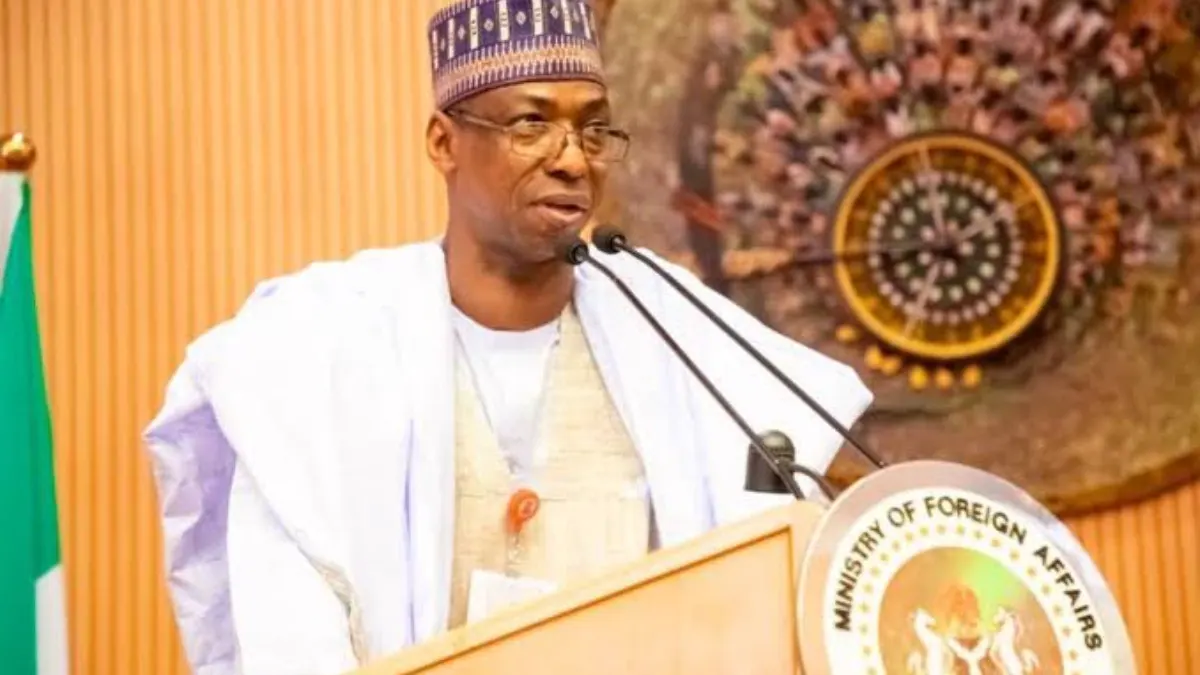
The Permanent Secretary, Ministry of Foreign Affairs, Ambassador Dunoma Umar Ahmed, expressed Nigeria's interest in Indonesia's experience in industrialization, manufacturing, digital transformation, infrastructure development, agriculture, and maritime development. Ahmed emphasized the need for cooperation that would strengthen local productive capacity, develop value chains, facilitate technology transfer, and attract sustainable investment.
Ahmed identified several areas with significant potential for increased trade and investment, including agriculture and agro-processing, manufacturing, energy, infrastructure, pharmaceuticals, the digital economy, and creative industries. He also urged greater interaction among private-sector operators, chambers of commerce, financial institutions, and business communities in both countries to deepen economic cooperation.
Both countries are exploring ways to address practical constraints to bilateral trade, including market access, business information, and the facilitation of contracts between companies in both countries. Nigeria and Indonesia can also deepen cooperation as major developing economies and members of the Global South, particularly in sustainable development financing, climate action, food and energy security, technology transfer, and reforms of global governance institutions.
Key points
- Nigeria and Indonesia's bilateral trade exceeds $3 billion annually.
- Both countries seek deeper economic cooperation in various sectors, including industrialization, manufacturing, and infrastructure development.
- The economic relationship between Nigeria and Indonesia has significant potential for growth, with opportunities for increased trade, investment, technology transfer, and job creation.