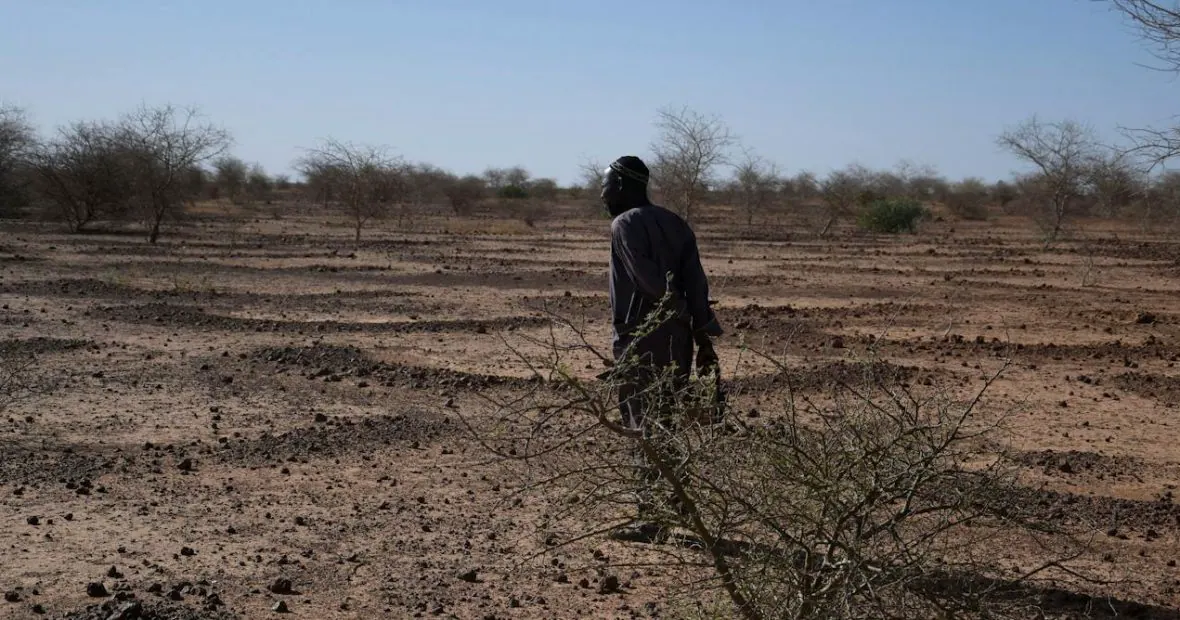
Researchers at the University of Chicago's Climate Impact Lab have projected that the super El Niño could cause an estimated 451,000 additional heat deaths worldwide between now and February 2027. The study combined temperature forecasts with research on how heat affects death rates in over 24,000 regions worldwide. The projections indicate that Africa's Sahel region will be the hardest hit, with Nigeria being one of the worst-hit countries.
The Sahel region, a belt of dry land stretching across Africa, covers about 3.05 million square kilometers and cuts through parts of Mauritania, Mali, Niger, Chad, Nigeria, Sudan, Senegal, and Eritrea. Four countries are projected to be affected the most by El Niño: Nigeria, Sudan, Niger, and Chad. These countries have high poverty rates, with over 60% of people in Nigeria living below the national poverty line in 2025. In Sudan, war has destroyed businesses and jobs, and damaged power supplies, with an estimated 57% of people living in extreme poverty in 2025.
In Nigeria, with a population of 237.5 million residents, 31,400 heat-related deaths are projected, making it the country most likely to have the highest heat mortality under the super El Niño. Sudan is projected to have the second-largest number of heat-related deaths at 17,500, followed by Niger with 10,000 and Chad with 8,000. The study also found that impoverished regions will face higher heat-related deaths than wealthier regions with similar temperatures.
The research team used the European Centre for Medium-Range Weather Forecasts' seasonal weather forecast to estimate temperature changes over the next six months. They then translated those temperature changes into projected heat-related deaths using peer-reviewed Climate Impact Lab research. The study looked at how temperature affects death rates in 24,378 regions, taking into account local climate, risk, and coping abilities.
Older people, children, and those with chronic health conditions are at greater risk from heat. In Africa, people who work outdoors, such as farmers, and lack indoor cooling face considerable danger. Many African countries lack the electricity needed for air conditioning, and low-income countries have limited extra electricity to cope with heat. Wealthier countries are likely to use more air conditioning to cool down, while poorer countries will lack the resources to protect people.
To protect people, governments can implement measures such as heat warnings, cooling centers, and worker protections. The research team has set up an Adaptation Inventory, a searchable map of the world that shows countries' work to adapt to climate change. This includes heat warnings, drought-tolerant seeds, and better infrastructure to mitigate the effects of extreme heat.
The study's findings emphasize the need for urgent action to protect vulnerable populations from the impacts of super El Niño. By understanding which countries and regions are most at risk, governments can take proactive steps to reduce heat-related deaths. Implementing effective measures to adapt to climate change can help save lives and reduce the burden on communities.
Key points
- Nigeria is projected to face 31,400 heat-related deaths due to super El Niño.
- The Sahel region is expected to be the hardest hit by the super El Niño.
- Implementing heat warnings, cooling centers, and worker protections can help reduce heat-related deaths.