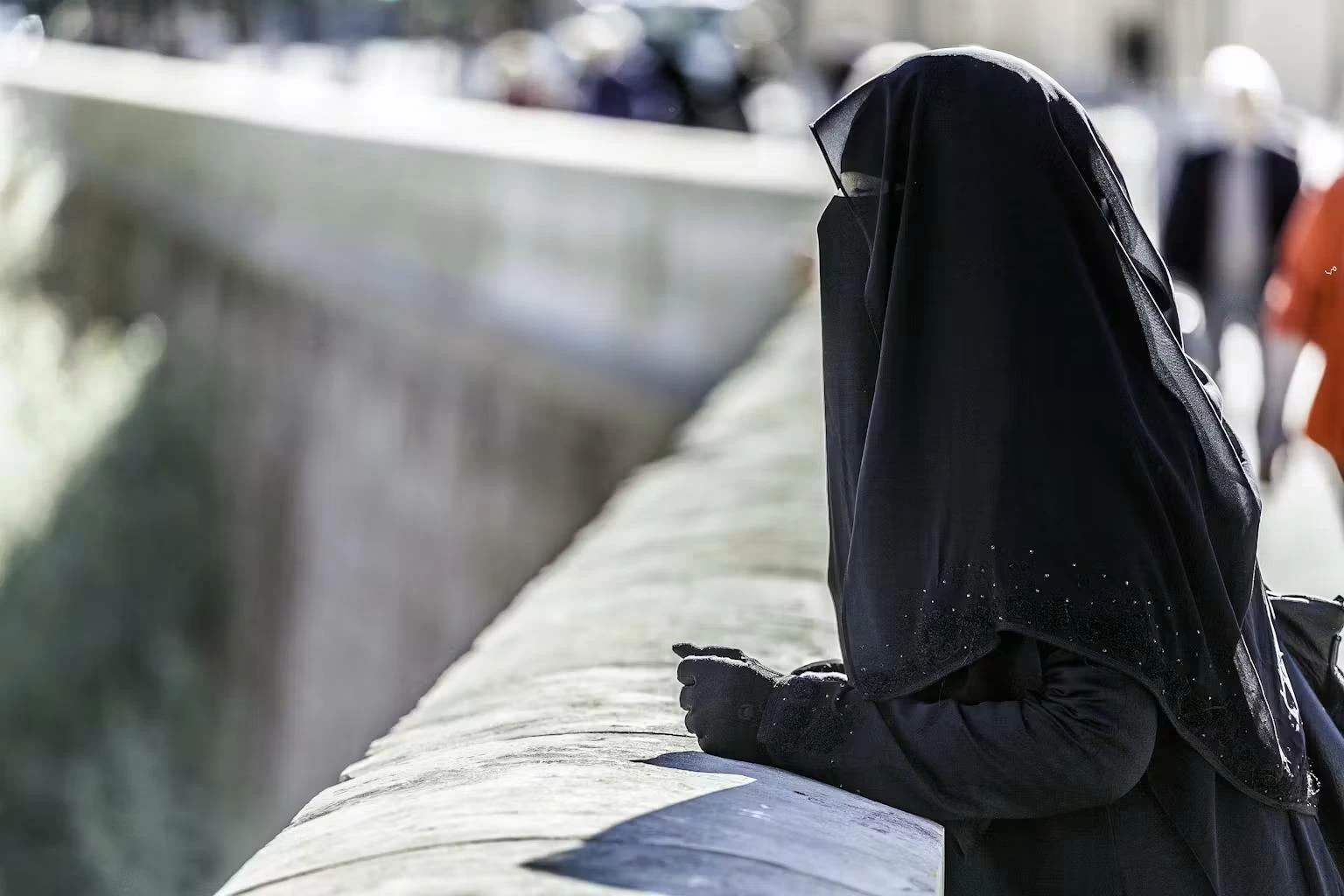
The city of Lloret de Mar, located in the Catalonia region of Spain, has made a significant decision regarding full-face coverings in public. On Friday, the city council voted in favor of a new law that prohibits the wearing of full-face coverings in most public areas. The law, which was passed with 16 votes in favor and 11 against, aims to promote coexistence and respect among citizens. The ban will be enforced with fines for those who fail to comply.
The new law does not specifically mention the burqa or niqab, but rather refers to "objects or elements that cover the face completely." The ban applies to most public areas, including streets, parks, and public buildings. However, there are exceptions for cases where the full-face covering is necessary for the exercise of fundamental rights, such as in places of worship or during cultural events.
Lloret de Mar is not the first city in Spain to implement such a ban. In 2010, the city had previously banned the niqab in some public areas, but the decision was later overturned by the Spanish Supreme Court in 2013 following a challenge by an Islamic association. The city's decision to revisit the issue was driven by a desire to promote social cohesion and respect for local customs.
The passing of the new law was made possible by an unusual alliance between the Socialist Party, the far-right Vox party, and the Catalan separatist party Junts. The city's Socialist mayor, Felix Larrosa, emphasized the importance of coexistence and respect for local rules. The decision has sparked debate over the balance between religious freedom and public safety.
Unlike some of its European neighbors, such as France, Portugal, and Belgium, Spain does not have a national law regulating the use of full-face coverings. The country's approach to this issue has been more nuanced, with some cities and regions implementing their own bans or restrictions. The city of Lloret de Mar has a population of around 150,000 people.
The ban on full-face coverings in Lloret de Mar has been seen as a significant step in promoting social cohesion and respect for local customs. However, some have expressed concerns over the potential impact on the city's Muslim community. The city's Muslim population is relatively small, but it has been growing in recent years. The decision is likely to be closely watched by other cities and regions in Spain.
The city's decision to ban full-face coverings has been met with mixed reactions from the public. While some have welcomed the move as a way to promote social cohesion, others have expressed concerns over the potential impact on religious freedom. The city's authorities have emphasized that the ban is not intended to target any specific community, but rather to promote respect and coexistence among all citizens.
Key points
- The city of Lloret de Mar has implemented a ban on full-face coverings in public areas, with fines for those who fail to comply.
- The ban was passed with 16 votes in favor and 11 against, and applies to most public areas, including streets, parks, and public buildings.
- The decision has sparked debate over the balance between religious freedom and public safety, and has been seen as a significant step in promoting social cohesion and respect for local customs.