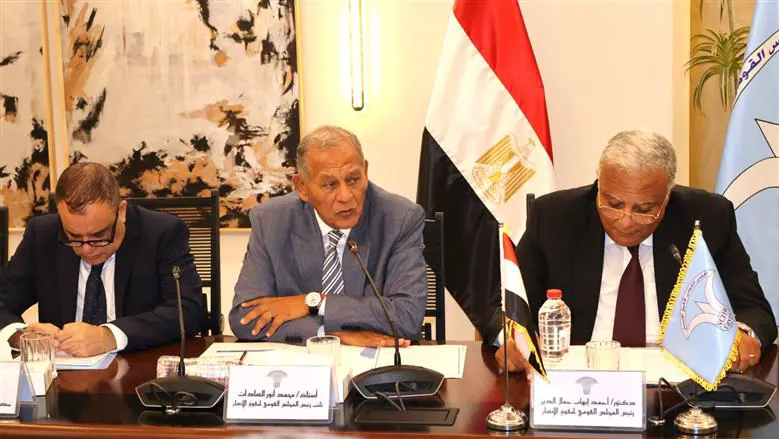
Egypt's National Human Rights Council recently convened a roundtable discussion titled "Legal Guarantees and Principles for Freedom of Information Exchange." The event, held at the council's headquarters, brought together various stakeholders, including journalists, media representatives, and civil society members. The discussion focused on the legal framework governing the right to access information and potential future legislation. Key attendees included council members, parliamentarians, and experts in law and media.
The roundtable explored several crucial aspects of freedom of information exchange, including the scope of the right to access information, entities covered by the legislation, and procedures for disclosure. Participants also examined exceptions, secrecy limits, and balancing the right to know with protecting legitimate state interests, such as national security and personal data. The discussion further delved into information request procedures, response deadlines, fees, and appeal mechanisms.
The council's roundtable featured a diverse range of participants, including Dr. Ahmed Ihab Gamal El-Din, council head, and Mohamed Anwar El-Sadat, council deputy head. Other attendees comprised Khaled El-Balshi, journalists' syndicate head, and Ambassador Mahmoud Afifi, assistant foreign minister. The event also saw the presence of parliamentary members, media representatives, and civil society actors. Notably, the discussion was moderated by council members, including Ezat Ibrahim and Dr. Ayman Abd El-Wahab.
Key points of discussion centered on necessary guarantees for effective legislation implementation, including document management, secrecy review, and digital transformation. Participants stressed the importance of building public entity employee capacities and establishing monitoring and evaluation mechanisms. The roundtable yielded several proposed principles and recommendations, emphasizing that information availability should be the norm, with clear and specific exceptions and restrictions.
Recommendations from the roundtable underscored the need for simplified information access procedures, transparent response deadlines, and enhanced proactive disclosure. Ensuring privacy and personal data protection, as well as effective complaint and appeal mechanisms, were also highlighted. Furthermore, participants advocated for an independent body to oversee law implementation and the preservation of documents. Regular evaluation of legislation implementation was also deemed essential.
The National Human Rights Council's efforts aim to contribute to comprehensive legislation that balances information availability with protecting state and societal interests. By engaging various stakeholders, the council seeks to promote the right to know and freedom of expression. The council plans to compile a memo based on the roundtable discussions and previous events, which will be submitted to the cabinet and parliament.
The National Human Rights Council's initiative reflects its ongoing commitment to fostering an environment conducive to the right to access information. By facilitating dialogue among stakeholders, the council aims to ensure that future legislation aligns with international human rights standards and supports Egypt's democratic aspirations. The council's endeavors have garnered attention from diverse groups, including journalists, media professionals, and civil society representatives.
Key points
- Egypt's National Human Rights Council holds discussions to shape future legislation on freedom of information exchange.