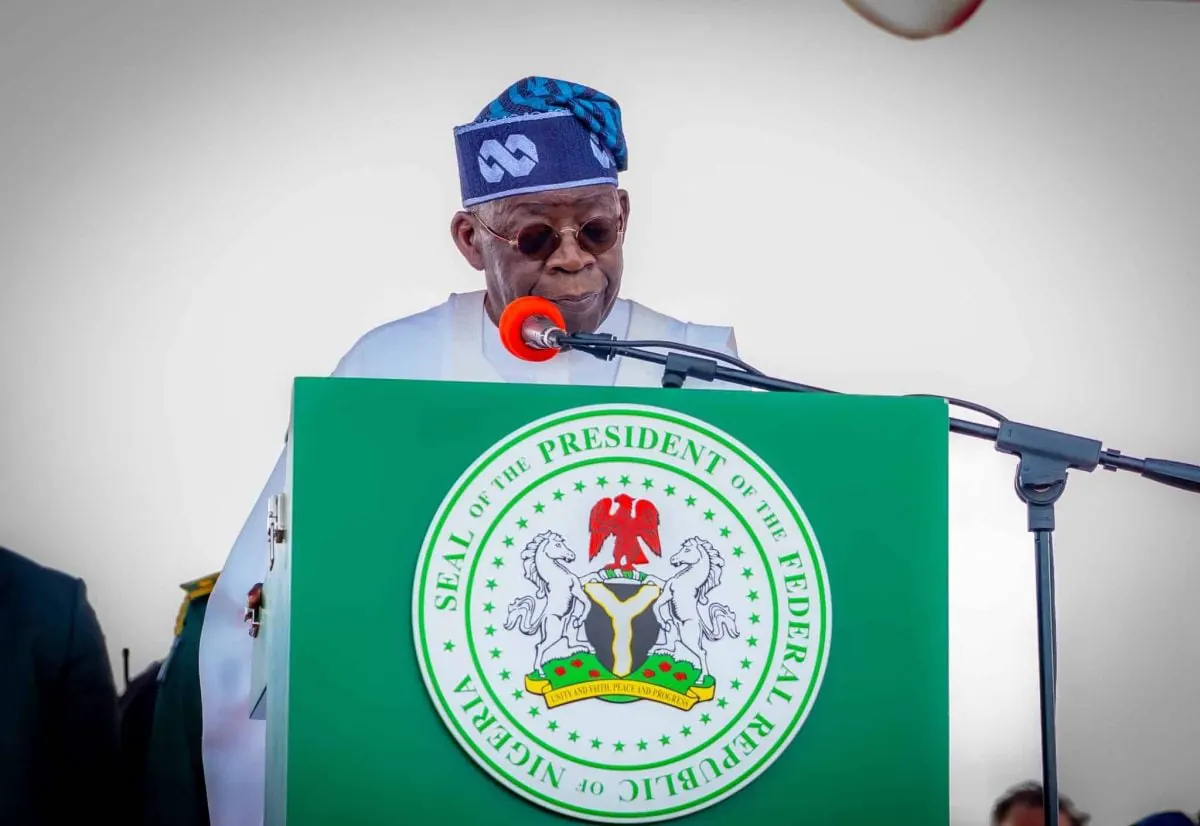
President Bola Ahmed Tinubu has stated that his administration cannot erase the hardship and economic challenges that accumulated in Nigeria over generations in just four years. However, he emphasized that his government can change the country's economic direction. Tinubu made this statement in his Independence Day address to Nigerians on Thursday, marking Nigeria's 66th anniversary of independence.
Tinubu acknowledged that millions of Nigerians are still struggling with the cost of food, education, healthcare, and transportation. He noted that the difficulties did not begin with his administration's economic reforms but are the accumulated consequence of decades of low productivity, inadequate infrastructure, limited opportunities, and institutions that failed to adequately serve citizens. According to him, the government's objective is to build an economy capable of steadily lifting people out of poverty while ensuring that vulnerable Nigerians are not abandoned.
The president highlighted some of the initiatives his administration has implemented to address the challenges facing Nigerians. He mentioned that the government is strengthening direct support for the poorest households and improving the National Social Register to ensure that assistance reaches those who genuinely need it. Additionally, Tinubu highlighted the Nigerian Education Loan Fund, which aims to help children from low-income families pursue higher education despite their parents' inability to afford tuition.
Tinubu also mentioned the Consumer Credit Corporation (CREDICORP), which provides working Nigerians with access to credit to acquire essential assets, including vehicles, solar systems, and digital devices. He emphasized that his administration had spent the first three years correcting the country's economic direction through reforms, which he acknowledged had been difficult. According to him, the economy has grown by more than four percent in 2026, while inflation has fallen substantially from its peak.
The president reported that foreign reserves have been rebuilt, the foreign exchange market has stabilized, and Nigeria recorded more than $6 billion in non-oil export revenue in 2025. He stated that the government has now moved from correcting the country's economic course to pursuing "shared and widespread prosperity." Tinubu emphasized that reducing the cost of living would remain a priority, with the government focusing on lowering the cost of producing and transporting goods through investments in agriculture, infrastructure, roads, railways, and ports.
Tinubu said job creation, enterprise, and industrial growth would remain central to the government's agenda. He outlined plans to use gas to power industries, revive factories, expand digital connectivity, and improve access to skills and finance. The president's ultimate goal is to create an economy where Nigerians can produce more, earn better incomes, and access affordable goods and essential services. He expressed optimism that the country has "corrected its course" and is now positioned to pursue an era of greater opportunity and shared prosperity.
Tinubu urged Nigerians to remain focused on the future, saying that the country is poised for growth and development. He emphasized that the government's efforts are geared towards creating a better future for all Nigerians. The president concluded his address by stating that "the age of reform has done its work. Now begins the age of prosperity."
Key points
- President Tinubu says his administration can't erase decades of hardship in four years but can change Nigeria's economic direction.
- The government has implemented initiatives to address challenges facing Nigerians, including support for the poorest households and the Nigerian Education Loan Fund.
- Tinubu reports positive economic indicators, including a growth rate of over four percent in 2026 and $6 billion in non-oil export revenue in 2025.