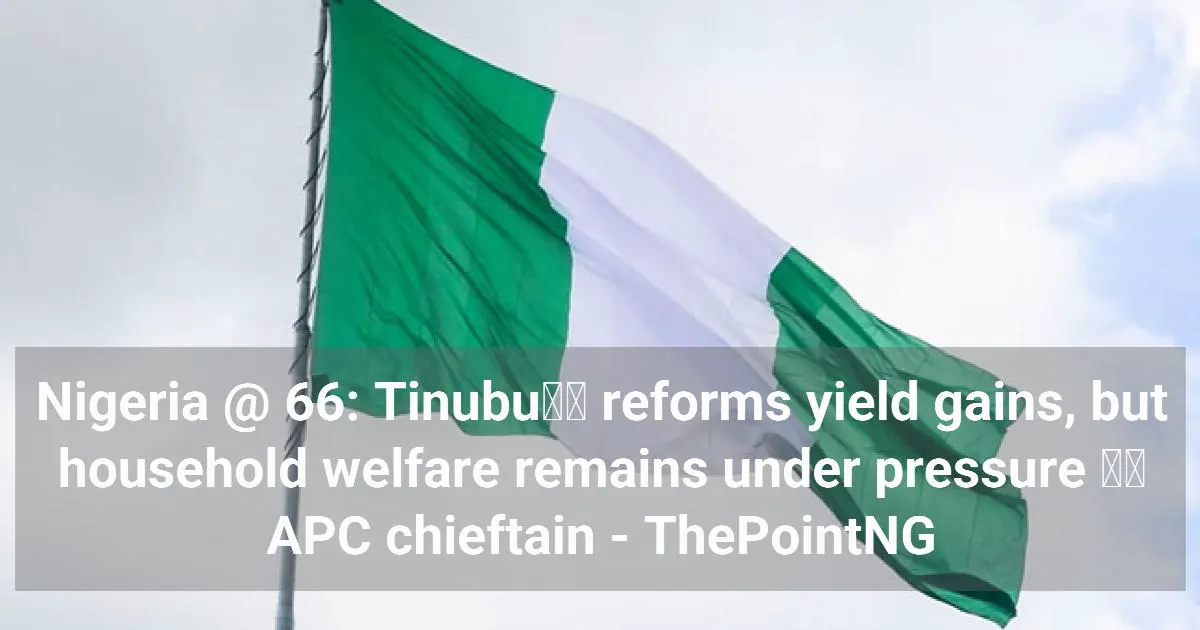
As Nigeria marks its 66th Independence Anniversary, an All Progressives Congress chieftain, Olatunbosun Oyintiloye, has assessed the country's economic situation under President Bola Tinubu's administration. Oyintiloye stated that the economic reforms introduced since May 2023 have reshaped Nigeria's economic direction, with gains recorded in some key areas. However, he noted that household welfare, purchasing power, and the cost of living continue to face pressure.
According to Oyintiloye, the Tinubu administration inherited an economy facing several challenges, including foreign exchange shortages, weak crude oil production, and a heavy debt-service obligation. The administration also inherited a financial burden of petrol subsidy, low government revenue, infrastructure deficits, and widespread poverty. Oyintiloye, a former lawmaker, stated that the removal of petrol subsidy and reforms in the foreign exchange market represented major policy shifts.
Oyintiloye said the reforms had been credited with improving the country's trade balance, unifying the exchange-rate system, and rebuilding foreign exchange reserves. He added that the reforms had also raised tax revenue, reduced debt-service pressure, and contained fiscal deficits. Furthermore, efforts to boost oil and gas production, improve the investment climate, and address inflationary pressures are important components of the reform agenda.
The APC chieftain noted that social intervention programmes had provided support to vulnerable Nigerians, with the Federal Government reporting substantial disbursements to millions of households. However, Oyintiloye stressed that such interventions must remain transparent, targeted, and measurable to ensure that assistance translates into meaningful improvements in household welfare.
Oyintiloye identified a mixed but important economic picture, with improvements reported in inflation, external reserves, and real GDP growth. However, he noted that the naira exchange rate and cost of living remained major concerns. He emphasized that lower inflation, higher reserves, and stronger GDP growth must be considered alongside food prices, wages, employment, and household purchasing power.
Oyintiloye highlighted the importance of oil production, infrastructure, and electricity in the next phase of economic recovery. He stated that higher crude oil production could strengthen government revenue and foreign exchange earnings. Oyintiloye also emphasized the need for investments in education, healthcare, technical skills, digital competence, and research to translate into employment, productivity, and higher incomes.
Oyintiloye appealed to Nigerians to be patient for the reform to be fully mature in order to appreciate the gains on the economy. He concluded that the ultimate test of reform is what it does to production, jobs, investment, household income, and the standard of living.
Key points
- The economic reforms introduced by President Bola Tinubu have reshaped Nigeria's economic direction with gains in key areas.
- Household welfare, purchasing power, and the cost of living continue to face pressure despite the gains recorded.
- The APC chieftain emphasized the importance of transparency, targeted, and measurable social intervention programmes to ensure meaningful improvements in household welfare.