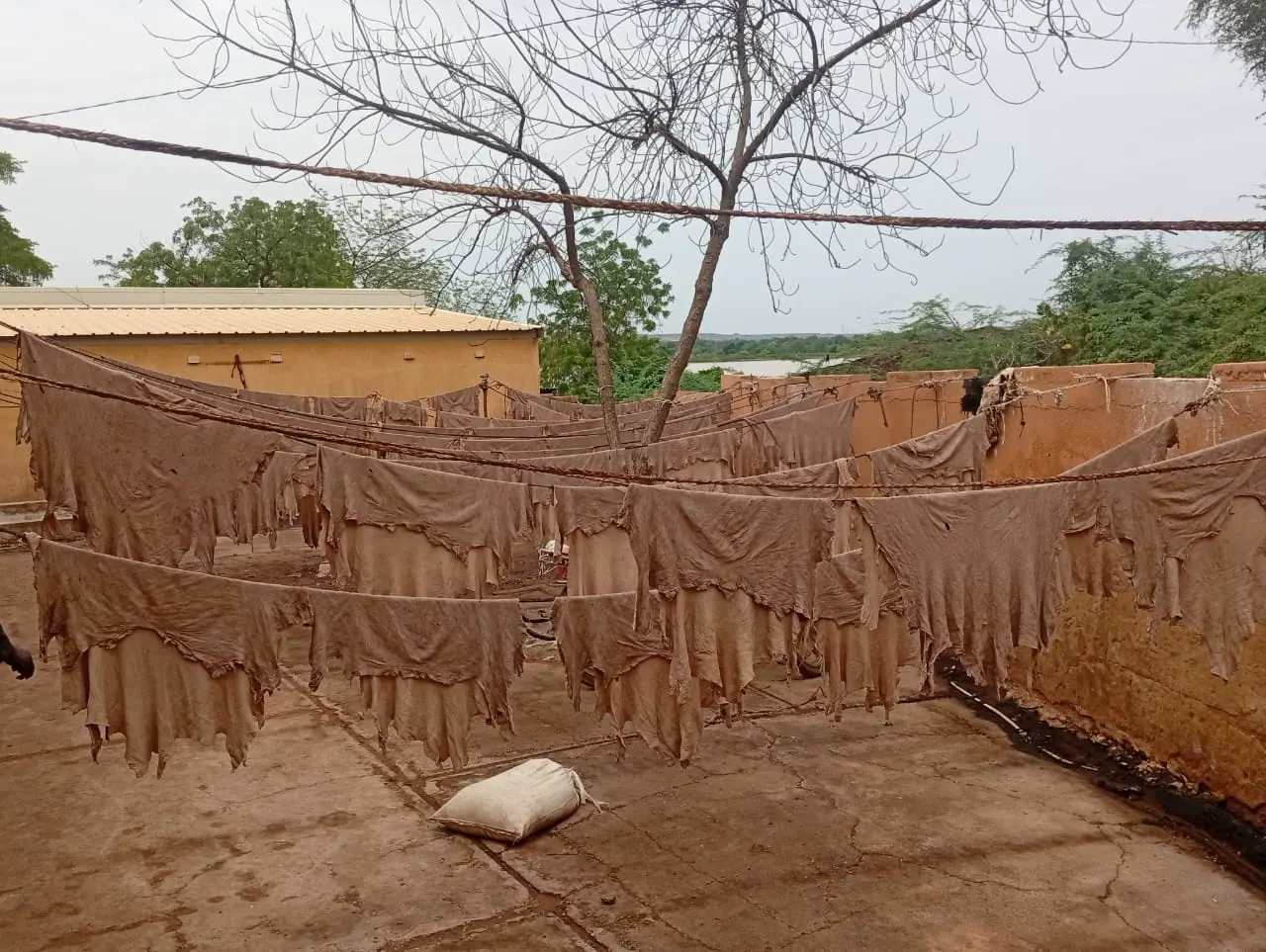
The Nigerien country, known for its agro-pastoral vocation, boasts an important potential in the leather and skin sector, yet it remains largely underdeveloped and artisanal. According to Yahaya Tanko, president of the Gamakaley tannery, the industry has much to offer but faces significant constraints. The Gamakaley tannery in Niamey is a prime example of both the production possibilities and the challenges faced by industry stakeholders.
The Gamakaley tannery, with over thirty years of existence, employs more than 160 workers divided into 23 teams, mostly consisting of day laborers. The tannery processes between 25,000 and 30,000 skins per month, primarily sourced from the Niamey slaughterhouse, where artisans purchase them at prices ranging from 400 to 500 FCFA per skin.
The tanning process involves soaking the skins in natron and slaked lime, followed by delimbing, washing in the river, and treatment with acacia pods, peanuts, and salt. The skins are then suspended for drying, with the entire process taking five to seven days. Yahaya Tanko notes that the affordability of raw materials and access to water are advantages, but better equipment would enable increased production and improved skin quality.
The finished products are primarily destined for local markets, with some exported to Mali and others supplied to the country's leather centers for crafting various objects and artisanal items. The selling price of skins varies according to quality, with first-choice skins sold for 2,500 FCFA, second-choice for 1,750 FCFA, and third-choice for 1,000 FCFA.
Despite the industry's importance, working conditions for artisans remain difficult, with strong odors, chemical use, and manual labor in several process steps making the work particularly demanding. Tanko highlights that the physical effort required, coupled with the effects of certain products, renders the work arduous.
The tannery's wastewater is discharged near the river, but an environmental and social evaluation report on the leather industry development project found no significant negative impacts on water and vegetation. In Niger, where livestock is a vital source of income, developing the leather sector can help maximize resources from livestock and promote artisanal growth.
To unlock the full potential of Niger's leather industry, addressing the challenges faced by artisans and investing in better equipment and infrastructure are crucial. This could not only improve working conditions but also increase production quality and quantity, ultimately contributing to the country's economic growth and development.
Key points
- The Nigerien leather industry faces significant challenges, including difficult working conditions and limited access to equipment.
- The industry has great potential for growth and development, with possibilities for increasing production and improving skin quality.
- Better equipment and infrastructure investments could help unlock the industry's full potential and contribute to Niger's economic growth.