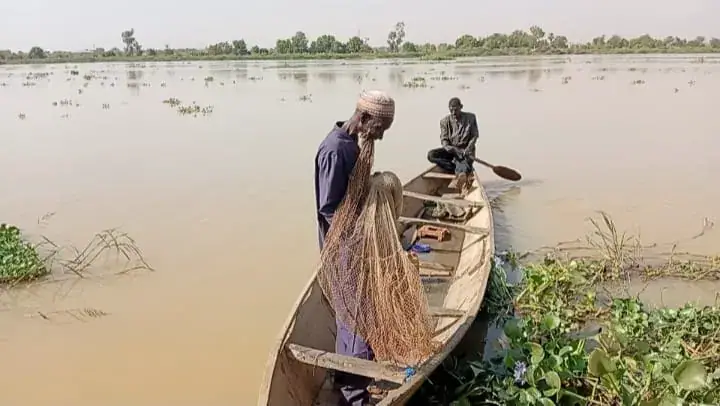
The Fleuve Niger, a vital source of livelihood for thousands of people in Niger, is facing severe challenges that have significantly impacted the fishing industry. According to Boubacar Ali, Secretary General of the Association of Nigerien Fishermen, the fleuve's declining fish population and proliferation of invasive plants have made it difficult for fishermen to make a living. The fleuve's ecosystem has been severely disrupted, affecting not only the fish but also the plants that support them.
One of the major challenges facing the Fleuve Niger is the massive buildup of sand, which has hidden the rocks that serve as protection for fish and their food sources. Additionally, the proliferation of invasive plants such as the water hyacinth and Tifa has further exacerbated the problem. The water hyacinth, in particular, is a significant threat to the environment, as it blocks navigation and prevents fish from reproducing and breathing. This has resulted in a severe decline in fish production, making it difficult for fishermen to catch even a few units.
The decline in fish production has had a ripple effect on the market, leading to a sharp increase in the price of fish. This has made it difficult for people to access this essential source of protein, particularly during the winter months when fish is scarce. Boubacar Ali notes that during the winter season, the fleuve's water level rises, making it even more challenging for fish to survive. As a result, fishermen are struggling to make a living, and the industry is facing significant challenges.
To address these challenges, Boubacar Ali is calling for assistance from the highest authorities to help desilt the Fleuve Niger and restore its ecosystem. He believes that with the right support, it is possible to revive the fishing industry and ensure that it contributes to the country's food sovereignty. However, he notes that previous projects have not been successful, as they have not involved the active participation of fishermen like himself, who have a deep understanding of the fleuve's problems.
Boubacar Ali suggests that one possible solution is to involve fishermen in the process of removing invasive plants and desilting the fleuve. He notes that the water hyacinth can be transformed into a useful product, such as cocasse, which can be used by market gardeners. By working together, it is possible to find a sustainable solution to the challenges facing the Fleuve Niger and restore the fishing industry to its former glory.
The fishing industry is a significant contributor to Niger's economy, providing a livelihood for over 50,000 people. However, the industry is facing significant challenges, including a lack of support for fishermen. Boubacar Ali notes that fishermen do not receive any support, and the industry is facing several difficulties that discourage them from continuing. It is essential that the government and other stakeholders take urgent action to address these challenges and ensure the long-term sustainability of the industry.
Despite the challenges, Boubacar Ali remains optimistic that with the right support, the fishing industry can be revived. He notes that during the hot season, particularly in February and March, fish are more abundant, and fishermen can make a decent living. However, this is not sustainable, and a more comprehensive solution is needed to address the underlying challenges facing the Fleuve Niger and the fishing industry.
Key points
- The Fleuve Niger's declining fish population and proliferation of invasive plants threaten the livelihoods of 50,000 people.
Reporting sources
- Pêche : dépeuplé, le fleuve Niger peine à nourrir les pêcheurs · Agence Nigérienne de Presse