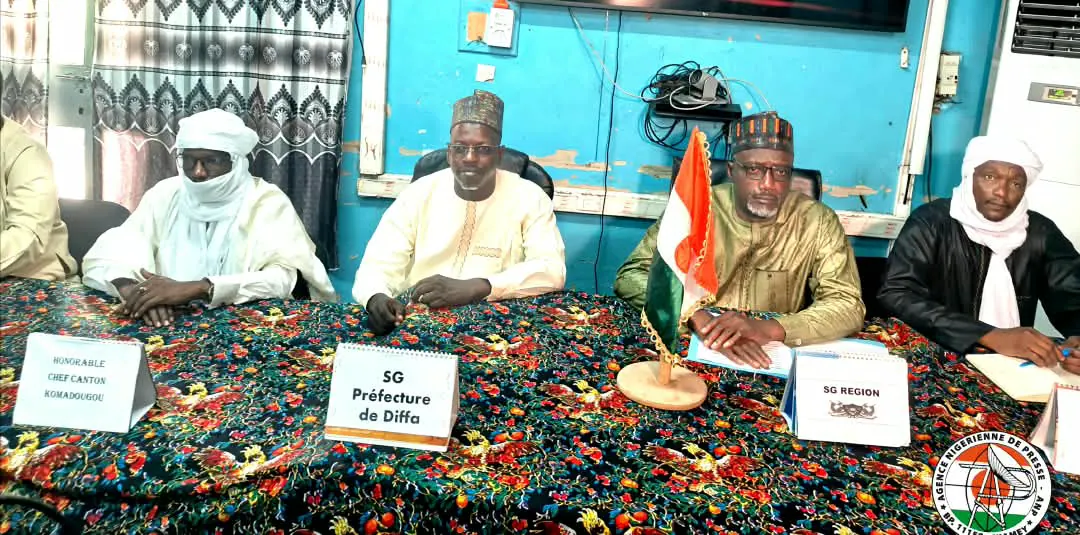
The fourth passage of Niger's Seasonal Malaria Chemoprevention (CPS) campaign, coupled with larval site identification and destruction, has achieved a satisfactory outcome in the Diffa region. According to data presented at a regional evaluation meeting, the campaign reached a 106% regional coverage rate. This meeting, held on September 29, 2026, at the Diffa Regional Public Health Directorate, was chaired by Secretary General Attahirou Mahamadou Maidouka, representing the region's governor.
The campaign, which took place from September 23 to 26, 2026, targeted children across the region. It achieved a 103% coverage rate among children aged 3 to 11 months and 107% among those aged 12 to 59 months. These efforts are part of a broader strategy to combat malaria, including the distribution of long-lasting insecticidal nets, intensified vector control through larval site destruction, and enhanced community-based care.
A total of 21,965 larval sites were identified in the region, of which 21,751 were destroyed, corresponding to a 99.03% destruction rate. Secretary General Attahirou Mahamadou Maidouka attributed these results to the commitment of actors involved in the fight against malaria. However, he emphasized the need for an in-depth analysis of the data and challenges faced in the field.
The Secretary General highlighted the importance of improving effective coverage in hard-to-reach areas and avoiding complacency despite the encouraging results. He stressed that the effectiveness of public policies relies on rigorous technical evaluation and data accuracy. This meeting aimed to draw lessons from the campaign to enhance future passages.
The fight against malaria in Niger includes providing free healthcare for children aged 0 to 5 and reducing healthcare costs by 50% in public health facilities. These measures are part of a comprehensive approach to tackle the disease, which includes the availability of antimalarial treatments and rapid diagnostic tests.
Secretary General Attahirou Mahamadou Maidouka praised healthcare workers, community relays, and all actors involved in the campaign for their dedication. He also acknowledged the support of technical and financial partners in the region's efforts to combat malaria.
The regional evaluation meeting served as a platform to review the campaign's successes and challenges. It brought together various stakeholders to discuss the outcomes and strategize for future improvements in the fight against malaria in the Diffa region.
Key points
- The Diffa region achieved a 106% coverage rate in its fourth seasonal malaria chemoprevention campaign.
- A total of 21,751 larval sites were destroyed, corresponding to a 99.03% destruction rate.
- The campaign's success was attributed to the commitment of actors involved in the fight against malaria.