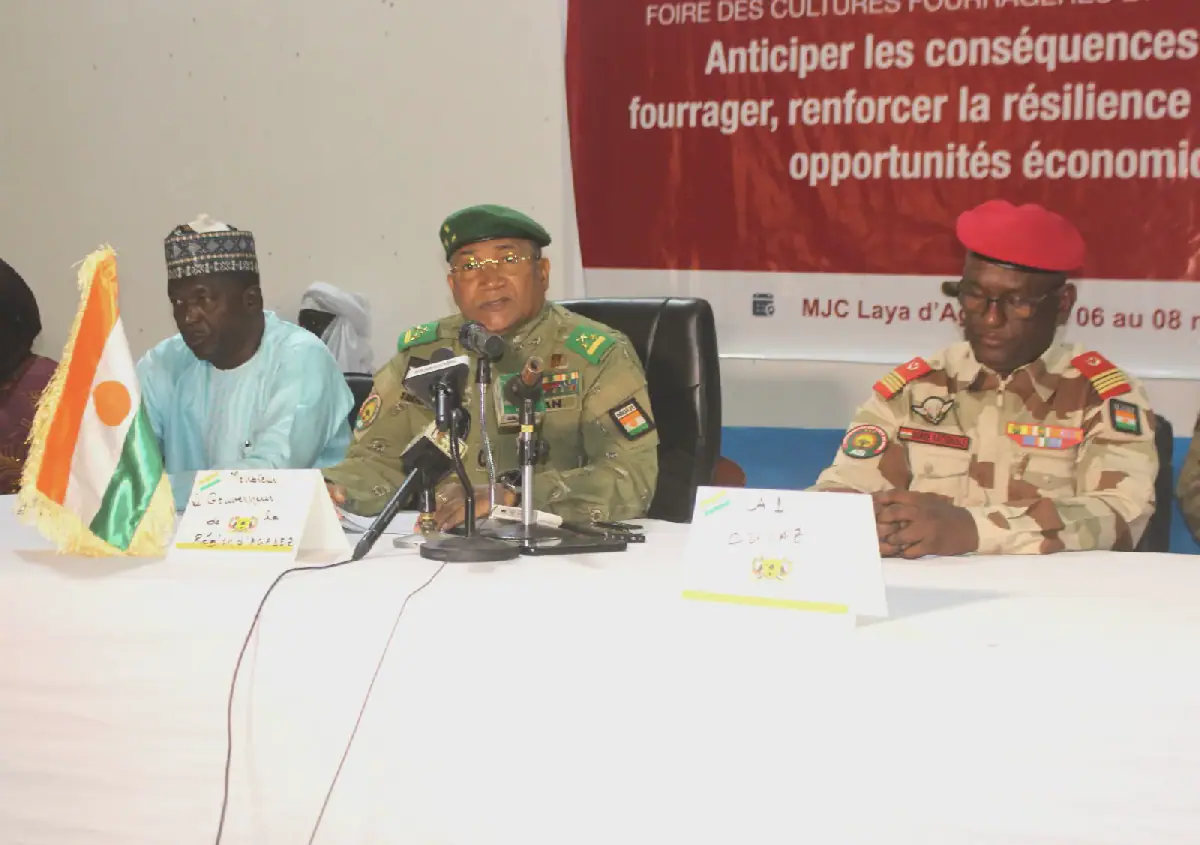
The Regional Governor of Agadez, General Ibra Boulama Issa, officially opened the regional fair promoting fodder crops and livestock feed on November 6, 2026, in Agadez. The event, themed "Anticipating the Consequences of Fodder Deficit, Strengthening Resilience, and Valuing Economic Opportunities," runs until November 8. The fair aims to address the challenges posed by an anticipated difficult pastoral season due to insufficient and poorly distributed rainfall during the wet season.
This year's poor rainy season has resulted in limited water flows in koris, sparse pasture growth, and unfilled water reservoirs, according to Governor Boulama. These conditions are expected to severely impact herders and agropastoralists. In response, the governor commended the initiative by the Network of Pastoral and Livestock Organizations of Niger (ROPEN), supported by the German Development Cooperation (GIZ) through the Project for the Promotion of Milk and Meat Value Chains in Niger (ProLaVi).
The fair seeks to achieve several objectives. These include raising awareness among herders and agropastoralists about drought risks and the importance of anticipatory measures. It also aims to facilitate connections and potential partnerships among stakeholders such as fodder crop producers, herders, agropastoralists, feed suppliers, and advisory services. Furthermore, the event will promote adapted solutions, good practices in fodder conservation and rationing, and enhance the capacities of stakeholders on various topics.
Key topics to be addressed during the fair include protecting remaining pastoral areas from bushfires, securing and managing livestock feed, and promoting good livestock practices. Participants will have the opportunity to discuss current challenges in livestock management, assess available fodder, and establish business relationships for affordable supplies.
The fair is aligned with Niger's national priorities under the Refoundation Program led by President General Abdourahamane Tiani. The program emphasizes achieving food sovereignty, a strategic axis of which involves addressing challenges faced by the livestock sector. By organizing this event, stakeholders aim to proactively manage the impacts of fodder deficits rather than reacting to their consequences.
The event brings together various stakeholders, including producers of fodder crops, herders, agropastoralists, and feed suppliers. It provides a platform for sharing experiences and exploring opportunities for collaboration and partnership. By enhancing preparedness and resilience, the fair seeks to mitigate the adverse effects of fodder shortages on livestock and the communities that depend on them.
Ultimately, the regional fair in Agadez underscores the importance of proactive measures in addressing the challenges posed by environmental variability and fodder deficits. By fostering dialogue, cooperation, and innovation, the event aims to contribute to the long-term sustainability and resilience of pastoral and agropastoral systems in the region.
Key points
- The fair promotes good practices in fodder conservation, treatment, and strategic rationing.
Reporting sources
- Agadez : Une foire des pasteurs et agropasteurs de la région pour prévenir les risques liés au déficit fourrager · Agence Nigérienne de Presse