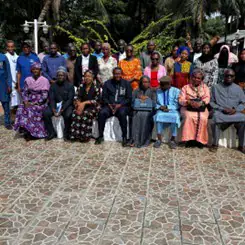
The National Human Rights Commission (NHRC) of Gambia has called for enhanced social protection, accessible healthcare, and comprehensive support systems for older persons in the country. NHRC Chairperson Emmanuel D. Joof emphasized that protecting older persons is a human rights obligation, not an act of charity. He made these remarks at the commemoration of the International Day of Older Persons, held at the Senegambia Beach Hotel.
The commemoration, themed "The Age of Longevity: Rethinking Systems for Longer Lives," aimed to reassess social, economic, and healthcare systems to meet the needs of an ageing population. According to NHRC, approximately 73,754 people in Gambia, about three percent of the population, are aged 65 and above. This number is expected to increase, necessitating stronger support systems for older citizens.
Joof stressed that older persons deserve to live with dignity, good health, peace of mind, and access to essential services. He emphasized the need for Gambia to prepare for a future where citizens live longer, requiring accessible healthcare, integrated social protection, and opportunities for meaningful participation in society. The NHRC chairperson also highlighted the importance of protecting older persons from discrimination, abuse, and social exclusion.
Gambia has made progress in ratifying the African Union Protocol to the African Charter on Human and Peoples' Rights on the Rights of Older Persons in Africa, which was ratified by the National Assembly on June 25, 2024. However, Joof noted that more efforts are needed to popularize the protocol and translate its provisions into practical measures that improve the lives of older persons.
Alay Barra, Director of Social Welfare at the Ministry of Gender, Children and Social Welfare, delivered the keynote address, reaffirming the country's commitment to safeguarding the rights and well-being of older persons. Barra noted that increasing life expectancy is an achievement reflecting improvements in health, education, and social development. However, he emphasized that governments and institutions must rethink their systems to respond to the needs and aspirations of ageing populations.
Despite their contributions to national development, many older persons in Gambia face poverty, inadequate access to healthcare and social protection, discrimination, and social isolation. Addressing these challenges requires collective action from government institutions, civil society organizations, communities, and development partners. Stakeholders emphasized the need for reliable social protection that enables older persons to live with dignity and reduces excessive financial dependence on relatives.
The commemoration highlighted key issues, including establishing or strengthening social pension arrangements for older persons without formal retirement benefits and expanding pension coverage to informal-sector workers. The discussions renewed calls for policies that recognize older persons as citizens with rights, knowledge, experience, and valuable contributions to national development, rather than merely as vulnerable members of society.
Key points
- The Gambia's NHRC is pushing for stronger social protection and healthcare systems for older persons.
- Approximately 73,754 people in Gambia are aged 65 and above, representing about three percent of the population.
- The country has ratified the African Union Protocol on the Rights of Older Persons in Africa, but more efforts are needed to implement its provisions.