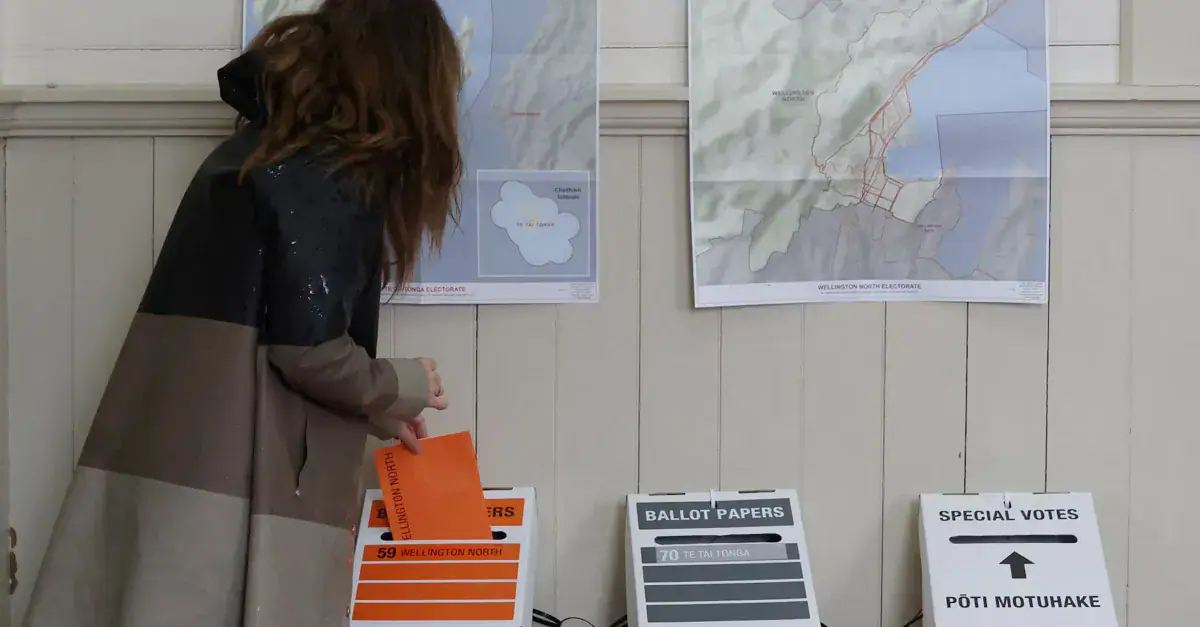
New Zealand is waiting for the final results of its general election, which took place on November 27. The outcome is uncertain, with the governing coalition led by Prime Minister Christopher Luxon holding a slim lead. According to initial results from the Electoral Commission, Luxon's coalition, comprising the National Party and the Act and New Zealand First parties, has secured around 67 seats out of 131 in parliament.
However, these results are not yet final, as the Electoral Commission has not yet counted special votes, which account for around 14% of total votes. These votes, cast by New Zealanders living abroad and those who voted outside their electoral districts, tend to favor left-wing parties. If the governing coalition loses its majority after the final results are announced, it may need the support of the centrist Opportunity Party, which is expected to enter parliament for the first time.
Prime Minister Luxon addressed a press conference after the election, stating that the contest was extremely close and that the current results do not determine the shape of the government for the next three weeks. He expressed the possibility of forming a government with his current partners. Meanwhile, Labour Party leader Chris Hipkins did not declare victory in his post-election speech. The election was dominated by issues such as slowing economic growth and rising living costs.
The initial results indicate a decline in support for the two major parties, with both the National Party and the Labour Party receiving less than 30% of votes. This is the lowest proportion for both parties since the introduction of the mixed-member proportional representation system in 1996. The results reflect widespread dissatisfaction with the economic performance of Luxon's government and a lack of conviction among voters in the opposition's promises to improve living standards.
Prime Minister Luxon is set to lead a caretaker government until consultations are completed and a new governing coalition is formed. The final results may lead to changes in the balance of power within parliament, including the potential loss of seats for some senior National Party MPs, including Finance Minister Nicola Willis.
The election outcome has significant implications for New Zealand's future, with various sectors of society eagerly awaiting the final results. The country's economic challenges and social issues were at the forefront of voters' concerns during the campaign. As the nation waits for the final outcome, attention is focused on the coalition negotiations that will determine the government's agenda for the next three years.
The Electoral Commission is expected to announce the final results in the coming days, which will provide clarity on the composition of the next government. Until then, New Zealand remains in a state of uncertainty, with various scenarios possible, including a change in government or a coalition agreement between parties.
Key points
- The governing coalition led by Prime Minister Christopher Luxon holds a slim lead in the initial results.
- The final results may lead to changes in the balance of power within parliament.
- The election outcome has significant implications for New Zealand's economic and social future.
Reporting sources
- Al-Qahera News · Al-Qahera News