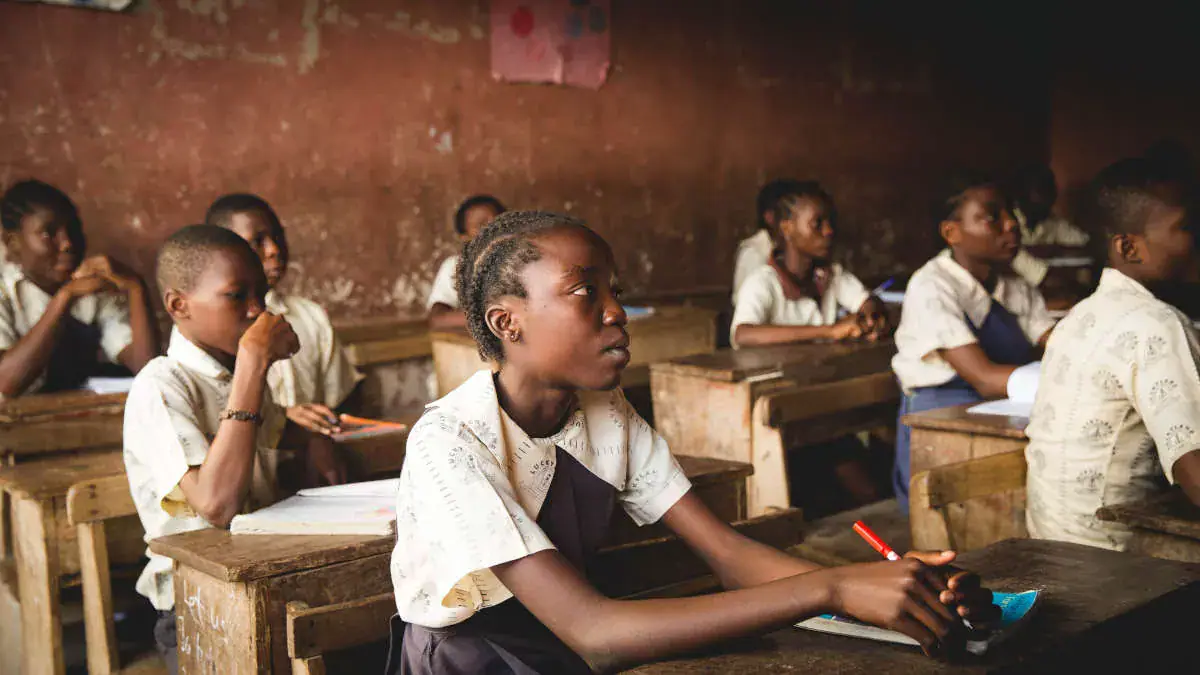
A recent report by the World Bank stresses that countries must look beyond schools and healthcare facilities to invest in their populations. The report, titled "Building Human Capital Where It Matters: Homes, Neighborhoods, and Workplaces," notes that the accumulation of human capital, which includes health, skills, and knowledge, is slowing down. According to the report's authors, Alaka Holla, Norbert Schady, and Joana Silva, human capital explains about two-thirds of the income gap between rich and poor countries.
The report highlights that Sub-Saharan Africa is particularly affected, with a decline in health and education outcomes over the past 15 years. In the region, adults born in 1996 are, on average, three centimeters shorter than those born in 1966, indicating a decline in health. Additionally, the region has experienced significant declines in educational outcomes, which is concerning given that it is the poorest region in the world. The report emphasizes that investing in human capital is crucial for achieving sustainable growth and reducing poverty.
The report suggests that policymakers should focus on investing in human capital in the home, neighborhood, and workplace. It notes that inequalities in human capital development begin early in life, with children from disadvantaged backgrounds experiencing significant delays in vocabulary and cognitive development. The report cites examples from Ethiopia, Nigeria, and Madagascar, where access to resources such as books and stimulation activities can significantly impact a child's development.
The report also highlights the importance of neighborhoods in shaping human capital outcomes. It notes that two families with the same income can have vastly different outcomes depending on the neighborhood they live in. The report cites an example from Brazil, where children from poor families living in affluent neighborhoods earn significantly more as adults than those living in disadvantaged neighborhoods. The report recommends targeting disadvantaged neighborhoods and coordinating efforts across different government agencies.
The report emphasizes that the workplace is also an important setting for human capital development. It notes that about half of the human capital accumulated over a person's lifetime is acquired through work. However, many workers in low- and middle-income countries, particularly in Sub-Saharan Africa, work in informal or precarious jobs that do not provide opportunities for skills development. The report recommends investing in on-the-job training, agricultural extension services, and business skills training.
The report cites several examples of successful programs and policies that have improved human capital outcomes in Africa. For example, a program in northern Nigeria that provided cash transfers, asset transfers, and health advice to mothers reduced child stunting by 6 percentage points. The report also notes that educating girls can have a positive impact on human capital outcomes for future generations.
The report concludes that investing in human capital is not optional, but fundamental, for achieving sustainable growth and reducing poverty. The authors recommend a more coordinated approach to investing in human capital, with a focus on the home, neighborhood, and workplace. They also emphasize the need for better data to track progress in these areas. Mamta Murthi, Vice President of the World Bank, notes that investing more effectively in human capital is crucial for achieving development goals.
Key points
- The report emphasizes that investing in human capital is crucial for achieving sustainable growth and reducing poverty.
- The accumulation of human capital is slowing down, particularly in Sub-Saharan Africa.
- Policymakers should focus on investing in human capital in the home, neighborhood, and workplace.
Reporting sources
- Capital humain : Pourquoi l’Afrique recule, et comment repartir · La Nouvelle Tribune