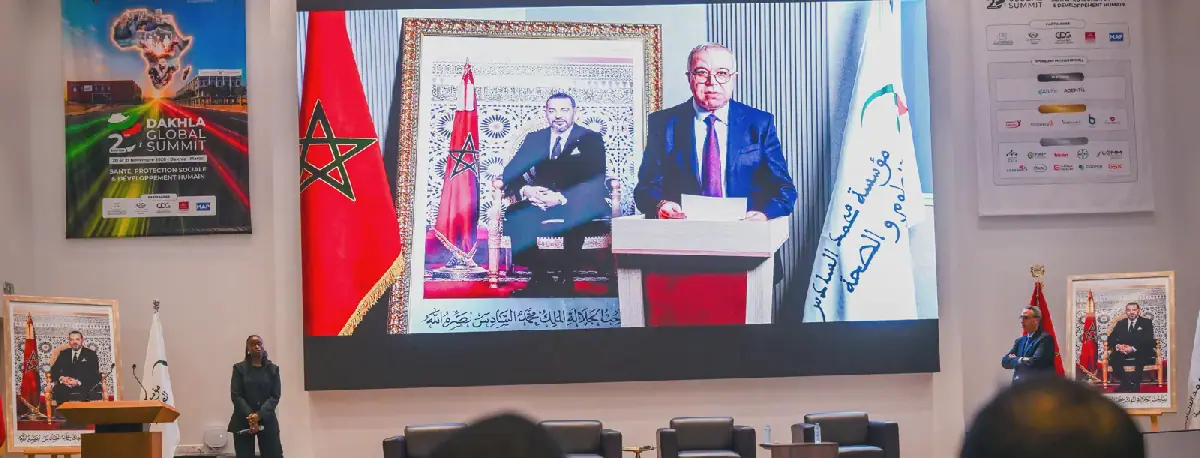
The second edition of the Dakhla Global Summit recently convened in Morocco, bringing together former African heads of state, ministers, elected officials, institutional leaders, researchers, and international experts. Moroccan Health and Social Protection Minister Youns Bjijou emphasized the need to adapt healthcare policies to the structural changes occurring in African countries. He noted that demographic and epidemiological transitions are putting increasing pressure on healthcare facilities, which must improve access to services while controlling operating costs.
Bjijou highlighted the lessons learned from the COVID-19 pandemic, which exposed the vulnerabilities of healthcare systems and the economic and social consequences of health crises. He stressed the importance of health security and the ability of states to have autonomous means of prevention and response to emergencies. To achieve this, Bjijou called for the integration of health threat preparedness into all public policies, using a multisectoral approach that involves different concerned domains.
The minister also emphasized the need to strengthen local industrial capacities, particularly for the production of medicines, vaccines, diagnostic tools, and other medical equipment. This aims to reduce vulnerabilities related to external supplies and improve the resilience of African healthcare systems in the face of future crises. Furthermore, Bjijou noted that controlling spending is another challenge, as expanding medical coverage must be accompanied by mechanisms to ensure the financial sustainability of social protection systems.
Bjijou discussed the potential of new technologies in the healthcare sector, including digital advancements, artificial intelligence, biotechnologies, and diagnostic and therapeutic innovations. He stated that these developments offer unprecedented opportunities to rethink prevention, treatment, and care approaches. However, he emphasized that their deployment must be equitable, ensuring that technological progress benefits all populations.
The minister called for a shift from treatment-centric approaches to a greater focus on prevention, behavior change, and adapting health responses to territorial specificities. He explained that this evolution is necessary to address the changing healthcare landscape in Africa. Bjijou also stressed the importance of preparing healthcare professionals to use new tools and adapting institutions to the changing healthcare environment.
The Dakhla Global Summit provided a platform for stakeholders to discuss the transformation of healthcare and social protection systems in Africa. Bjijou's remarks underscored the need for innovative solutions to address the complex challenges facing the continent's healthcare systems. The summit brought together a diverse range of participants, including former African heads of state, ministers, and international experts.
The Moroccan government's efforts to strengthen its healthcare system align with the goals of the Dakhla Global Summit. By prioritizing health security, local industrial capacity, and equitable access to healthcare, the government aims to improve the resilience of its healthcare system and enhance the well-being of its citizens. The summit's discussions and recommendations are expected to inform policy decisions and drive progress in the healthcare sector across Africa.
Key points
- The Moroccan Health and Social Protection Minister called for the integration of health threat preparedness into all public policies to address the vulnerabilities of healthcare systems.
- The minister emphasized the need to strengthen local industrial capacities to reduce vulnerabilities related to external supplies and improve the resilience of African healthcare systems.
- Bjijou highlighted the potential of new technologies, including digital advancements and artificial intelligence, to transform the healthcare sector in Africa.