A new DNA analysis has provided further evidence that Thomas Jefferson, the third president of the United States, fathered children with Sally Hemings, a woman he enslaved. The study, led by Richard Kurin, a distinguished scholar and ambassador-at-large for the Smithsonian Institution, used DNA from Jefferson's hair to confirm a genetic link to Hemings' children. This finding has been a topic of debate for over two centuries, with some questioning the possibility of a consensual relationship between Jefferson and Hemings.
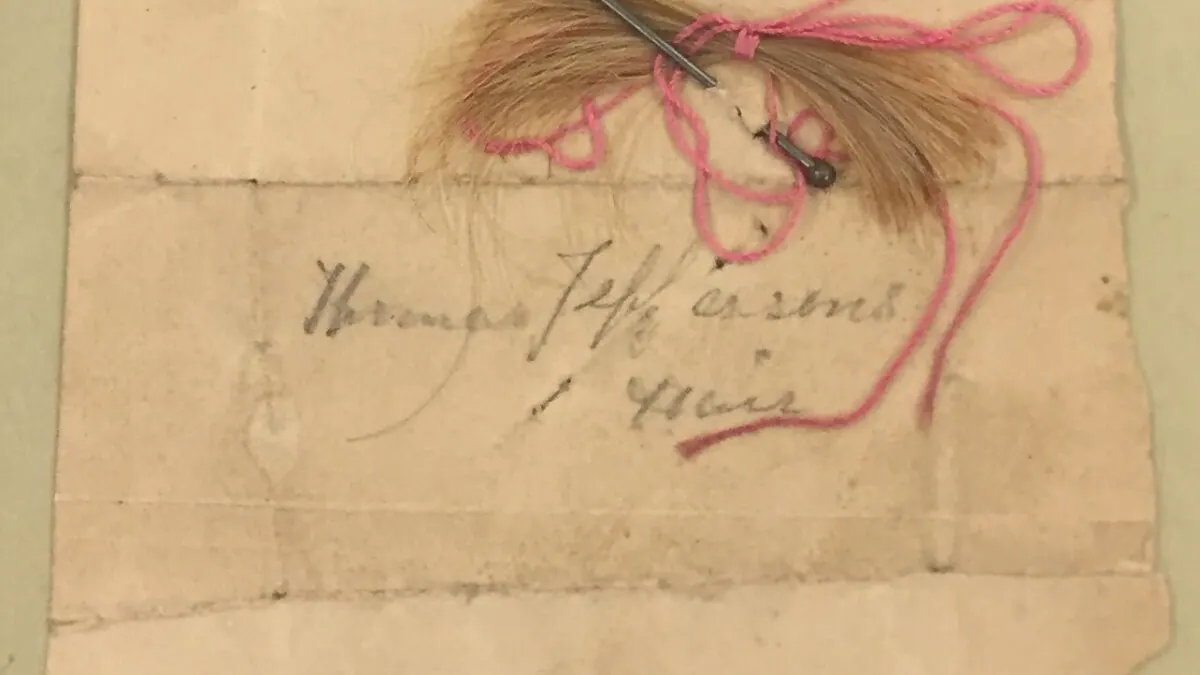
The investigation into Jefferson's paternity began with strands of hair found in his personal Bible, but it was later discovered that the hair did not belong to Jefferson. However, Kurin and his team found a packet of hair labeled as Jefferson's, cut on the day he died, July 4, 1826. This hair yielded DNA that was used to compare with descendants of Hemings' children. The team worked with scientists, archaeologists, genealogists, forensic experts, and Jefferson's and Hemings' descendants to gather evidence.
Previous DNA analysis conducted in the late 1990s by pathologist Eugene Foster and colleagues found that descendants of Eston Hemings, Sally Hemings' youngest son, shared a Y chromosome marker with Jefferson's family descendants. However, the results were not conclusive, as they could have pointed to any Jefferson male, such as a cousin, brother, or nephew. Kurin's team aimed to provide more definitive evidence using advanced DNA analysis techniques.
The new DNA analysis, conducted in collaboration with Beth Shapiro, a MacArthur fellow, and Richard "Ed" Green, an expert in paleogenomics and forensic genomics, found that descendants of Madison Hemings and Eston Hemings had a significant amount of Thomas Jefferson DNA. In fact, the Hemings descendants had more Jefferson DNA than some known Jefferson descendants. This finding supports the claim that Jefferson fathered children with Hemings.
The study's results have significant implications for our understanding of Jefferson's legacy and the history of slavery in the United States. Jefferson, who wrote the Declaration of Independence, owned over 600 enslaved people and fathered children with a woman he enslaved, highlighting the complexities and contradictions of his life. The findings also underscore the importance of using DNA analysis to uncover hidden histories and provide new insights into the past.
Despite the new evidence, some questions remain unanswered. The researchers were unable to identify descendants of Sally Hemings' other surviving children, Harriet Hemings and Beverly Hemings, who ran away from Monticello in 1822 and passed as white. Kurin hopes to make Thomas Jefferson's genome publicly available, which could help others trace connections to his family and potentially rediscover obscured heritage.
The study's findings are detailed in Kurin's new book, History by a Hair, which explores the investigation's twists and turns, as well as the science behind it. The research has the potential to shed new light on the complex and often fraught history of slavery and racism in the United States, and Kurin believes that the story is far from over.
Key points
- The DNA analysis confirms a genetic link between Thomas Jefferson and Sally Hemings' children.
- The study used advanced DNA analysis techniques to compare Jefferson's DNA with that of Hemings' descendants.
- The findings have significant implications for our understanding of Jefferson's legacy and the history of slavery in the United States.