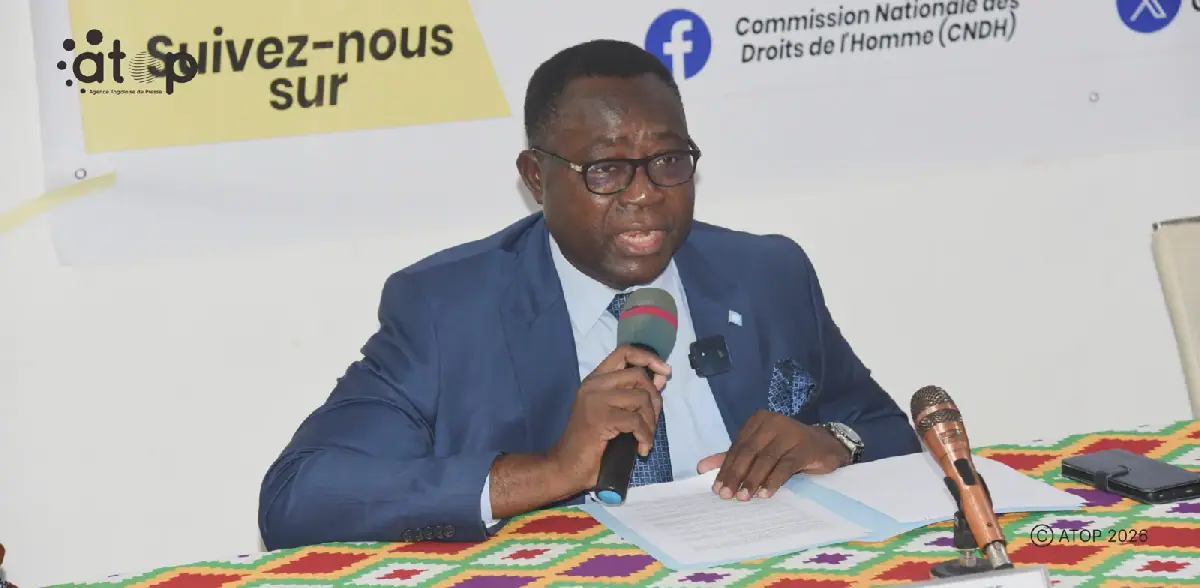
The Togolese National Human Rights Commission (CNDH) recently organized an information and awareness-raising session on the inter-ministerial decree regulating noise emissions in the Togolese Republic. The session, held in Lomé, brought together 148 actors from the Golfe and Agoè-Nyivé communes. These actors included administrative and local authorities, traditional chiefs, members of village, cantonal and neighborhood development committees, and representatives of civil society organizations and consumer associations.
The session aimed to educate the concerned actors on regulatory provisions and contribute to the fight against noise pollution. The initiative seeks to raise awareness of the harmful effects of noise pollution on populations and the environment while recalling the standards to be respected. The roles and responsibilities of different stakeholders in applying the regulations were also clarified, and participants were equipped with mechanisms for managing and controlling noise pollution in their respective environments.
Two communications marked the session's proceedings. The first focused on the consequences of noise pollution on public health, the environment, and social cohesion. The second addressed the administrative procedure for managing disputes related to noise pollution. On this occasion, participants received a ten-page booklet presenting the law regulating noise emissions in the Togolese Republic, which was the subject of a presentation and interactive exchanges.
The President of the CNDH, Me Kwao Ohin Sanvee, stressed that excessive noise can infringe on fundamental rights, including the right to health, rest, and private and family life. He emphasized that no freedom can be exercised without regard for the rights of others. Me Sanvee expressed the wish that the fight against noise pollution be based primarily on awareness-raising and mutual understanding to avoid confronting different parties with sanctions provided by the texts.
The Governor of the Grand Lomé autonomous district, Mme Zouréhatou Kassah-Traoré, highlighted three requirements to guarantee the effectiveness of this approach. These include respect for regulations, sharing responsibilities, and coordinating institutional interventions. She welcomed the CNDH's initiative and invited participants to serve as relays in their respective communities for the widespread dissemination of the information received.
The session is part of the CNDH's efforts to promote respect for human rights and the environment in Togo. The commission seeks to engage various stakeholders in the fight against noise pollution and promote a culture of responsibility and respect for regulations. By equipping participants with the necessary knowledge and tools, the CNDH aims to contribute to creating a healthier and more peaceful environment for all.
The CNDH's initiative has been well-received by participants, who have expressed their commitment to serving as relays in their communities. The commission's efforts to raise awareness and promote understanding of noise pollution regulations are expected to have a positive impact on the lives of Togolese citizens. The fight against noise pollution is an essential aspect of promoting human rights and the environment in Togo.
Key points
- The CNDH's session aimed to educate actors on regulatory provisions and contribute to the fight against noise pollution in Togo.
- The initiative seeks to raise awareness of the harmful effects of noise pollution on populations and the environment.
- The Governor of the Grand Lomé autonomous district highlighted the importance of respect for regulations, sharing responsibilities, and coordinating institutional interventions.