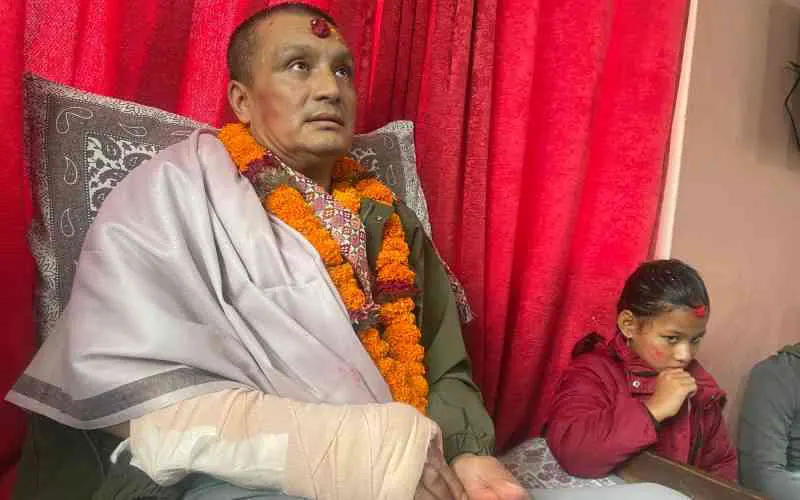
Kabir Maharjan, a 45-year-old Nepali hydropower worker, was rescued from a tunnel on September 4, after being trapped for 10 days following the catastrophic floods in Nepal. Maharjan was among hundreds of workers employed at projects hit by the floods. His miraculous rescue, alongside fellow worker Sanjay Sah, offered a rare moment of hope during the disaster. Maharjan's ordeal began on August 26, when a glacial mountain collapse near the China-Nepal border triggered the floods.
The floods have killed more than 1,400 people in Nepal, with over 5,000 still missing. The disaster has also dealt a major blow to Nepal's hydropower generation system, which is central to the country's development ambitions and export earnings. Maharjan, a father of two, returned home on Friday after spending weeks recovering at a hospital in Kathmandu. He was welcomed by traditional music and tearful relatives.
Maharjan said he survived by reaching an upper floor of the tunnel site and drinking water while waiting for help. He recalled trying to find a way out whenever he was awake and seeing what appeared to be a light and hearing voices. "I thought I imagined it. But I called out, and they answered," Maharjan said. His voice was choked with emotion as he spoke about his experience.
Maharjan is determined to help rebuild his country despite his own harrowing ordeal. "Life is precious. Hundreds of people have died but I survived," he said. "Perhaps I still have work to do for my society, for the country, and my home and family." Maharjan hopes to return to his profession, saying, "There is risk in everything, but still we have to win over it."
The government estimates overall reconstruction could cost $4.8 billion, with thousands of people displaced and key infrastructure damaged. More than 800 people employed at hydropower projects in Nepal remain unaccounted for, according to the energy minister. Forty-seven bodies have been recovered from flood-hit project sites, while rescue teams continue to comb through the ruins.
Prime Minister Balendra Shah told the United Nations on Thursday that the flooding was "a warning to the world" about the growing dangers posed by climate change. He urged greater international support to help Nepal adapt and rebuild. Aid groups have warned that the humanitarian crisis is far from over, with thousands of people still in need of assistance.
The disaster has renewed scrutiny of how roads, hydropower plants, and trade corridors are built in Nepal's challenging mountain terrain. Maharjan's story serves as a reminder of the risks faced by workers in the hydropower sector. As Nepal shifts from emergency response to reconstruction, Maharjan's determination to help rebuild his country is a testament to the resilience of the Nepali people.
Key points
- Over 1,400 people have been killed in the Nepal floods, with over 5,000 still missing.