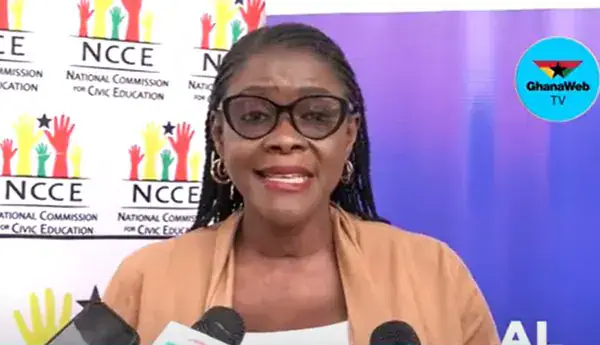
The National Commission for Civic Education (NCCE) has launched a youth media literacy drive in Accra, aimed at combating the spread of misinformation and disinformation online. Chairperson Kathleen Addy addressed the press at CivicFest Accra 2026 on Friday, 30 October 2026, emphasizing the importance of verifying information before sharing it. According to Addy, most misinformation spreads because people share claims without checking their accuracy first.
CivicFest Accra 2026, organized by the NCCE with support from the French Embassy in Ghana, brought together students from six schools to explore the impact of false information on individuals, families, schools, and the country. The event featured drama, dance, music, poetry, and art performances, allowing students to interpret the issues in their own way. Addy explained that this format was chosen to engage young people and test their understanding of the subject matter.
Addy warned that spreading harmful falsehoods is a criminal matter that could lead to legal consequences, including court appearances. She urged the public to resist sharing content designed to provoke an emotional reaction or target specific individuals, emphasizing that a personal decision not to forward unverified claims would help curb the problem. The NCCE boss encouraged young people to question what they see online and think critically about the information they share.
The NCCE also used the event to refute reports suggesting that extremists were targeting Ghana's 2024 elections. Although the commission did not elaborate on the origin of these reports or specific claims, the denial was part of a broader effort to combat misinformation ahead of future polls. Addy emphasized that the festival aims to help students take ownership of what they learn about responsible information sharing.
The youth media literacy drive seeks to empower young people to become ambassadors for digital citizenship within their communities. By engaging students in creative activities, the NCCE hopes to promote a culture of critical thinking and responsible information sharing. Addy believes that if people pause, reflect, and verify before sharing, a significant amount of misinformation and disinformation can be prevented from spreading.
The event provided a platform for students to express their thoughts on the impact of false information and to develop skills for identifying and verifying credible sources. By involving young people in the fight against misinformation, the NCCE aims to build a more informed and critically thinking citizenry. The commission's efforts are seen as crucial in promoting media literacy and combating the spread of false information in Ghana.
The NCCE's initiative has been well-received, with many stakeholders recognizing the need for media literacy programs in Ghana. By working with schools and communities, the commission hopes to create a ripple effect, inspiring a culture of responsible information sharing across the country. As the threat of misinformation continues to evolve, the NCCE's efforts are seen as a vital step in promoting a more informed and critically thinking public.
Key points
- NCCE Chairperson Kathleen Addy urges young people to pause and verify information before sharing online to combat the spread of misinformation and disinformation.
- The NCCE launches a youth media literacy drive in Accra, featuring drama, dance, music, poetry, and art performances to engage students and promote critical thinking.
- The commission refutes reports suggesting that extremists are targeting Ghana's 2024 elections, emphasizing the importance of combating misinformation ahead of future polls.