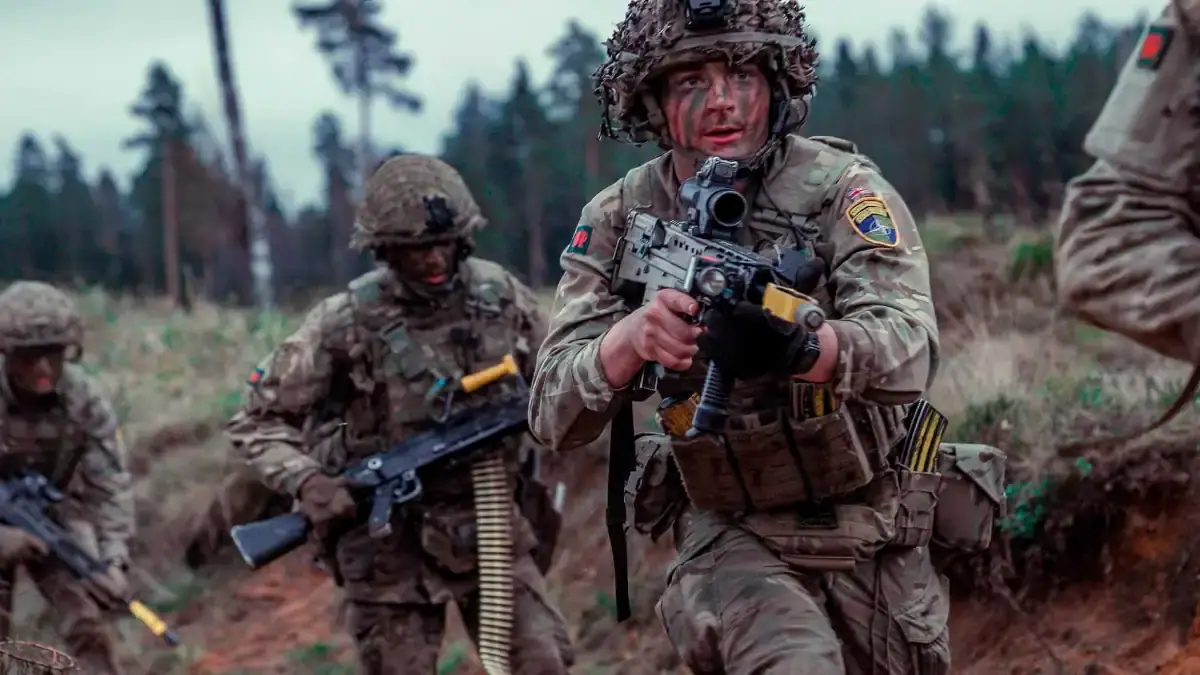
The North Atlantic Treaty Organization (NATO) is seeking to accelerate its military transformation in response to emerging conflicts and advancements in military technology. This effort aims to enhance the alliance's adaptability to current battlefield realities. The ongoing conflict in Ukraine has significantly altered military practices, particularly with the increased use of drones for surveillance and strikes, as well as electronic jamming that disrupts ground communications.
The evolving nature of threats necessitates that military forces adjust their equipment and tactics accordingly. However, developing new military capabilities can take several years, a timeframe that NATO considers increasingly incompatible with the pace of current conflicts. To address this challenge, the alliance aims to expedite the integration of technological innovations into its forces. This will enable them to better anticipate threats and respond more swiftly.
Admiral Pierre Vandier, the French commander-in-chief of NATO's transformation, emphasizes the need for the alliance to adapt more rapidly to these new realities. He highlights the importance of army robotization and improving countermeasures against drones, whose growing use complicates military operations. The alliance is also focused on enhancing information sharing among its forces to accelerate decision-making and improve operational coordination.
The integration of artificial intelligence and digital tools can contribute significantly to this objective. Furthermore, a reorganization of the military structure is planned to enable the more rapid mobilization of troops in crisis situations. These efforts are part of a broader strategy to ensure that NATO forces remain effective and responsive to emerging threats.
In 2022, NATO leaders adopted a new strategic concept at the Madrid summit, the first since 2010. This concept outlines three fundamental missions: deterrence and defense, crisis prevention and management, and cooperative security. It also identifies Russia as the most significant and direct threat to the security of NATO allies.
The strategic concept underscores the importance of adapting to the changing security landscape. NATO's efforts to transform its military capabilities are aimed at ensuring that the alliance remains capable of addressing current and future threats effectively. This involves not only technological advancements but also a shift in strategic priorities.
By focusing on the rapid integration of new technologies and improving its operational capabilities, NATO aims to maintain a strong deterrent posture and ensure the security of its member states. The success of these efforts will depend on the alliance's ability to adapt and evolve in response to emerging challenges.
Key points
- NATO is accelerating its military transformation to adapt to evolving conflicts and technological advancements.
- The alliance is prioritizing the integration of new technologies, including artificial intelligence and counter-drone measures.
- NATO's new strategic concept, adopted in 2022, identifies Russia as a primary threat and emphasizes the need for adaptability in the face of changing security challenges.