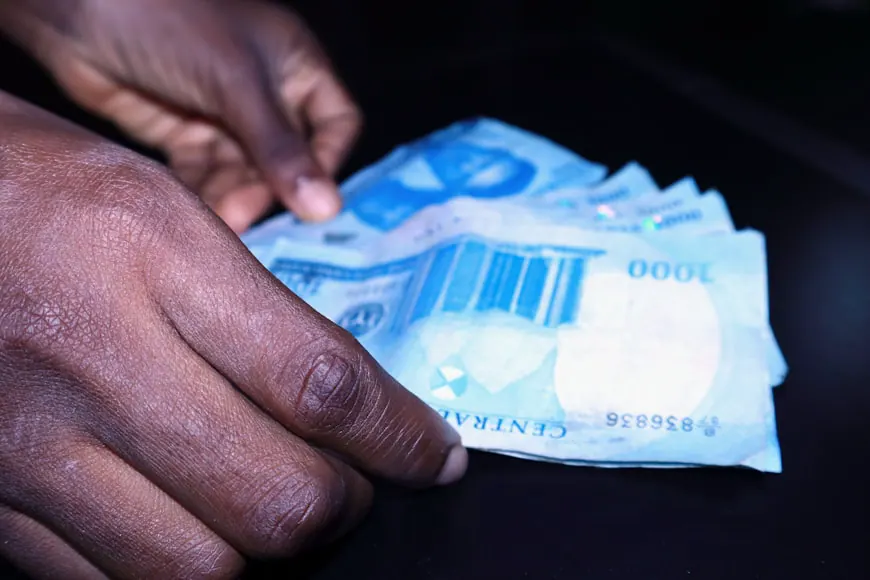
The naira closed September at N1,329.16 per dollar in the Nigerian Foreign Exchange Market, representing a 0.28 percent appreciation from N1,332.94 at the end of August. This gain is attributed to improved foreign exchange liquidity, stronger oil receipts, and sustained market confidence. On a day-on-day basis, the naira traded almost flat, weakening slightly by 0.12 percent to N1,331.69 on the second trading day in October.
In the parallel market, also known as the black market, the local currency strengthened by 1.47 percent, closing at N1,360 per dollar from N1,380 previously. The gap between the official and parallel market rates narrowed to N29, or 2.18 percent, from N50, or 3.76 percent, on Friday. Analysts at Coronation Merchant Bank noted that the narrowing premium points to improved convergence between the official and parallel FX markets and relatively contained near-term FX pressures.
Activity in the foreign exchange market moderated on Monday, with the total turnover at the interbank segment declining by 53.17 percent to $72.12 million from $154.02 million on Friday. Nigeria's external reserves, which give the Central Bank of Nigeria the firepower to defend the naira and meet external obligations, have maintained a steady growth trajectory, rising to $54.95 billion as of October 2.
The country's gross external reserves rose to $54.92 billion in September from $53.81 billion in August, representing a 2.07 percent increase. The Financial Market Dealers Association said the stronger naira was primarily driven by improved FX fundamentals, including stronger inflows from oil receipts and sustained market confidence. Average Brent crude prices also rose sharply during the month, increasing 14.43 percent to $99.95 per barrel.
Nigeria's external position was further supported by a stronger current account, with the country's current account surplus increasing to $7.54 billion in the second quarter of 2026, above the FMDA's earlier projection of $6.12 billion. The association expects the surplus to widen further to $8.69 billion in the third quarter, supported by lower import demand and elevated crude oil prices.
Nigeria's trade surplus also strengthened significantly, rising from $5.45 billion in the first quarter to $9.22 billion in the second quarter, while remittances increased from $5.28 billion to $5.49 billion over the same period. The FMDA attributed the appreciation of the naira in September to stronger FX fundamentals and sustained market confidence.
The Dangote IPO may have contributed marginally to the naira's appreciation through increased investor interest and pre-positioning flows, although its direct impact on FX liquidity remained limited. The naira's gain in September reflects improved market conditions and a positive outlook for Nigeria's economy.
Key points
- Nigeria's external reserves rose to $54.95 billion as of October 2.
- The naira appreciated by 0.28 percent in September.
- The country's current account surplus increased to $7.54 billion in the second quarter.