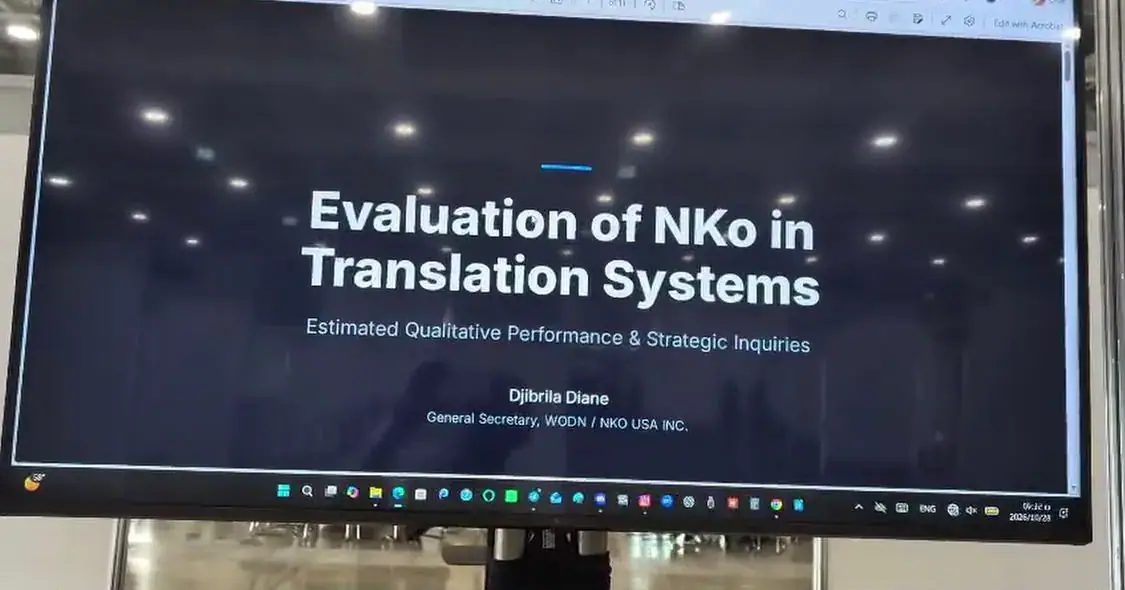
The Conference on Empirical Methods in Natural Language Processing (EMNLP 2026) recently concluded in Budapest, Hungary, from October 24 to 29, 2026. The event, held at HUNGEXPO, featured a significant presentation on the evaluation of N'Ko in translation systems. This presentation highlighted the progress made in automatic translation of the N'Ko language, a crucial development for the linguistic community.
The N'Ko language, a standardized form of the Mandingue languages' orthography, has seen significant advancements in automatic translation since its introduction to Google Translate in 2024. Initially, the performance was average, with 60% accuracy for N'Ko to other languages and 40% for other languages to N'Ko. These numbers have improved substantially, thanks to Google's Gemini Advanced Capabilities, an artificial intelligence model.
As of 2026, the performance of N'Ko automatic translation has reached an estimated 80% for N'Ko to other languages and 60% for other languages to N'Ko. This represents a 20-point increase in both directions over the two-year period. The improvement is part of Google's broader efforts to enhance its translation systems, which now cover 249 languages worldwide.
The advancements in N'Ko translation are attributed to the integration of Gemini Advanced Capabilities into Google's translation systems. This AI model has enabled more accurate and efficient translations, significantly benefiting the N'Ko-speaking community. The development was presented at EMNLP 2026 by Djibrila Diané, a Guinean and Secretary General of the World Organization for the Development of the N'Ko Alphabet.
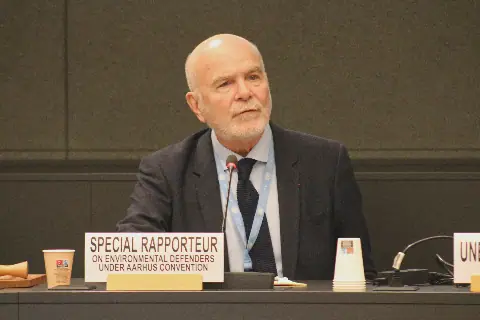
The EMNLP 2026 conference brought together experts and researchers in the field of natural language processing to share their findings and discuss future directions. The presentation on N'Ko translation was a highlight of the event, showcasing the progress made in supporting linguistic diversity through technology. Nafadji Sory Condé, a sociolinguist specializing in African languages and linguistic policies, also contributed to the discussion.
The improvement in N'Ko automatic translation has significant implications for communication and cultural exchange. Enhanced translation capabilities can facilitate better understanding and collaboration between speakers of N'Ko and other languages, promoting linguistic inclusivity. The development also underscores the importance of continued investment in language technology to support diverse linguistic communities.
The World Organization for the Development of the N'Ko Alphabet and other stakeholders are likely to build on this progress, exploring further enhancements to N'Ko translation systems. As language technology continues to evolve, the potential for even more accurate and efficient translations grows, offering new opportunities for global communication and understanding.
Key points
- N'Ko automatic translation improves by 20% in two years, reaching 80% accuracy for N'Ko to other languages and 60% for other languages to N'Ko.