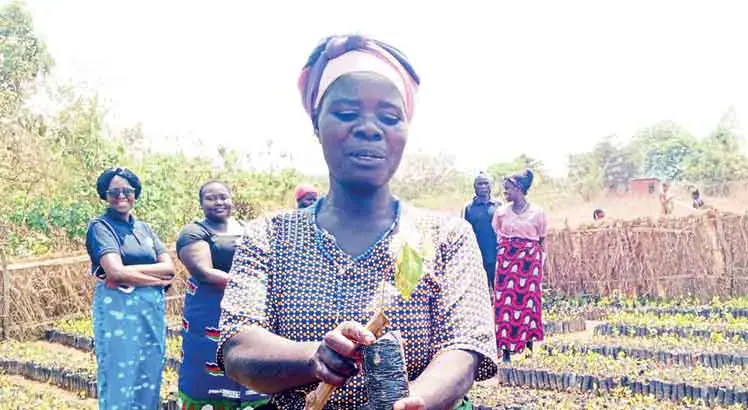
Project manager Hastings Chikoko has urged communities surrounding Perekezi Forest Reserve in Mzimba District to plant indigenous trees. This initiative aims to conserve the forest and improve livelihoods. Chikoko made the call at group village head Mjojo in Traditional Authority Mzikubola, where stakeholders toured conservation interventions under the More Income and Employment in Rural Areas project.
The project seeks to address the degradation of the forest due to dependence on it for firewood, charcoal, and timber. Chikoko stated that the project aims to improve nature tourism through afforestation and organic farming. This will increase community income and create jobs around Luwawa and Perekezi forest areas. The initiative is crucial for preserving one of the district's major catchment areas.
Community members have welcomed the initiative. Matilda Nkhata, a member of the Takondwa Club, said the club has started raising and planting indigenous trees in degraded areas. The club decided to venture into tree-planting after realizing that indigenous trees would restore the vegetative cover. This effort demonstrates the community's commitment to conserving the forest.
M’mbelwa District Council acting director of natural resources and environment Masozi Mhoni commended the initiative. He believes that planting indigenous trees and promoting beekeeping will ease pressure on Perekezi Forest. This project is a collaborative effort to ensure sustainable use of natural resources and improve community livelihoods.
The project is funded by Germany's Federal Ministry for Economic Cooperation and Development. This funding will support the implementation of conservation interventions and community development initiatives. The project's success will depend on the continued involvement and support of local communities.
The conservation efforts in Mzimba District are crucial for preserving biodiversity and ecosystem services. The Perekezi Forest Reserve plays a vital role in maintaining the region's ecological balance. By planting indigenous trees, communities can help restore degraded areas and promote sustainable land use practices.
The initiative's impact will be closely monitored, and its success could serve as a model for similar conservation projects in other regions. By working together, stakeholders can ensure the long-term sustainability of conservation efforts and improve the livelihoods of local communities. The project's outcomes will be critical in determining the effectiveness of afforestation and organic farming initiatives.
Key points
- Communities in Mzimba are being encouraged to plant indigenous trees to conserve the Perekezi Forest Reserve.
- The project aims to improve nature tourism and create jobs through afforestation and organic farming.
- The initiative is funded by Germany's Federal Ministry for Economic Cooperation and Development.