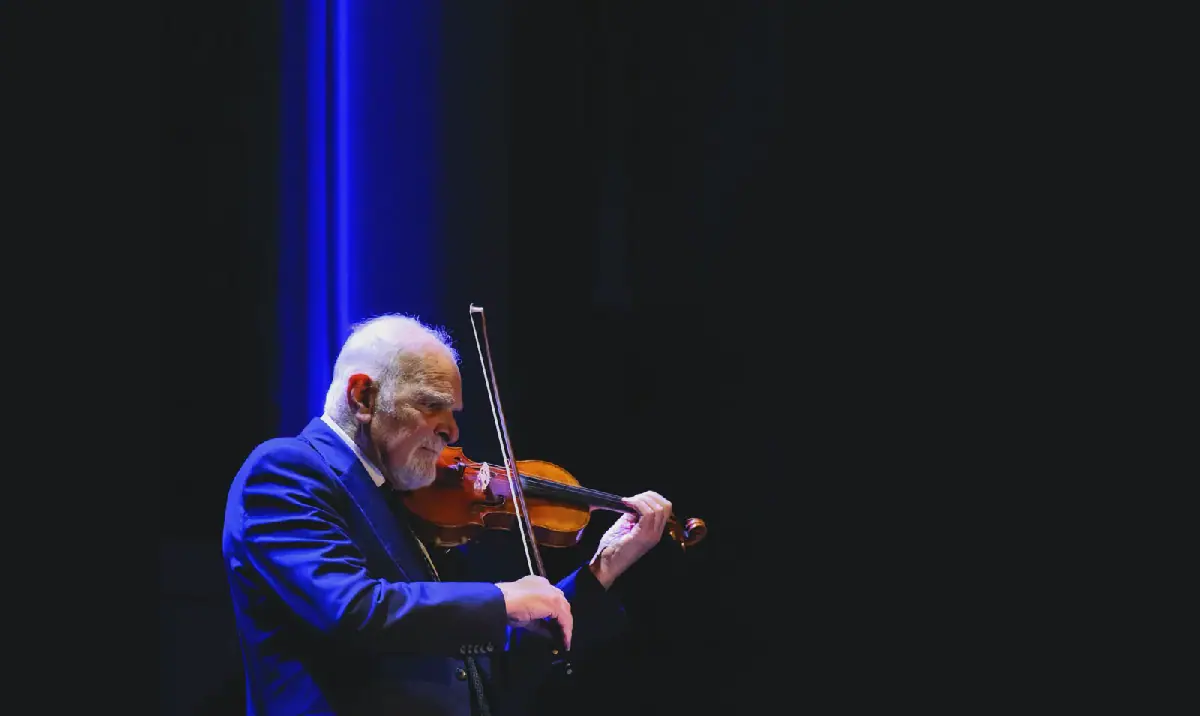
Patrice Fontanarosa, a celebrated violinist, recently visited Tunisia for a series of performances and masterclasses. In an interview with Nadia Ayadi, Fontanarosa shared his thoughts on his journey as a musician and his approach to the violin. Born into a family of artists, Fontanarosa began playing the violin at the age of three and has since become known for his unique and emotive style. With a career spanning decades, Fontanarosa has established himself as a leading figure in the world of classical music.
Fontanarosa's love for music was instilled in him by his parents, who were both painters. He credits them with fostering his passion for art and encouraging him to pursue a career in music. When asked what he would have done if he weren't a musician, Fontanarosa replied that he would have liked to be on stage, possibly as a comedic actor or opera singer. However, he never doubted his decision to become a violinist, and his commitment to his craft has been unwavering.
Fontanarosa's approach to the violin is characterized by his emphasis on emotion and expression. He believes that the technical aspects of playing the instrument are essential, but that they should serve the music, rather than the other way around. When asked to describe his playing style in terms of colors, Fontanarosa explained that he associates different tones and harmonies with specific hues. For example, he imagines the tone "la" major as blue and "ré" minor as brown.
Fontanarosa's visit to Tunisia was made possible by the Fondation Hasdrubal Mohamed Lamouri pour la culture et les arts, which he praised for its efforts in promoting music and artistic exchange. During his stay, he had the opportunity to meet with young Tunisian musicians and share his expertise with them. Fontanarosa was impressed by the talent and dedication of the young artists, who he believes have a bright future ahead of them.
Fontanarosa's performances in Tunisia featured a program of opera arias, showcasing his ability to convey the emotional intensity of the music through his playing. He was joined on stage by Tunisian tenor Hassen Doss, with whom he shared a compelling musical dialogue. Fontanarosa also performed with his daughter Stéphanie, who accompanied him on piano, and his sister and brother, Frédérique and Renaud Fontanarosa.
Fontanarosa's family has played an important role in his musical journey. He has performed with his siblings on several occasions, and his daughter has been a frequent collaborator. Fontanarosa values the experience of making music with his family members, citing the special bond that they share. He believes that this experience has helped him to develop a deeper understanding of the music and to communicate more effectively with his audience.
As Fontanarosa looks to the future, he is optimistic about the role that music can play in bringing people together and promoting understanding. He believes that music has the power to transcend borders and cultures, and that it can be a powerful tool for building bridges between communities. Fontanarosa's message to young musicians is to work hard, persevere, and trust in the value of their own unique voice.
Key points
- Patrice Fontanarosa emphasizes the importance of emotion and expression in music.
- Fontanarosa praises the Fondation Hasdrubal for promoting music and artistic exchange in Tunisia.
- The violinist values the experience of making music with his family members.