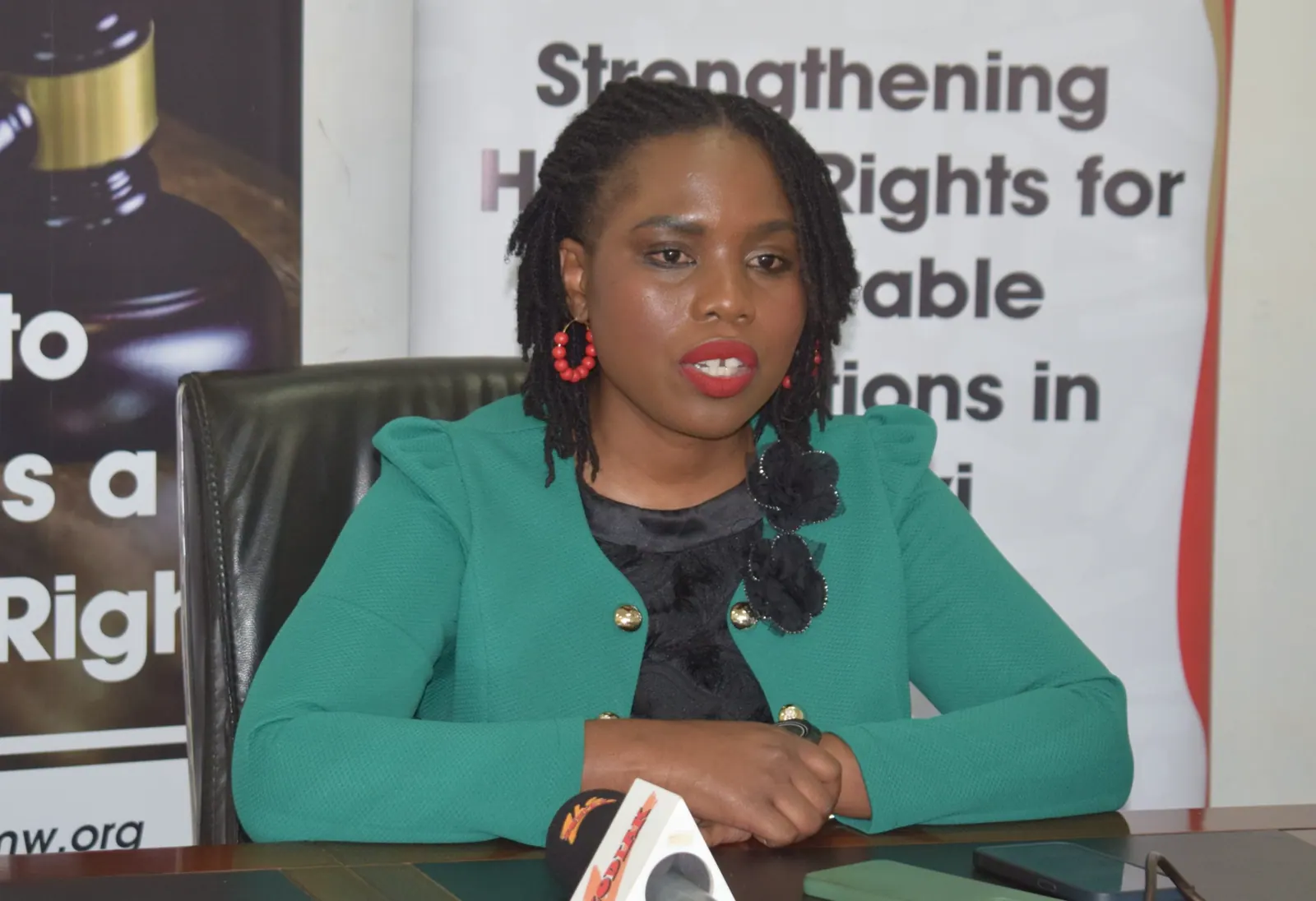
President Peter Mutharika has appointed a new cohort of commissioners for the Malawi Human Rights Commission, comprising seven members. The appointments were announced by Chief Secretary to the Government Justin Saidi, with the commissioners' three-year term effective from September 20, 2026. This move comes barely a month after the previous team's tenure expired. The new commission will have a mix of experienced and new members.
Three commissioners have been retained from the previous cohort, including Viwemi Chavula, executive director of the Centre for Civil Society Strengthening, journalist and former Media Institute of Southern Africa-Malawi chairperson Teresa Ndanga, and Andrew Kavala, director of the Malawi Network of Older Persons Organisations. Their continuity is expected to provide stability to the commission. The retained commissioners bring a wealth of experience and knowledge to the new team.
The new faces appointed to the commission include Lingalireni Mihowa, Orison Chaponda, Godfrey Kangaude, and Stella Nkhonya. Additionally, Law Commissioner Rosemary Kanyuka and Ombudsman Grace Malera will serve as ex-officio members. The diverse backgrounds of the new commissioners are expected to bring fresh perspectives to the commission's work. The appointments have been made in accordance with the Human Rights Commission Act.
However, the appointments have been criticised by the Youth-Decide Campaign, which had lobbied for at least one qualified young commissioner below the age of 35 to be included. The campaign's national coordinator, Mwandida Theu, expressed disappointment that the appeal was not considered. The campaign has given the Office of the President and Cabinet 14 days to explain the exclusion of youth representation.
The Youth-Decide Campaign has also called on President Mutharika to recommit to youth inclusion in future appointments. They have further urged the new commission to establish a youth advisory mechanism within 90 days. The campaign's concerns highlight the need for greater youth representation in key institutions. The issue has sparked a debate about the importance of youth inclusion in decision-making processes.
Human Rights Defenders Coalition chairperson Michael Kaiyatsa has welcomed the appointments and urged the new commission to provide independent and courageous leadership in defending human rights. He emphasised the need for the commission to remain responsive to ordinary Malawians. Kaiyatsa also highlighted the importance of the commission focusing on critical issues such as the impact of mining on vulnerable communities.
National Advocacy Platform chairperson Benedicto Kondowe has noted that the appointments are an important constitutional step, but the commission's independence will be tested through its actions. Under the Human Rights Commission Act, commissioners serve three-year terms and may be reappointed for another term. The law also provides for half of the outgoing commissioners to be reappointed to ensure continuity. The new commission's performance will be closely watched by various stakeholders.
Key points
- President Mutharika has appointed seven new commissioners for the Malawi Human Rights Commission.
- The appointments have been criticised by the Youth-Decide Campaign for excluding youth representation.
- The new commission is expected to provide independent and courageous leadership in defending human rights.