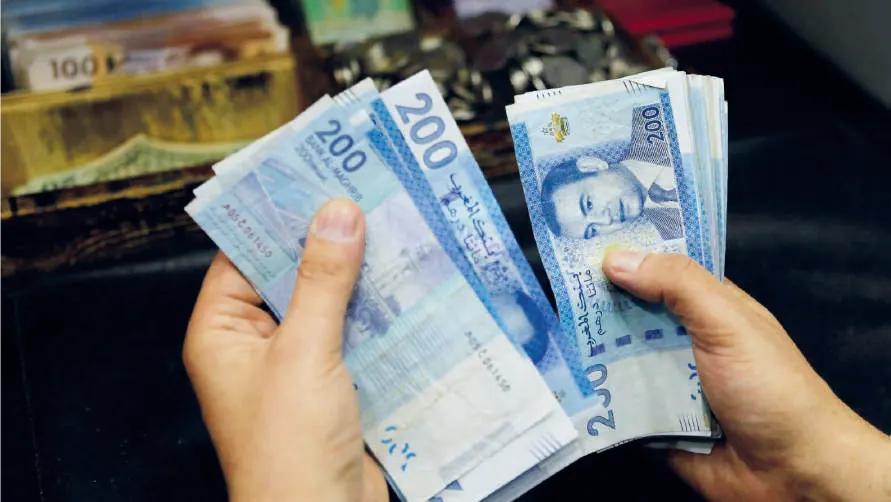
Remittances from Moroccans living abroad (MREs) have shown a significant increase, reaching MAD 89.22 billion ($8.92 billion) at the end of August 2026. This represents a 9% increase compared to the same period last year, according to provisional figures from the Office des Changes. The inflows gained MAD 7.37 billion ($737 million) from the MAD 81.85 billion ($8.18 billion) recorded a year earlier.
The improvement in remittances extended across Morocco's external accounts. Travel receipts climbed 9.7% to MAD 97.93 billion ($9.79 billion), while travel spending rose 6.6% to MAD 23.31 billion ($2.33 billion). The travel balance widened 10.8% to a surplus of MAD 74.62 billion ($7.46 billion). This growth in travel receipts and spending indicates a positive trend in Morocco's tourism sector.
However, the goods trade moved in the opposite direction. Imports grew 15.8%, or MAD 84.27 billion ($8.43 billion), to MAD 617.51 billion ($61.75 billion), outpacing an 8.7% rise in exports to MAD 334.89 billion ($33.49 billion). The widening gap pushed the trade deficit up 25.4% to MAD 282.62 billion ($28.26 billion), and the coverage rate fell 3.5 points to 54.2%.
Services partly offset the deficit in goods trade. Exports of services advanced 12.6%, and imports rose 11.7%, lifting the services surplus 13.4% to MAD 118.26 billion ($11.83 billion). This growth in services exports and imports indicates a positive trend in Morocco's service sector.
Foreign direct investment also strengthened during this period. The net flow of FDI into Morocco jumped 65% to MAD 34.33 billion ($3.43 billion), as receipts gained 17% to MAD 47.32 billion ($4.73 billion) and expenditures fell 33.9% to MAD 12.98 billion ($1.30 billion). Moroccan direct investment abroad posted a net flow of MAD 6.67 billion ($667 million), up from MAD 2.36 billion ($236 million) a year earlier.
The remittance gains come against a regulatory concern raised in June by Bank Al-Maghrib Director General Abderrahim Bouazza. He pointed to the tightening of conditions in the European Union for intermediation carried out by subsidiaries of Moroccan banks as one of the main challenges facing the remittance ecosystem. The matter is being closely followed by Moroccan authorities alongside their European counterparts.
Despite the growth in remittances, Bouazza noted that significant gaps persist between rural and urban areas, between genders, and between younger and older users in terms of financial inclusion. The mobilization of transfers toward entrepreneurship and the productive sector remains weak, particularly in rural areas, due to administrative complexity, a difficult business environment, and a lack of incentives. Consumption still absorbs most of the money, with 87% of these transfers going into households' current consumption.
Key points
- Remittances from Moroccans living abroad reached MAD 89.22 billion at the end of August 2026, a 9% increase from the same period last year.
- The growth in remittances was accompanied by a 9.7% increase in travel receipts and a 65% jump in foreign direct investment.
- Despite the growth in remittances, significant gaps persist in financial inclusion, particularly in rural areas and in terms of mobilizing transfers toward entrepreneurship and the productive sector.