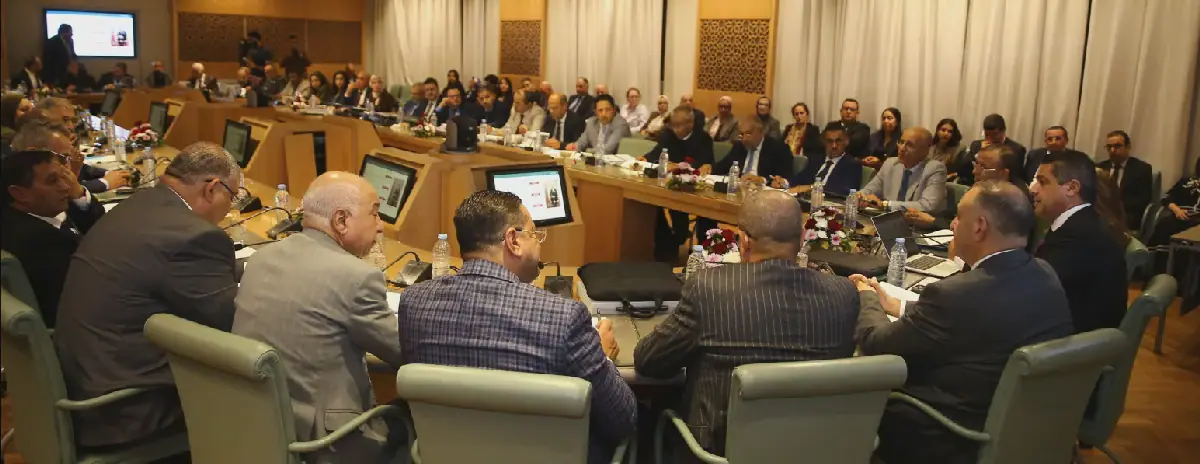
Morocco is set to revamp its territorial development policy with a new national framework aimed at 2050. The strategy focuses on enhancing coordination between sectoral policies and regional development strategies. According to Samir Belfkih, Minister of National Territorial Development, the vision is based on a more flexible planning approach. This aims to shift from a fixed planning logic to a flexible strategic orientation, ensuring regional development schemes align with national orientations.
The new strategy prioritizes the development of intermediate and small cities. The government aims to strengthen the national urban network by consolidating major metropolises as development hubs and focusing on intermediate and small cities. Two national strategies have been developed to boost the attractiveness and competitiveness of these areas. The first strategy targets 77 intermediate cities with 8.47 million inhabitants, while the second focuses on 292 small cities with four million inhabitants.
The government has made significant progress in urban planning, with 89.5% of the national territory covered by urban planning documents as of 2026. Since October 2021, 527 documents have been approved, including three master plans, 339 development plans, and 185 rural agglomeration development plans. This progress indicates a concerted effort to organize and develop the country's urban and rural spaces.
The direct housing aid program has also seen substantial uptake, with 263,840 requests recorded as of November 4, 2026. Of these, 237,456 were deemed eligible, and 127,707 beneficiaries have been supported. The program's financial contribution from the state stands at 10.5 billion dirhams, with a total value of acquired housing amounting to 52.5 billion dirhams. Women make up 48% of beneficiaries, Moroccan expatriates 23%, and individuals under 40 years old 53%.
The Ministry of Housing and Urban Policy has outlined a new action plan for 2026-2031, focusing on five key areas. These include improving territorial planning, facilitating access to affordable housing, addressing unsanitary housing, and tackling buildings at risk of collapse. The plan aims to introduce a new generation of interventions to address the country's housing and urban development challenges.
The new territorial development strategy is built on a flexible planning approach, allowing for adaptability and responsiveness to changing regional needs. By prioritizing intermediate and small cities, the government seeks to promote balanced regional development and enhance the quality of life for residents. The strategy's success will depend on effective coordination between sectoral policies and regional development strategies.
As Morocco moves forward with its 2050 territorial development vision, the government faces the challenge of implementing these ambitious plans. With a focus on sustainable and equitable development, the strategy aims to address the country's urban and regional disparities. The coming years will be crucial in determining the effectiveness of this new approach and its impact on Morocco's territorial development.
Key points
- The new strategy aims to shift from fixed planning to flexible strategic orientation.
- 89.5% of Morocco's territory is covered by urban planning documents as of 2026.
- The direct housing aid program has supported 127,707 beneficiaries with a state contribution of 10.5 billion dirhams.