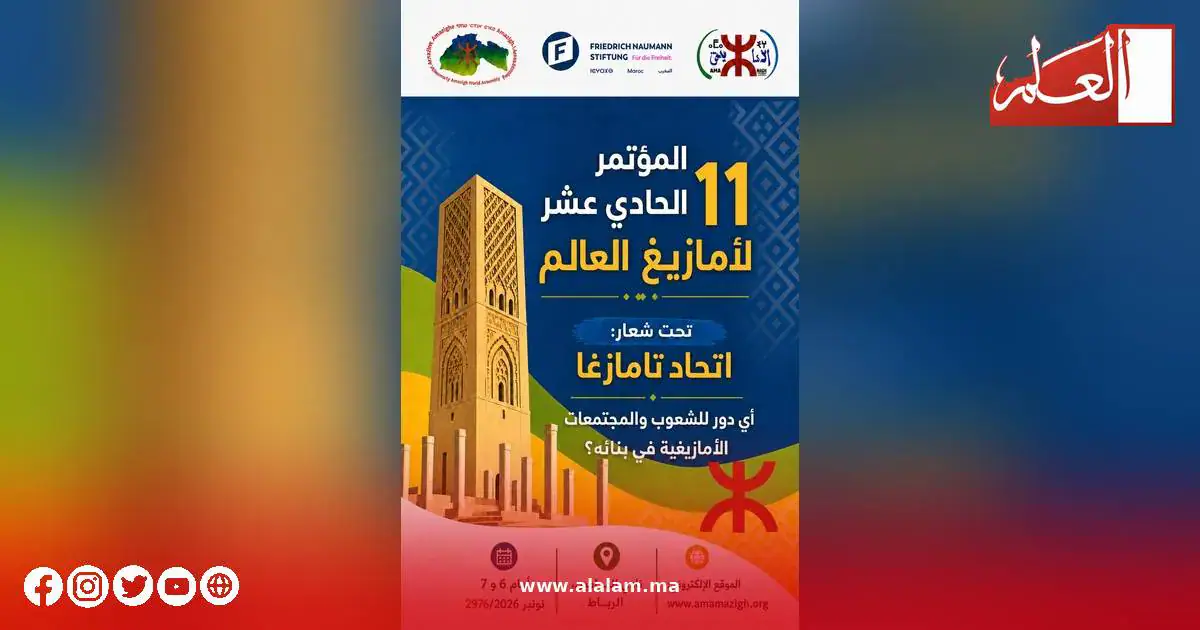
The 11th Congress of the Global Amazigh Gathering is set to take place in Rabat, Morocco, on November 6-7, 2026. The event, themed "United Tamazgha: What roles should Amazigh peoples and communities play in building it?", will bring together representatives and activities from various countries in North Africa and the diaspora. According to Rashid Rakh, president of the Global Amazigh Gathering, this year's congress is particularly significant given the current regional tensions and political stagnation between some countries in the area.
Rakh emphasized that the time has come to move beyond these differences and work towards rapprochement between peoples based on shared identity and cultural history. He believes that the common Amazigh characteristics can serve as a bridge to rebuild Maghrebi relations on a solid foundation. The choice of Rabat as the congress venue holds symbolic and historical significance, as the city has historically been a hub for unification efforts, including the launch of a unification movement under Sultan Abd al-Mu'min al-Muwahhidi.
The congress will focus on recent archaeological discoveries in Morocco, including the findings at the Jbel Igoud site, which holds the oldest remains of Homo sapiens, dating back around 315,000 years. This aims to highlight the region's historical depth and its place in human civilization. Rakh stated that the congress reflects an effort to positively transcend the current state of closure and political tension in the Maghrebi region through cultural diplomacy.
By emphasizing a shared identity as a unifying factor, the congress seeks to build bridges between communities, regardless of temporary political differences. The experience of the Almohad state and the choice of Rabat as a launchpad aim to provide a historical basis for regional integration, rephrased in modern terms based on citizenship, democracy, and human rights values. The inclusion of Jbel Igoud's fossils in the discussion represents an attempt to link the rights struggle to scientific facts and historical depth.
The congress also aims to transform the Amazigh component into a primary actor in North Africa's development, stability, and economic integration. This shift from local cultural and linguistic demands to larger regional projects, such as a "North African Union", reflects a desire for substantial change. According to Rakh, this demonstrates the Global Amazigh Gathering's will to engage in broader discussions on regional projects.
Participants at the congress will explore ways to strengthen cooperation and understanding among Amazigh communities across North Africa and the diaspora. The event is expected to foster dialogue and collaboration on issues affecting the Amazigh people, including cultural preservation, linguistic rights, and socio-economic development. By bringing together diverse stakeholders, the congress aims to promote a stronger sense of unity and shared purpose.
As the congress approaches, expectations are high for meaningful discussions and outcomes that could shape the future of Amazigh communities. The event's focus on cultural diplomacy and regional integration underscores the importance of cooperation and shared identity in overcoming current challenges. With its unique blend of historical reflection, cultural celebration, and forward-thinking dialogue, the 11th Congress of the Global Amazigh Gathering promises to be a significant milestone in the region.
Key points
- The congress will focus on recent archaeological discoveries in Morocco.
- The event aims to promote cultural diplomacy and regional integration.
- The congress seeks to transform the Amazigh component into a primary actor in North Africa's development.