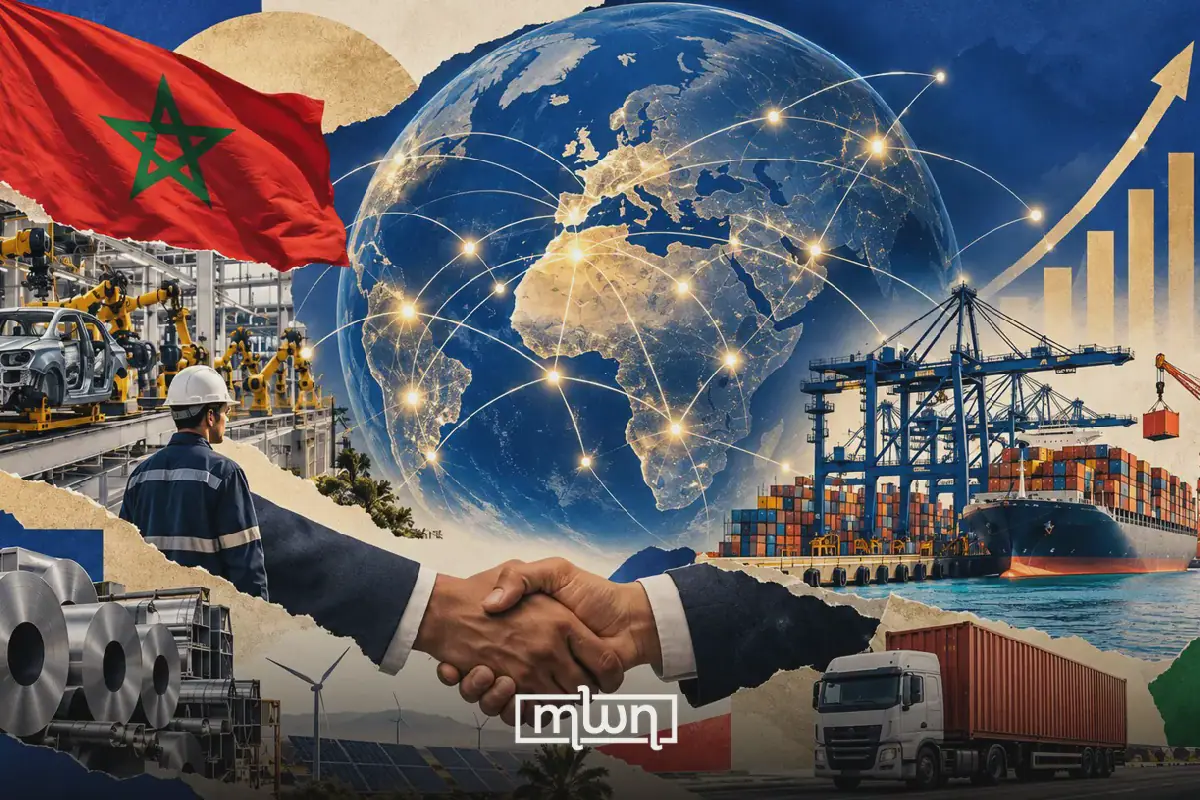
The recent agreement between the United Arab Emirates and Canada, signed on October 27, 2026, has sparked discussions on how Morocco can leverage its international relationships to enhance its domestic industrial capabilities. The Comprehensive Economic Partnership Agreement is expected to improve market access between the two countries once it enters into force in 2027. Beyond trade provisions, the agreement includes cooperation in investment, energy, technology, and logistics, showcasing the interconnected nature of economic partnerships.
Morocco's relationship with the European Union is a significant starting point for its trade development. In 2025, merchandise trade between Morocco and the EU reached approximately €62.2 billion, with machinery and transport equipment accounting for a substantial share of EU imports from Morocco. These figures demonstrate Morocco's participation in international production and distribution networks. However, the country's industrial connections with Europe also raise questions about economic concentration and the long-term development of domestic capabilities.
To move beyond simply increasing export volumes, Morocco's next stage of trade development should emphasize the depth of industrial participation. The automotive sector is a prime example, where manufacturing and exporting vehicles and components creates jobs and commercial opportunities. However, the wider economic benefit grows when local firms develop engineering services, specialized maintenance, industrial software, and testing capabilities that support production. Similar considerations apply to food processing, renewable energy equipment, and transport-related industries.
Cooperation with Gulf economies, such as the UAE, could become relevant in this context. The UAE has developed international experience in logistics, investment, and commercial infrastructure, while Morocco offers industrial activity, geographical connections, and access to established European markets. These strengths can create opportunities for complementary investment and business cooperation. However, each project must be assessed on its own merits, and the quality of implementation is crucial.
Moroccan companies seeking to expand across Africa or into other international markets face practical requirements involving standards, distribution, financing, payment security, and reliable transport. For smaller enterprises, securing a commercial agreement may be only the beginning. A manufacturer needs predictable delivery arrangements, while a food exporter must understand product regulations and quality requirements. Economic diversification is sustainable only when businesses have the organizational capacity to meet these requirements.
The UAE-Canada agreement is instructive, as its announcements extend into infrastructure and transport. A memorandum involving DP World and Canadian partners proposes exploring a trade corridor linking infrastructure around the Port of Churchill with international logistics networks. Morocco can apply a similar principle to its own role as a commercial and industrial bridge between regions, focusing on the systems that connect markets.
Efficient logistics can help manufacturers, agricultural producers, and distributors, but those benefits are strongest when local enterprises can meet demand, maintain quality, and participate in international supply chains. This requires coordination between infrastructure planning, industrial policy, education, investment promotion, and business development. Morocco's economic relationships with Europe and other partners should be treated as assets to develop, not dependencies to be abandoned.
Key points
- Morocco's next stage of trade development should focus on the depth of industrial participation.
- Cooperation with Gulf economies could create opportunities for complementary investment and business cooperation.
- Efficient logistics and coordination between infrastructure planning, industrial policy, education, investment promotion, and business development are crucial for sustainable economic diversification.