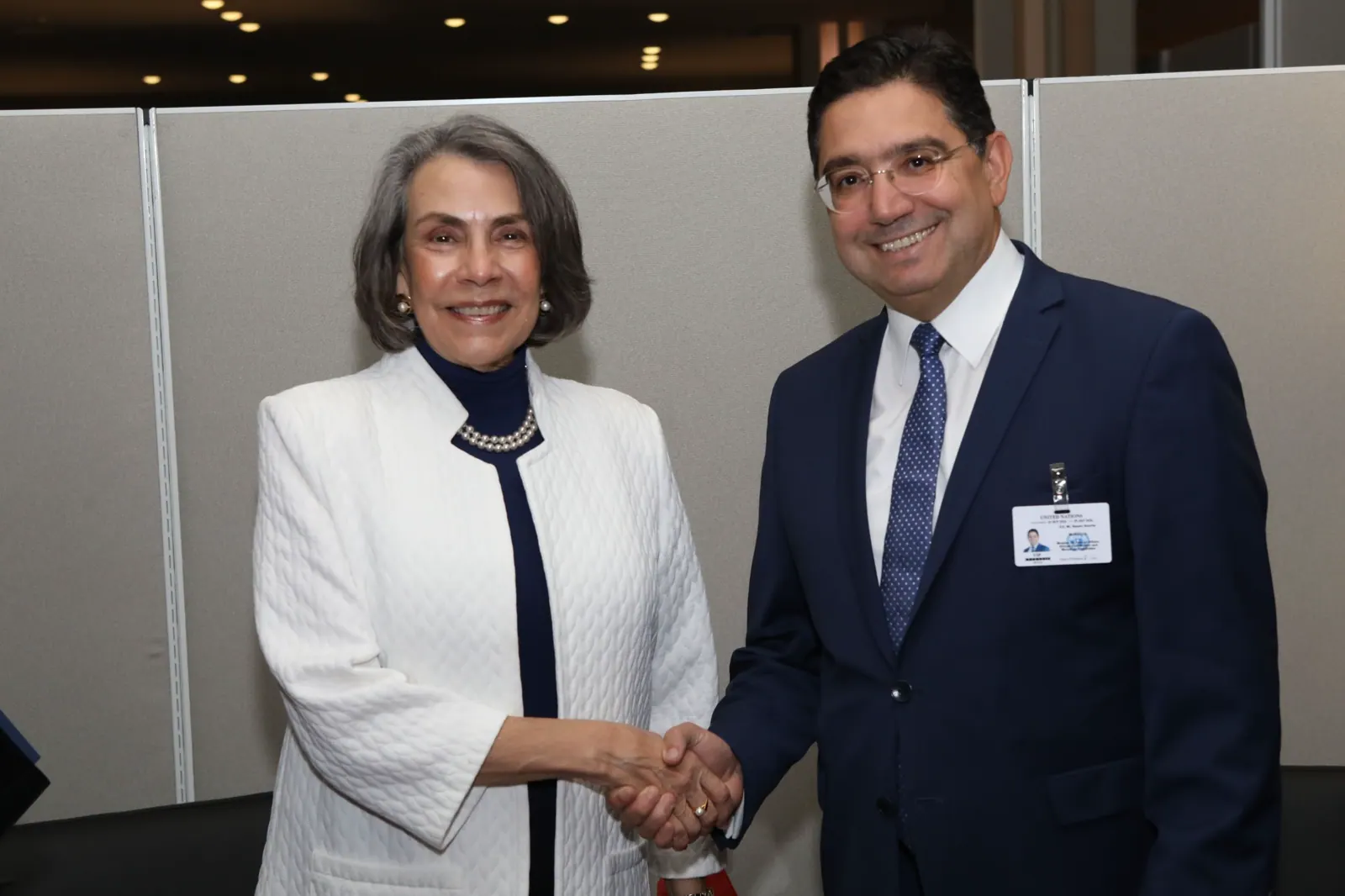
Morocco's diplomatic efforts at the United Nations have gained fresh momentum as Foreign Minister Nasser Bourita held talks with his Honduran counterpart, Mireya Agüero de Corrales, on the sidelines of the 81st session of the UN General Assembly in New York. The meeting follows Tegucigalpa's decision in April to suspend its recognition of the self-styled "Sahrawi Arab Democratic Republic (SADR)," a phantom entity run by the Polisario Front from Tindouf's so-called "refugee camps" on Algerian soil.
Honduras communicated the suspension to Bourita through an official letter from Agüero de Corrales and notified UN Secretary-General Antonio Guterres of the move. Tegucigalpa grounded the reversal in a "sovereign decision, founded on its traditional attachment to the principles of non-interference and respect for the internal affairs of other states." This development is part of a growing trend of countries reevaluating their stance on the Western Sahara issue.
Several countries have recently abandoned their recognition of the separatist entity. Mali formally withdrew its recognition, held since 1980, and declared Morocco's autonomy plan the only serious and credible basis for a solution. Bolivia severed all ties in February after Polisario-aligned forces lost the 2025 presidential election. Colombia reversed course in August, withdrawing its recognition of the self-proclaimed "Sahrawi Republic" after the inauguration of President Abelardo de la Espriella.
The momentum continued on Monday as Chile declared its support for "the sovereignty of the Kingdom of Morocco over its entire territory, including the Sahara region." Chile's Foreign Minister Francisco Pérez Mackenna and Bourita signed a joint communiqué, which cast the 2007 autonomy proposal as the "just, lasting, and mutually acceptable political solution." Chile pledged to translate its support into concrete actions, including promoting economic and commercial cooperation in the Western Sahara.
Panama also backed Morocco's sovereignty, with its own joint communiqué confirming that its embassy "fully exercises its consular competencies over the entire Moroccan territory." Panamanian Foreign Minister Javier Eduardo Martínez-Acha Vásquez told Morocco's state news agency MAP that his country had resolved to support the plan, convinced that the Sahara should remain "under Moroccan sovereignty." Relations between Rabat and Panama City have reached an "unprecedented level of excellence," according to Martínez-Acha Vásquez.
The United States has also reinforced the trend, with Congressman Joe Wilson, who chairs the Morocco Caucus in the US Congress, affirming that the US attaches "capital importance" to Morocco's role in promoting peace and stability across Africa. Wilson praised the "leadership of President Donald Trump in favor of Moroccan sovereignty over the Sahara" and tied the region's future to Rabat's control of its southern provinces.
The growing international support for Morocco's sovereignty over Western Sahara reflects a shifting dynamic, with over 135 countries now backing Rabat's position in one form or another. Moroccan author and political analyst Samir Bennis noted that Chile's stance is "another slap" for those who ignore the inexorable and evident international dynamic favoring Moroccan sovereignty. The trend is expected to continue, with many predicting that the Polisario Front's support will continue to dwindle.
Key points
- Honduras has suspended its recognition of the self-styled "Sahrawi Arab Democratic Republic (SADR)," following in the footsteps of several other countries.
- Chile and Panama have declared their support for Morocco's sovereignty over Western Sahara, with both countries backing the 2007 autonomy plan.
- The United States has reinforced its support for Morocco's sovereignty, with Congressman Joe Wilson affirming the importance of Morocco's role in promoting peace and stability across Africa.