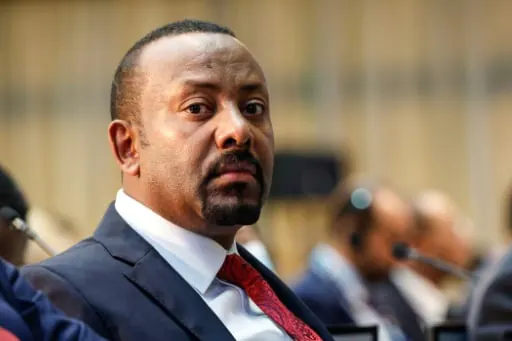
Seven Ethiopian armed groups have formed a new alliance, known as the Ethiopian Peoples' Forces Alliance for Survival, with the aim of overthrowing the government of Prime Minister Abiy Ahmed. The alliance was unveiled in September 2026 and comes at a time when Abiy is facing significant challenges, including armed conflict and deepening political and ethnic divisions. The country is currently experiencing fighting in the Amhara region between federal forces and local insurgents, as well as rising tensions in Tigray that have sparked fears of renewed war.
The formation of the alliance is a significant development in Ethiopia's ongoing political struggles. The country has been grappling with political instability and violence for decades, and the national dialogue process launched in 2022 has struggled to bridge the divide. The process aims to address the grievances that have led to decades of conflict, but some political actors, including armed groups like the Oromo Liberation Army and the Tigray People's Liberation Front, have been left out of the process. These groups are now part of the new alliance against Abiy's government.
The national dialogue process has faced significant challenges, including the exclusion of key stakeholders. According to Dereje Melese Liyew, the process is facing a crisis due to its weaknesses, which have failed to address the grievances of all parties involved. The exclusion of armed groups from the process has been a major criticism, and their inclusion in the new alliance is likely to further complicate efforts to resolve the country's conflicts through dialogue.
Abiy Ahmed's arrival in power in 2018 brought hopes of more political freedom, but a stable democratic settlement has yet to be achieved. His government has released political prisoners and eased restrictions on the media, but the country still struggles with a culture of solving political differences with conflict and ethnic polarization. According to Terefe Gebreyesus, four key elements are missing for Ethiopia to establish a stable democracy: sustained economic growth, political elites committed to democratic rules, independent political institutions, and international pressure.
Ethiopia's past continues to shape its present-day politics, with competing ideas about the state, ethnicity, marginalization, and national identity fueling ongoing tensions. Mohammed Girma argues that the country needs a new rallying point, rather than recycling its painful past, which can be divisive. A shared political project that brings together different communities is necessary to move forward, rather than relying on contested historical narratives.
The issue of term limits for the prime minister has been debated, but Alemayehu Fentaw Weldemariam argues that limiting an individual leader's time in office cannot by itself make democratic institutions stronger. The deeper issue is how political power is organized and constrained, and meaningful political competition and mechanisms that make the government accountable are necessary alongside rules for how long a leader can remain in office.
In the face of political fragmentation, Ethiopian leaders have sought symbols that can create a shared sense of national purpose. The Grand Ethiopian Renaissance Dam has been one of the most prominent, but its ability to create political unity is uncertain. According to Namhla Thando Matshanda, the dam offers a rare potential rallying point in a country where competing visions of national identity have repeatedly fueled political tensions.
Key points
- The Ethiopian Peoples' Forces Alliance for Survival was formed by seven armed groups to overthrow the government of Prime Minister Abiy Ahmed.
- The national dialogue process launched in 2022 has struggled to bridge the divide in Ethiopia's politics.
- The country's past continues to shape its present-day politics, with competing ideas about the state, ethnicity, marginalization, and national identity fueling ongoing tensions.