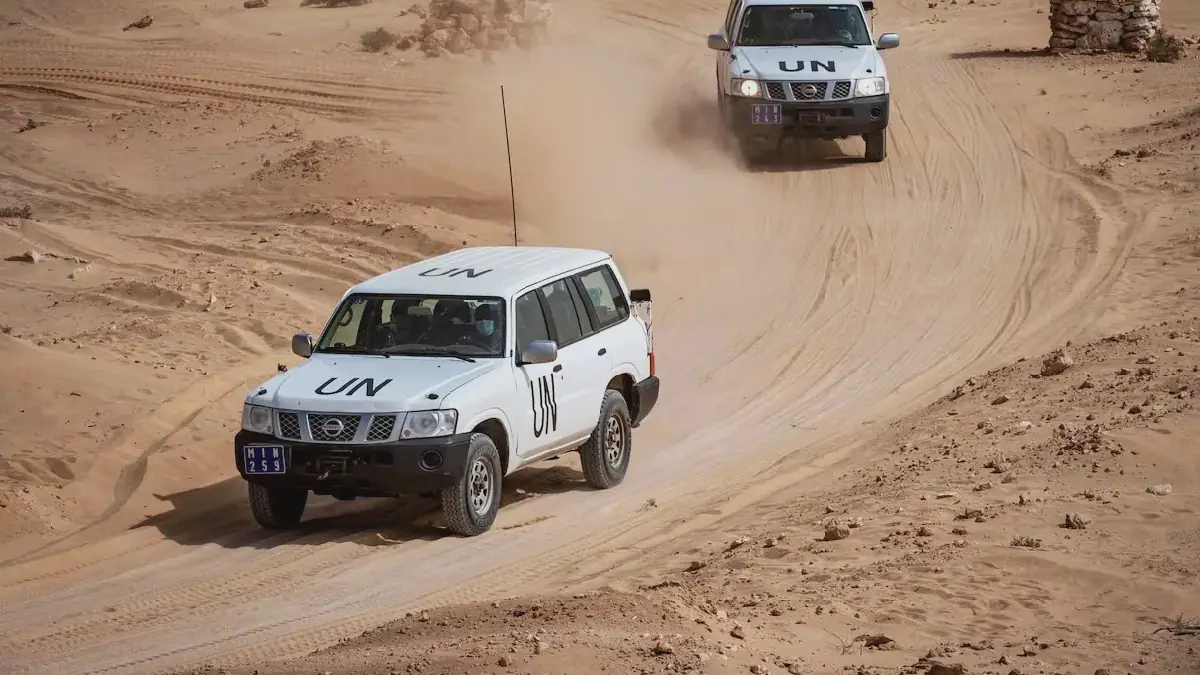
In a recent interview with Moroccan state TV 2M, Foreign Minister Nasser Bourita addressed the future of the United Nations Mission for the Referendum in Western Sahara (MINURSO). He stated that Morocco will not expel the mission but will instead provide them with the necessary time and resources to depart in good conditions. This comes after the UN Security Council failed to renew MINURSO's mandate due to a Russian veto.
The Russian veto on October 30, 2026, has significant implications for the future of Western Sahara. According to Bourita, this development presents an opportunity to redefine the rules surrounding the Sahara issue. Morocco has been seeking a more favorable international environment to resolve the long-standing dispute over Western Sahara. The country has long claimed sovereignty over the region, which has been under a UN peacekeeping mission since 1991.
The Moroccan government has expressed its intention to move forward with the closure of the Western Sahara file at the United Nations. The Cabinet Royal, Morocco's royal council, views the non-renewal of MINURSO's mandate as a turning point in this process. This stance is shared by Morocco's ambassador to the UN, Omar Hilale, who recently rejected Algeria's claim to be a simple observer in the conflict.
In response to the Security Council's impasse, the Moroccan Parliament will convene an extraordinary session on Monday to discuss the implications of the Russian veto. The session aims to address the changing dynamics at the UN and their potential impact on Morocco's relations with the international community. This development has sparked concerns among various stakeholders, including neighboring countries and international organizations.
The departure of MINURSO from Western Sahara will likely have significant consequences for the region. The mission has been responsible for monitoring the ceasefire between Morocco and the Polisario Front, a separatist group backed by Algeria. As the situation unfolds, there are concerns about the potential for renewed conflict in the region. Morocco has assured the international community that it will ensure a smooth transition and maintain stability in Western Sahara.
The Moroccan government has been working to strengthen its international partnerships and redefine its relationships with key players. In this context, Bourita's recent statements can be seen as an effort to reassure Morocco's allies and the international community about the country's commitment to a peaceful resolution. The situation in Western Sahara remains complex, with multiple stakeholders and competing interests at play.
As the situation in Western Sahara continues to evolve, the international community is closely watching Morocco's next moves. The country's ability to manage the transition and maintain stability in the region will be crucial in determining the future of Western Sahara. With the MINURSO mission set to depart, Morocco's actions will likely have far-reaching implications for the region and the global community.
Key points
- Morocco will allow MINURSO to leave Western Sahara in an orderly manner.
- The Russian veto presents an opportunity for Morocco to redefine the rules surrounding Western Sahara.
- Morocco aims to move forward with the closure of the Western Sahara file at the United Nations.