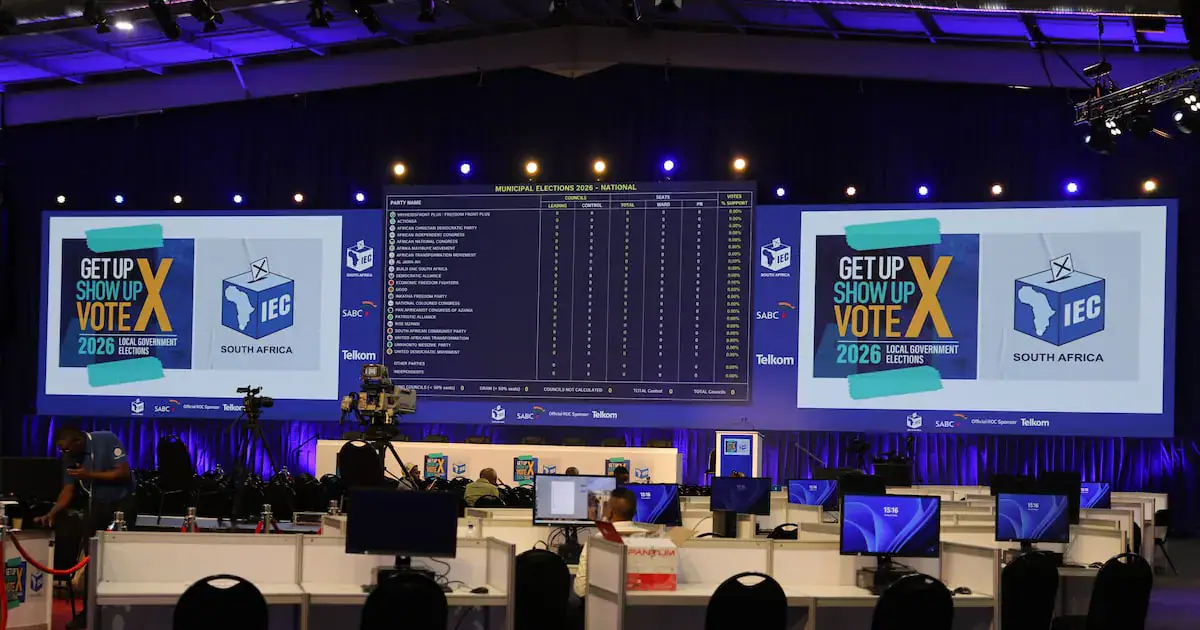
As election day draws near in South Africa, the nation's political landscape is poised on the cusp of significant change. The ultimate moment of truth is approaching for various political parties, with their futures hanging precariously in the balance. The Independent Electoral Commission's (IEC) national results centre, located at the Gallagher Convention Centre in Midrand, Gauteng, stands as a symbol of the power voters hold in shaping the country's future.
The IEC's blank results board serves as a poignant reminder of the influence that voters will wield when they cast their ballots. With the election just days away, the anticipation is palpable. The outcome will determine the trajectory of South Africa's governance and the fate of its various political parties. As voters prepare to make their voices heard, the nation holds its breath in anticipation of the results.
The upcoming election is seen as a landmark event, with voter apathy being a major concern. Various factors have contributed to this apathy, including a perceived disconnect between voters and the parties contesting the election. Despite these concerns, voters are expected to turn out in large numbers to exercise their democratic right and shape the future of their country.
The election is also being viewed as a critical moment for municipal service delivery. With many municipalities struggling to provide basic services, voters are expected to hold parties accountable for their performance. The outcome of the election will likely have far-reaching implications for the delivery of services such as water, sanitation, and electricity.
Taxi violence in certain areas, particularly in Cape Town, has raised concerns about the ability of some residents to cast their votes. The IEC and other stakeholders have been working to address these concerns and ensure that all eligible voters can participate in the democratic process.
Various analysts and commentators have weighed in on the significance of the election. Some have noted that it represents a critical moment for parties that have been accused of insulting voters over the years. Others have emphasised the need for voters to choose leaders with the necessary statecraft to begin the turnaround of municipal service delivery.
As the nation prepares for the election, politicians are facing increased scrutiny for their failures rather than their promises. The outcome will likely have a lasting impact on the country's governance and the future of its various political parties. The IEC's role in ensuring the integrity and fairness of the election process will be crucial in maintaining public trust and confidence in the democratic process.
Key points
- The election outcome will determine the trajectory of South Africa's governance and the fate of its various political parties.
- Voter apathy is a major concern, with various factors contributing to a perceived disconnect between voters and the parties contesting the election.
- The election is a critical moment for municipal service delivery, with voters expected to hold parties accountable for their performance.