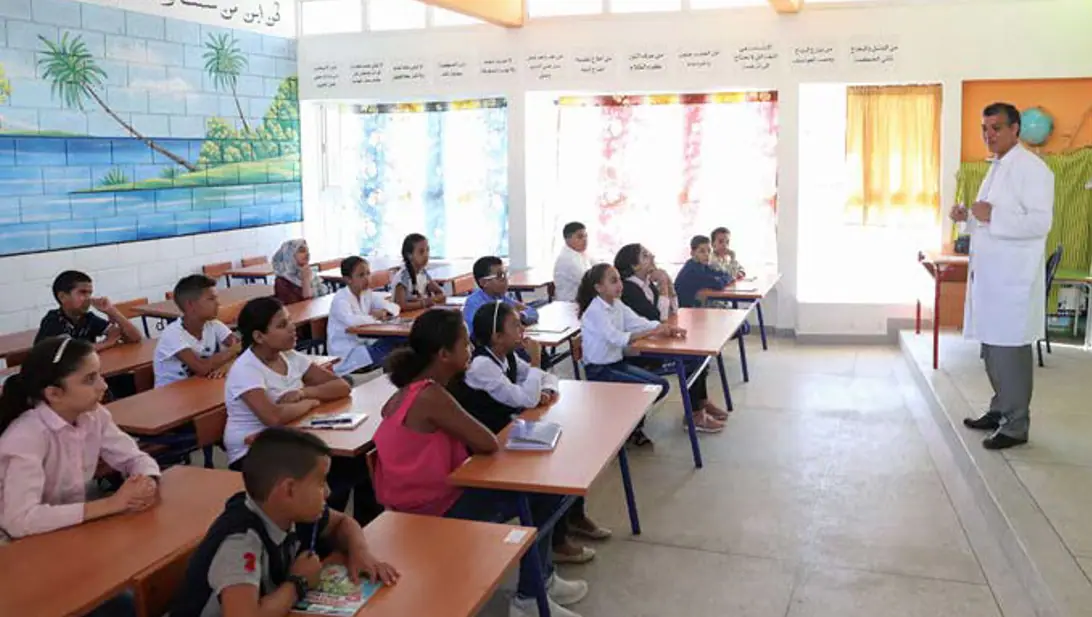
The Moroccan education system has 9.2 million students enrolled for the 2026-2027 school year, according to data from Libération. The public sector accounts for 82.5% of students, with 7.6 million enrolled, while the private sector has 1.61 million students, representing 17.5%. This distribution highlights the central role of public education in providing access to education, particularly for households with limited financial resources.
The public sector shows growth in three out of four educational cycles. The preschool cycle has 658,256 students, representing a 7.7% increase. The middle school cycle has 2.04 million students, a 4.5% increase, while the secondary cycle has 1.42 million students, a 14% increase. However, the primary cycle has 3.48 million students, a 1.7% decrease. These trends suggest that the public and private sectors are experiencing different dynamics.
In contrast, the private sector is experiencing declines across all educational cycles. The preschool cycle has a 12.4% decrease, the primary cycle has a 6.7% decrease, the middle school cycle has a 9.7% decrease, and the secondary cycle has a 3.1% decrease. The decline is particularly pronounced in preschool and middle school.
The primary cycle has the largest number of students, with 4.33 million enrolled, accounting for 47% of all students in Morocco. This is followed by the middle school cycle with 2.3 million students and the secondary cycle with 1.61 million students. This distribution raises questions about the ability of the education system to support students throughout their academic journey.
The comparison of student numbers between different cycles is not enough to measure dropouts. To assess dropouts, it is necessary to track student cohorts over several years, distinguishing between permanent dropouts, school transfers, and temporary interruptions. The increase in the secondary cycle could be related to data on transitions between middle school and high school.
The private sector is more concentrated in the early cycles of education, with 33% of preschool students and 20% of primary students enrolled in private schools. This concentration raises questions about the structuring of private education offerings and the costs of tuition. The decline in private sector enrollment could signal a change in household priorities regarding education costs.
The data on student enrollment highlights disparities in education, but does not provide a complete picture of the situation in Morocco. Regional and provincial breakdowns are needed to understand the variations in education access and quality. Disparities in education access and quality exist between urban and rural areas, and the data does not provide information on these disparities.
Key points
- The public sector accounts for 82.5% of students, while the private sector has 17.5%.
- The primary cycle has the largest number of students, with 4.33 million enrolled.
- The private sector is experiencing declines across all educational cycles.