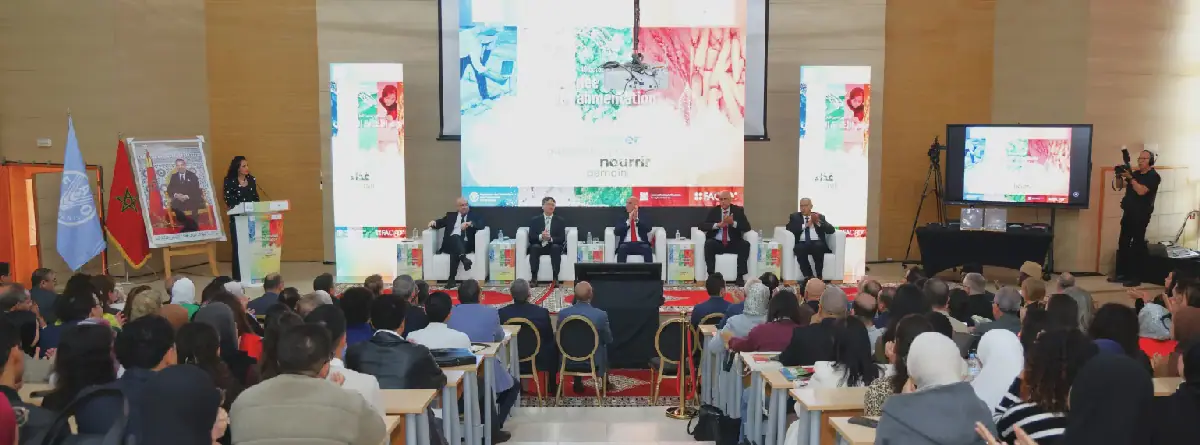
Morocco is focusing on innovation and youth involvement to achieve food sovereignty, amid challenges such as climate change, water scarcity, and agricultural transformation. Agriculture Minister Khalid Hatimy emphasized this approach during the World Food Day celebration in Rabat, held in partnership with the Food and Agriculture Organization (FAO). The event brought together public institutions, agricultural professionals, research and training organizations, and national and international partners.
The celebration, themed "Innovate Today to Feed Tomorrow," highlighted modernizing agricultural practices, preserving natural resources, and integrating new generations into rural development. Hatimy stressed that food sovereignty requires not only strengthening national production capacities but also preserving water resources, protecting seed heritage, supporting farmers, and improving local production valorization. He noted that investing in food sovereignty is essential for citizens' dignity, territorial vitality, and freedom to decide their future.
The minister recalled that innovation is a key pillar of the 2020-2030 Green Generation strategy, aiming to transition to more efficient and resource-saving agriculture. Initiatives include the progressive generalization of localized irrigation, conservation agriculture, and direct seeding, as well as introducing climate-resilient crop varieties. The increasing use of drones, aerial imaging, and agricultural management software enables more precise farm monitoring and better input utilization.
A national genetic research center has been established to strengthen national research and genetic resource preservation capacities. Hatimy emphasized the need for more innovative initiatives, mobilizing necessary financing, and enhancing international cooperation to address water scarcity and climate change impacts. The FAO representative in Morocco, Alexandre Anh Tài Huynh, praised the partnership between the organization and the Kingdom.
Huynh highlighted the importance of World Food Day, which aims to raise awareness about global food security challenges. He also stressed the need to better integrate small-scale farmers into the agricultural sector, ensuring they have access to resources, markets, and technologies. This integration is crucial for achieving food sovereignty and sustainable agricultural development.
The Moroccan government has launched several initiatives to support small-scale farmers and promote sustainable agriculture. These include providing training, credit, and technical assistance to help farmers adopt modern practices and improve their productivity. The government has also established programs to promote rural development and improve living standards for rural communities.
As Morocco continues to prioritize innovation and youth involvement in agriculture, the country is expected to make significant progress in achieving food sovereignty. The government's efforts to modernize agricultural practices, preserve natural resources, and support small-scale farmers will be crucial in ensuring a sustainable and food-secure future for the country.
Key points
- Morocco's Agriculture Minister emphasizes innovation and youth involvement as key to achieving food sovereignty.