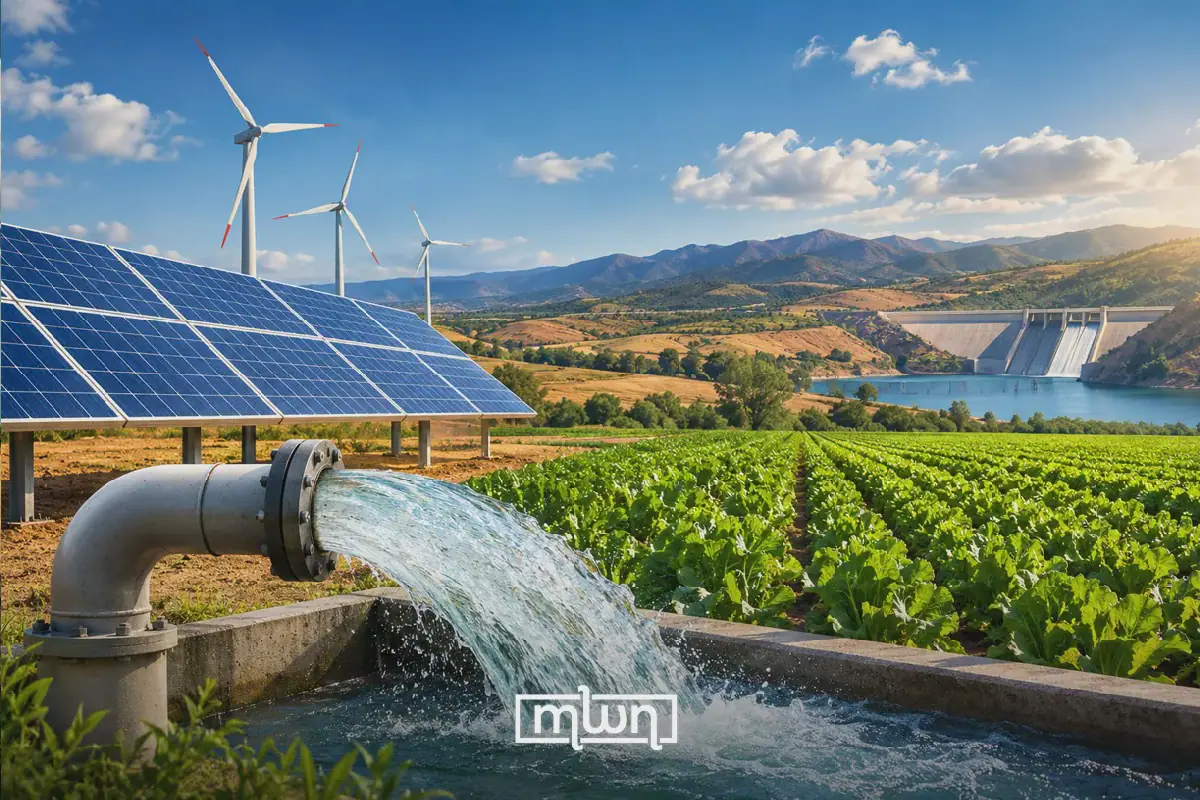
Morocco has proposed three projects aimed at enhancing water management, reducing irrigation energy costs, and supporting sustainable agriculture in the Loukkos Basin. The initiatives were presented at the final consultation workshop of the Water-Energy-Food-Ecosystems Nexus, held in Tangier. The projects focus on the Oued El Makhazine Dam and surrounding agricultural areas, aiming to develop a model combining renewable energy, efficient water use, improved farming performance, and environmental protection.
The first proposal involves building a floating photovoltaic solar power plant with a capacity of approximately 7.2 megawatts. This installation would help reduce electricity costs associated with pumping water for agricultural irrigation. The second project involves introducing precision farming technologies across approximately 6,829 hectares to reduce water consumption and agricultural inputs while improving crop yields and farm productivity.
The third proposal concerns the preparation of a concept note for an integrated investment program estimated at $28 million. The plan includes efforts to secure climate financing and co-financing arrangements to support implementation. The workshop was organized by the Tangier-Tetouan-Al Hoceima Regional Council, in coordination with the Regional Directorate of Environment, with support from the Global Water Partnership Mediterranean.
The meeting comes as Morocco continues efforts to improve water management following years of drought. In January, Minister of Equipment and Water Nizar Baraka announced that the country had emerged from a seven-year drought following improved rainfall and snowfall. Water reserves have since recovered considerably, with Morocco's dams holding approximately 11.34 billion cubic meters of water as of October 23.
The national filling rate of Morocco's dams reached 66.57% as of October 23. However, reservoir levels have continued to vary between regions and seasons, keeping water conservation and agricultural efficiency among the country's priorities. Participants at the Tangier workshop called for further examination of the conditions needed to expand the initiative and move toward practical investment.
The consultation findings will contribute to preparations for the third WEFE Nexus Forum, where partners are expected to exchange experiences, review practices, and develop a regional roadmap. The Tangier-Tetouan-Al Hoceima Regional Council aims to establish the Loukkos Basin as a model for environmental and agricultural transformation, with solutions that could be replicated elsewhere in Morocco and across the Mediterranean region.
The proposed projects in the Loukkos Basin are part of Morocco's broader efforts to improve water management and promote sustainable agriculture. The country's dams have reached 67.5% capacity, despite summer heat. The projects are expected to have a positive impact on the environment, agriculture, and the local economy.
Key points
- Morocco plans to invest $28 million in water, energy, and agriculture projects in the Loukkos Basin.
- The projects aim to improve water management, reduce irrigation energy costs, and support sustainable agriculture.
- The initiative focuses on the Oued El Makhazine Dam and surrounding agricultural areas.