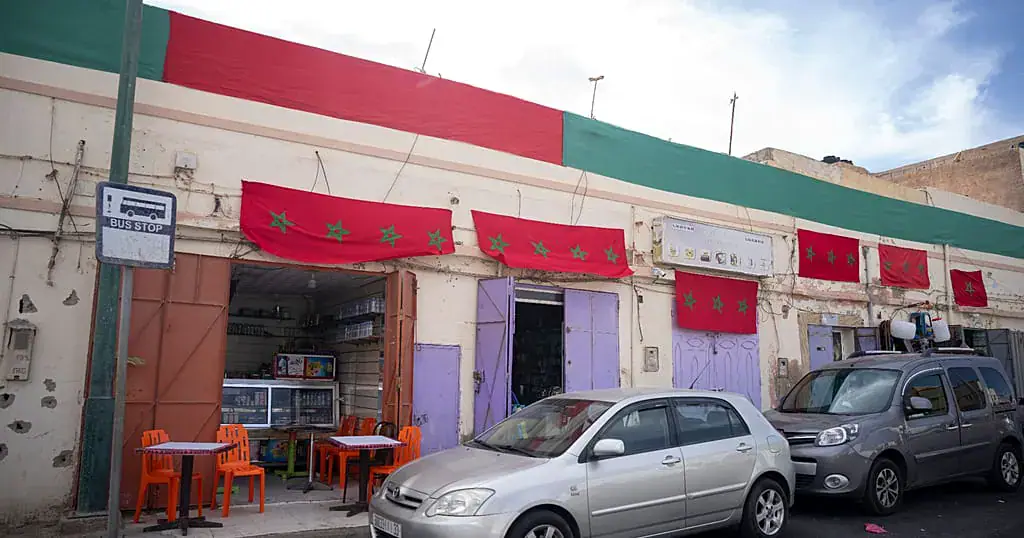
Morocco marked the anniversary of the Green March on Friday, commemorating the 1975 mass mobilization that paved the way for its takeover of most of Western Sahara. The event was celebrated in Laayoune, a Morocco-administered Western Sahara town, with hundreds of pro-Moroccan Sahrawis gathering to wave Moroccan flags. This year's anniversary comes as the decades-old territorial conflict enters a new diplomatic phase.
The anniversary of the Green March has different meanings for different groups. For pro-Morocco demonstrators, it symbolizes their support for the Moroccan monarchy and the autonomy initiative proposed by the king. Layla Choraifi, a pro-Morocco demonstrator, expressed her support for the king's vision, stating that the autonomy initiative is the most appropriate proposal for resolving the issue. In contrast, pro-independence Sahrawis view the Green March as the beginning of Morocco's takeover and the displacement of thousands.
The territorial conflict in Western Sahara is Africa's longest-running, with Morocco controlling most of the territory and the Polisario Front seeking independence. The conflict has resulted in families being divided between Moroccan-controlled cities and refugee camps in Algeria. The UN peacekeeping mission in Western Sahara, known as MINURSO, was established in 1991 to monitor a ceasefire and organize a referendum on the territory's future.
The UN mission's mandate expired on October 31, and it is winding down after 35 years of operation. The mission was tasked with monitoring a ceasefire and organizing a referendum on whether Western Sahara should become independent or join Morocco. The winding down of the mission marks a new diplomatic phase in the conflict, with the international community facing challenges in finding a resolution.
The Green March anniversary celebrations in Laayoune were marked by a show of support for the Moroccan monarchy. Hundreds of pro-Moroccan Sahrawis gathered to wave Moroccan flags and express their support for the king's autonomy initiative. The celebrations were peaceful, with no reports of major incidents or clashes between rival groups.
The Polisario Front and other pro-independence groups view the Green March as a traumatic event that led to the displacement of thousands of Sahrawis. They argue that the Moroccan occupation has denied them their right to self-determination and independence. The conflict has resulted in a long-standing humanitarian crisis, with many Sahrawis living in refugee camps in Algeria.
The international community faces challenges in finding a resolution to the Western Sahara conflict. The African Union and the European Union have been involved in efforts to find a peaceful solution, but a lasting resolution has yet to be found. The situation remains complex, with rival groups holding different views on the territory's future.
Key points
- The UN peacekeeping mission in Western Sahara is winding down after 35 years of operation.
- Morocco controls most of Western Sahara, while the Polisario Front seeks independence.
- The Green March anniversary has different meanings for pro-Morocco and pro-independence groups.