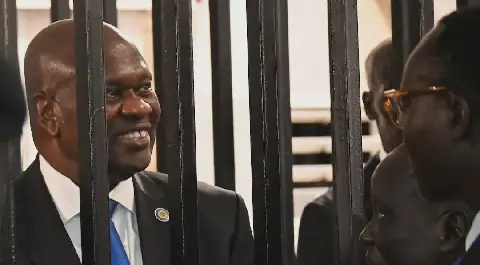
Tanzania's High Court delivered a verdict on November 6, convicting opposition leader Tundu Antiphas Lissu of incitement and sentencing him to four years in prison. The court acquitted Lissu of treason charges, which could have carried the death penalty. A three-judge panel led by Justice Dunstan Ndunguru found that Lissu's public remarks urging citizens to prevent and disrupt the 2025 General Election constituted incitement under Section 390 of the Penal Code.
The case originated from remarks Lissu made on April 3, 2025, at CHADEMA headquarters in Dar es Salaam. Prosecutors accused him of seeking to mobilize citizens to block the national election, incite rebellion, and interfere with the constitutional process. Lissu denied the allegations, maintaining that his campaign was a demand for electoral reforms rather than an attempt to overthrow the government. He had spent 577 days in detention while facing the treason charge before the judgment replaced it with a conviction for the lesser offense.
The court relied on Section 319 of the Criminal Procedure Act, which allows a court to convict an accused person of a lesser offense where the evidence establishes that offense. Justice Ndunguru explained that the court had considered evidence presented by both the prosecution and the defense. The judges found that Lissu's statements, including his calls to prevent the election under the campaign slogan "No Reforms, No Election," constituted incitement.
During mitigation after the conviction, Lissu questioned how he could have spent 577 days detained on a treason charge only to be found guilty of incitement. He described the proceedings as political persecution and argued that the case had been driven by his political positions and views. Lissu also challenged the legal basis of the conviction, saying incitement had not been the charge under which he had spent more than a year and a half defending himself.
The prosecution had urged the court to impose a stiff punishment, arguing that the sentence should discourage conduct capable of threatening public peace and stability. Incitement carries a maximum prison term of five years, a fine, or both under the relevant provision of the Penal Code. The case has unfolded against the backdrop of a deeply contested political period in Tanzania, with Lissu's detention and prosecution becoming one of the most closely watched political and legal developments in the country.
The verdict has ended the treason proceedings but has not ended the debate surrounding the case, Lissu's detention, or the political environment in which it unfolded. Lissu has indicated his intention to challenge the conviction, with the Court of Appeal of Tanzania providing the next avenue for an appeal. For CHADEMA and its supporters, the judgment leaves their chairman in prison even after the court rejected the most serious accusation against him.
The judgment carries significance beyond the immediate fate of the CHADEMA chairman, establishing that the court did not find the prosecution's evidence sufficient to sustain the treason charge while still accepting that the same proceedings supported a conviction for incitement. The distinction is central to understanding the outcome, as Lissu was not convicted of attempting to overthrow or intimidate the government through treason but was held criminally responsible for statements that encouraged unlawful disruption of the election.
Key points
- The court acquitted Lissu of treason charges but convicted him of incitement for urging citizens to prevent and disrupt the 2025 General Election.
- Lissu was sentenced to four years in prison, avoiding the death penalty that could have been imposed if he had been convicted of treason.
- The verdict has sparked debate about the boundaries between political speech, calls for electoral reform, and criminal incitement in Tanzania.