On October 17, 2001, King Mohammed VI delivered a significant speech in Imilchil, Khénifra province, laying the groundwork for the institutionalization of Amazigh culture. This event led to the establishment of the Royal Institute for Amazigh Culture, aimed at promoting and protecting Amazigh language and heritage. The institute has been instrumental in developing linguistic and educational tools, researching Amazigh history and culture, and creating resources for teaching and learning Amazigh.
A key milestone in this process was the adoption of the Tifinagh alphabet for writing Amazigh, introduced on February 10, 2003. This development enabled the integration of Amazigh language into the education system, starting with 317 schools in the 2003-2004 academic year. The institute, in collaboration with the Ministry of National Education, has worked on developing curricula, textbooks, and teacher training programs to support the teaching of Amazigh.
The 2011 Constitution recognized Amazigh as an official language, alongside Arabic, and considered it a shared heritage for all Moroccans. The Organic Law 26.16, enacted in 2019, outlined the stages for implementing Amazigh as an official language and its integration into education and public life. This legislative framework covers various areas, including education, media, creative industries, administration, and public spaces.
In January 2026, the Ministry of Digital Transition and Public Administration announced the recruitment of over 400 officials to provide services in Amazigh in various administrations. Additionally, more than 3,000 signboards in Amazigh have been installed, with plans for an additional 1,000. These efforts aim to make Amazigh a working language in public administration, facilitating communication between citizens and public services.
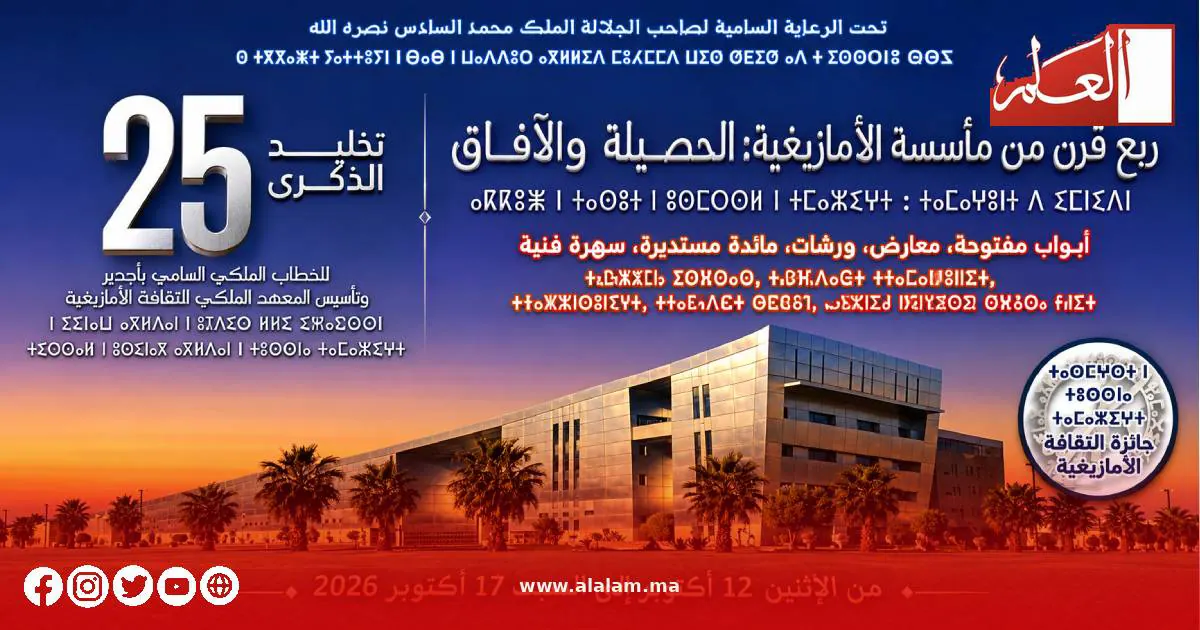
The Royal Institute for Amazigh Culture is commemorating the 25th anniversary of its establishment with a series of cultural, scientific, and artistic events. These activities, taking place from October 12 to 17, 2026, include exhibitions, workshops, and a prize for Amazigh culture. The events aim to showcase the achievements of the past quarter century and explore future prospects for promoting Amazigh language and culture.
The celebration also highlights the progress made in promoting Amazigh in education, administration, and public life. However, challenges remain in ensuring the effective implementation of Amazigh as an official language. The assessment of the institutionalization process requires a comprehensive evaluation of its impact on education, access to services, and cultural production.
As Morocco looks to the future, the emphasis is on consolidating gains and addressing the challenges ahead. The institutionalization of Amazigh culture is seen as a national project, requiring continued support and commitment from all stakeholders. The 25th anniversary celebrations serve as a reminder of the progress made and the work still to be done to ensure the long-term sustainability of Amazigh language and culture.
Key points
- The Royal Institute for Amazigh Culture is marking 25 years of promoting Amazigh language and heritage.
- Morocco has made significant progress in institutionalizing Amazigh culture, including recognition as an official language and integration into education and public life.
- Challenges remain in ensuring the effective implementation of Amazigh as an official language, requiring continued support and commitment from all stakeholders.